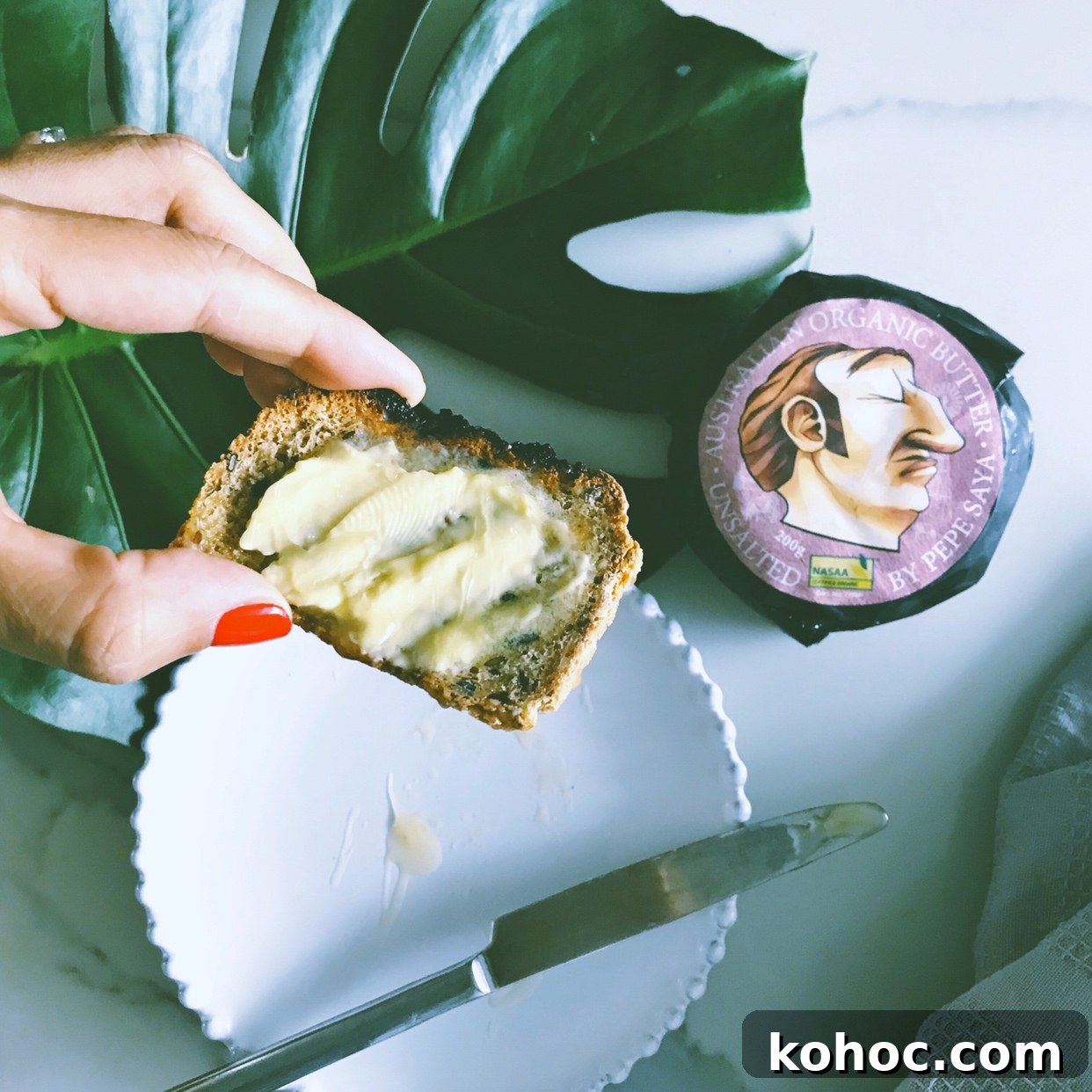
I’m a BIG advocate of good fats, and butter is one of my favorites.
If you enjoy butter, choose grass-fed so you get the full range of fat-soluble vitamins (A, D, E, and K), plus essential minerals and beneficial fatty acids. For an extra-special option, try cultured butter.
So what is cultured butter exactly?
Cultured butter is butter that has been fermented, making it a probiotic food.
Butter (good fats) + Fermentation (probiotics) = Gut superfood
Gut superfood = improved digestion, stronger gut lining, and better nutrient absorption
Fermentation gives cultured butter a pleasant tang and a silky, creamy texture, which many bakers prefer. Beyond flavor and texture, cultured butter offers additional gut benefits.
Butter contains a notable amount of butyrate, a short-chain fatty acid that supports and fuels the cells of the gut lining. While the gut can produce butyrate from dietary fiber, that conversion depends on a healthy microbiome. Butyrate also has anti-inflammatory properties that support overall gut health. In addition, butter fat contains glycosphingolipids, a group of lipids that help protect against gastrointestinal infections.
So next time you buy butter, remember:
-
Grass-fed is best
-
Cultured and grass-fed is even better
Although butter has been criticized in the past, when chosen and used wisely it can be a nutritious part of a balanced diet thanks to its fat-soluble vitamins, beneficial fats, and potential gut-supporting properties.
For example, my breakfast today was a generous amount of cultured butter on a slice of gluten-free sourdough, finished with a drizzle of raw honey. I paired it with enzyme-rich papaya and a cup of calming Tulsi tea to start the day mindfully.