
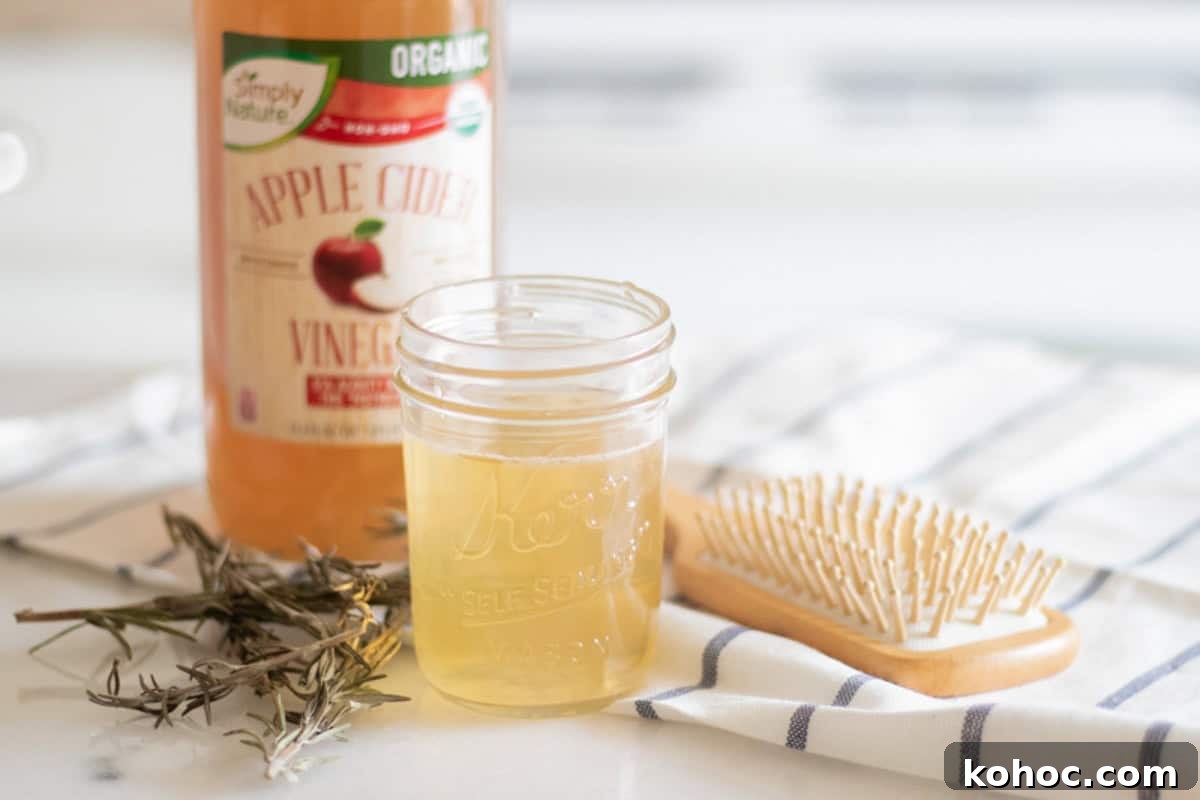
Give your hair and scalp some TLC with this DIY apple cider vinegar hair rinse. Made from just three simple ingredients, it can help reduce dandruff, restore shine, and leave hair looking and feeling healthier.
This post was originally published in November 2020.
Apple cider vinegar (ACV) is a common ingredient in hair care for good reason: it helps smooth the hair cuticle, clarifies buildup, exfoliates the scalp, and enhances shine. While it’s not a replacement for shampoo, ACV makes a great conditioner alternative for many hair types.
Why You’ll Love This Hair Rinse
- Rich in nutrients that refresh and invigorate hair and scalp.
- Can help reduce dandruff and scalp flaking.
- Inexpensive and easy to make at home.
- Quick to prepare—combine three ingredients and you’re ready.
Ingredients

- Apple cider vinegar: The base of the rinse; helps balance pH and remove buildup.
- Rosemary essential oil (optional): masks the vinegar scent and may support scalp health. Other essential oils can be used instead—see suggestions below.
- Water: ACV must be diluted to avoid irritation.
How to Make an Apple Cider Vinegar Hair Rinse

Step 1. Combine the ingredients in a small container and shake well to mix.
Step 2. Pour the rinse over clean, damp hair and work it through strands and the scalp by massaging or combing.
Step 3. Let it sit for 1–3 minutes, then rinse thoroughly with warm water.
Step 4. If desired, follow with a light natural conditioner.
Adding a few drops of an essential oil can neutralize the vinegar smell and add benefits for scalp and hair. Below are a few recommended options.
Essential Oil Recommendations
- Rosemary – often used to strengthen hair and support scalp health.
- Lavender – a calming floral scent that many find pleasant and soothing for the scalp.
- Cedarwood – used traditionally to support a healthy scalp and reduce dandruff.
- Tea tree – helpful for a dry or itchy scalp and adds cleansing properties.
- Frankincense – can help hydrate the scalp and reduce itchiness.
How to Use Apple Cider Vinegar Hair Rinse
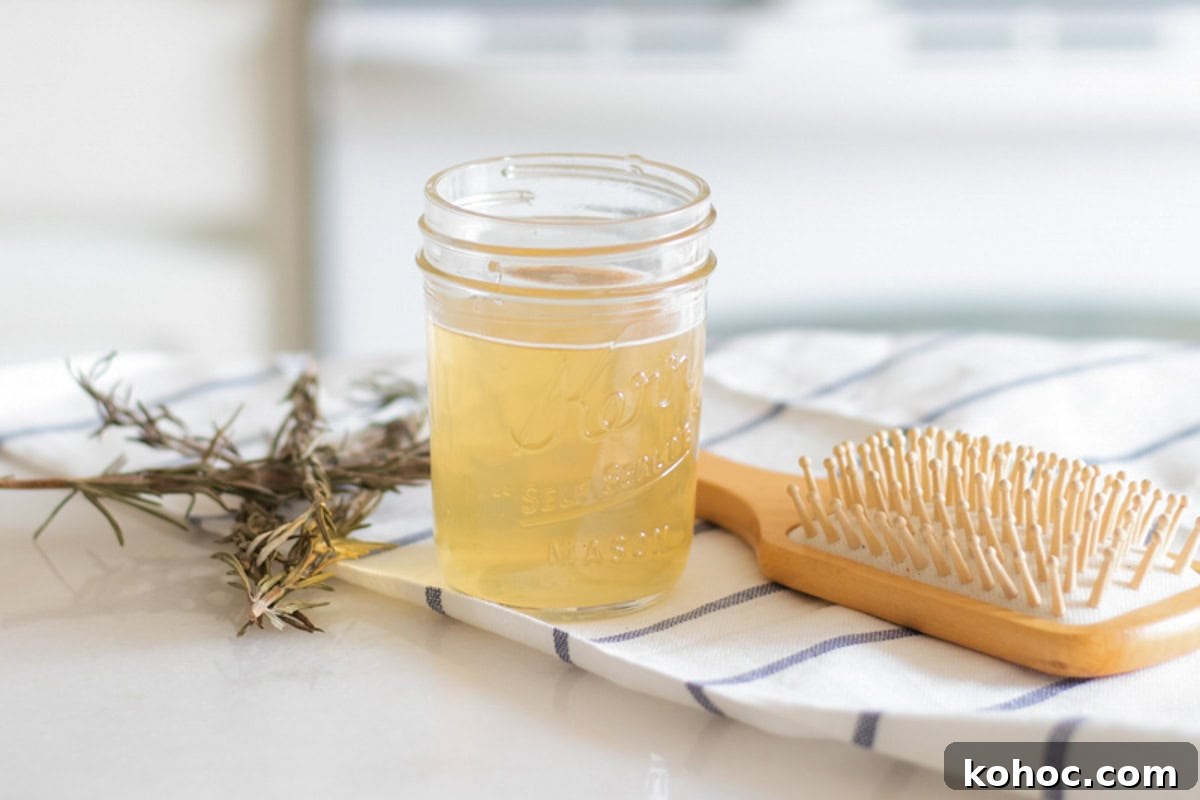
Use the rinse after shampooing. Wash your hair with a gentle, natural shampoo, then pour or spray the diluted ACV over your hair and scalp. Massage it in, let it sit for a few minutes, and rinse with warm water.
Depending on your hair type, this rinse can substitute for your regular conditioner. If hair becomes dry after repeated use, follow with a natural conditioner or a deep-conditioning treatment for extra hydration.
Recipe Tips
- Prepare the rinse in a spray bottle for easy application.
- Always dilute ACV to avoid scalp irritation. If you feel burning or discomfort, stop and dilute further.
- Avoid contact with eyes.
- Make only enough for a single use; discard any leftover rinse.
- Adjust proportions for very short or very long hair.

Apple Cider Vinegar Benefits for Hair
ACV offers several potential benefits when used properly as a rinse:
- Helps balance scalp pH.
- Leaves hair smoother, shinier, and softer.
- Reduces tangles and frizz.
- Controls excess oil and greasiness.
- Can act as a clarifying rinse to remove product buildup and dead skin cells.
- May help strengthen the hair over time.
Side Effects of Washing Hair with Apple Cider Vinegar
ACV is acidic, so always dilute it before applying. Undiluted vinegar can cause skin irritation or burning. Start with a mild dilution and use the rinse no more than once or twice weekly—less often if your hair is dry.
ACV Hair Rinse for Greasy Hair
This rinse is particularly helpful when transitioning away from harsh commercial shampoos. Overwashing with strong detergents can overstimulate oil production; reducing wash frequency often leads to less oil over time. Until your scalp adjusts, an ACV rinse can keep hair feeling fresh and light. A dry shampoo can also help extend time between washes.
Frequently Asked Questions
Apple cider vinegar is made from fermented apples and is commonly used in cooking and natural care routines. It has become popular in hair and skincare for its clarifying and pH-balancing properties.
This rinse is quick to make, so it’s best prepared for immediate, single-use application and discarded afterward.
Once or twice a week is typically enough for oily hair; use less often if your hair is dry or sensitive.
ACV clarifies and removes buildup but is not a substitute for shampoo. Use it after shampooing for best results.
Any vinegar scent typically dissipates as hair dries. Adding a few drops of essential oil also helps mask the smell.
If you decide to try this apple cider vinegar hair rinse, start with a gentle dilution and adjust to your hair’s needs. Many people notice improved manageability and shine after a few uses.
Related Recipes
- DIY protein hair treatment – for damaged hair
- DIY scalp scrub – for dandruff
- How to lighten hair naturally – top tips
- How to make rosemary water – for hair growth
- Homemade shampoo for hard water buildup
If you tried this Apple Cider Vinegar Hair Rinse, please leave a star rating and share how it worked in the comments. Thanks for reading!
Apple Cider Vinegar Hair Rinse
Equipment
- bowl for mixing
Ingredients
- 2 tablespoons apple cider vinegar
- 4 tablespoons water
- 3–5 drops rosemary essential oil (optional)
Instructions
- Combine ingredients in a small container, secure the lid, and shake well.
- Pour the rinse over clean, wet hair and work it into strands and scalp with your fingers.
- Let sit 1–3 minutes, then rinse out with warm water.
- Follow with a natural conditioner if needed.
Notes
- Use a spray bottle for easier application.
- Dilute ACV to avoid irritation; discontinue use if you feel burning.
- Avoid contact with eyes.
- Make only enough for a single use and discard leftovers.
- Adjust quantities for very short or very long hair.
This recipe is provided for informational purposes and is not intended as medical advice. Perform your own research and tests before using any new hair care ingredient.