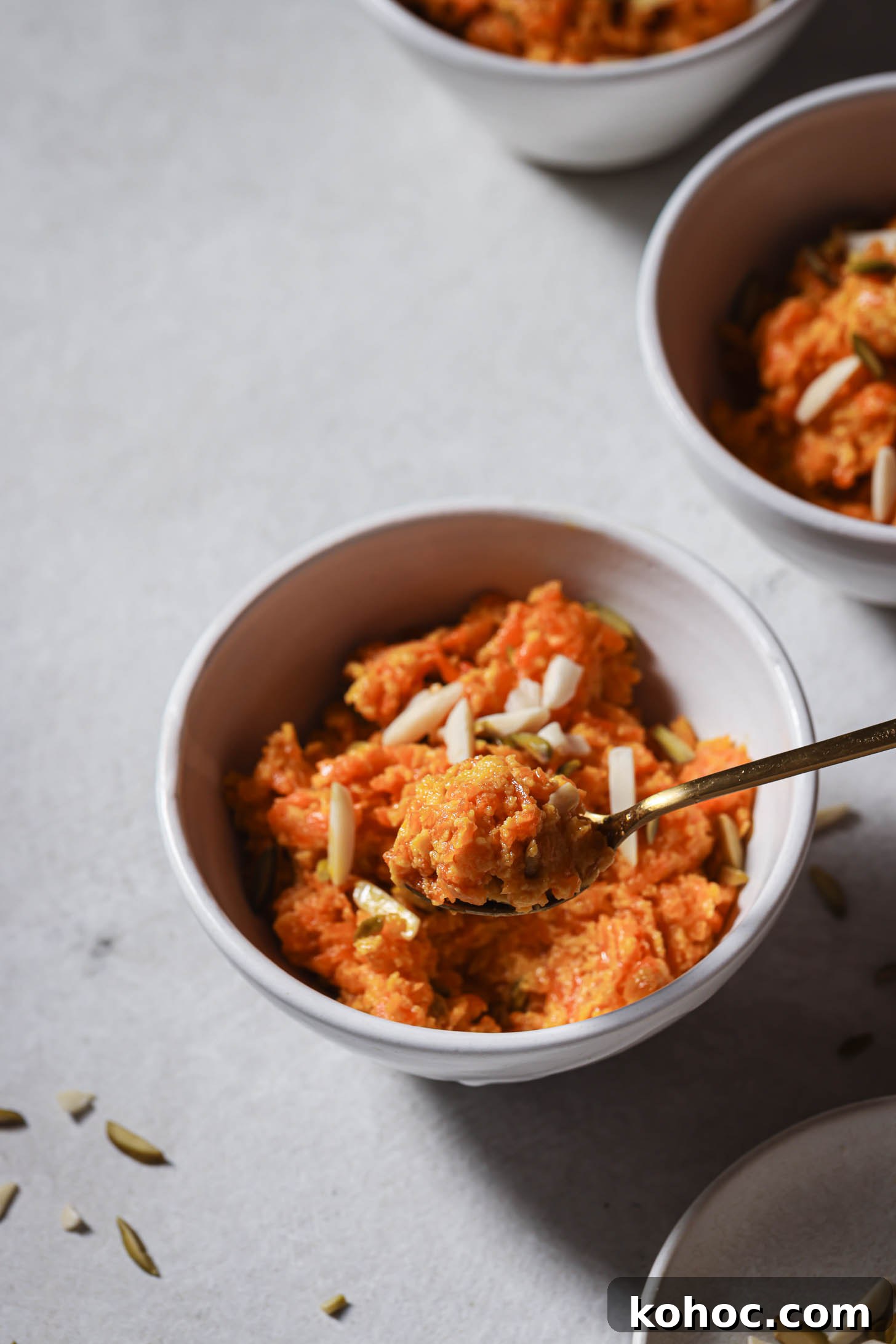
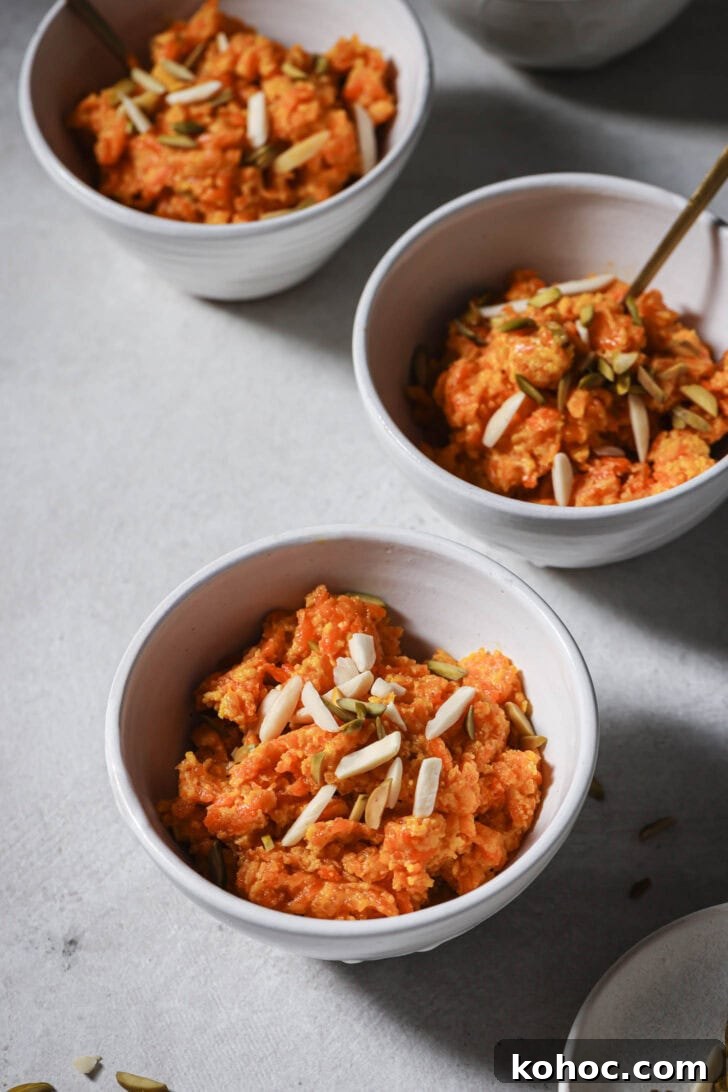
Among Desi desserts, Carrot Halwa ranks at the top for me, though truly excellent versions can be rare. This recipe delivers a classic yet simplified Carrot Halwa that’s rich without being heavy, balanced in sweetness, and full of flavor. It uses one pot and eight straightforward ingredients, and produces a halwa that will impress family and guests.
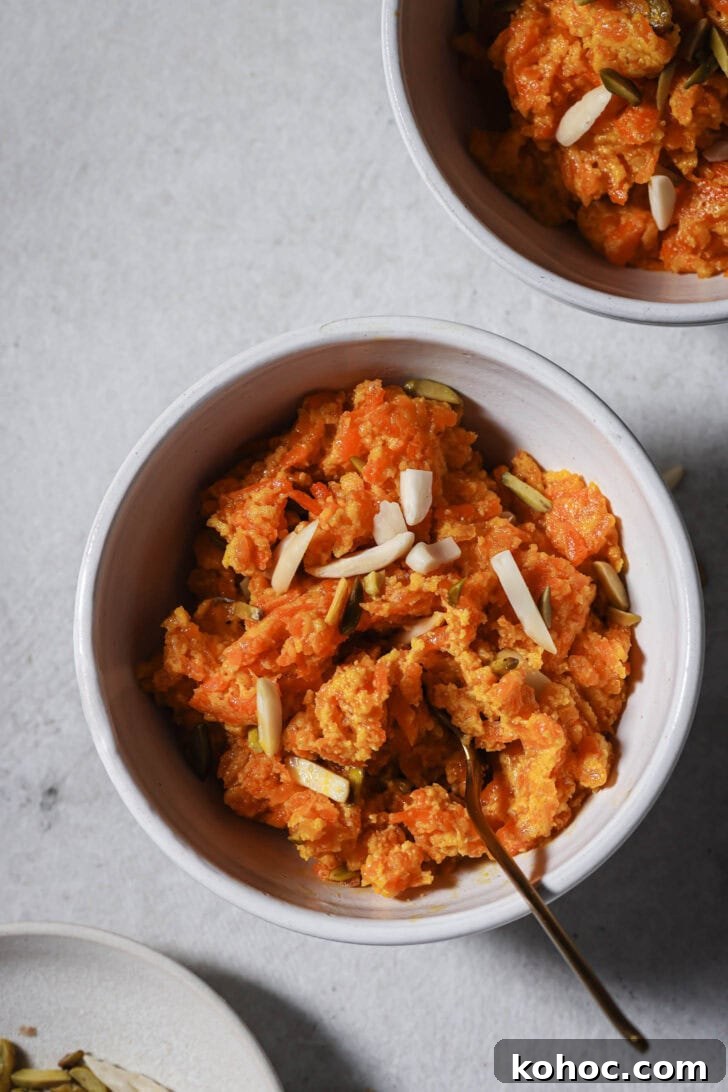
The Key to a Great Carrot Halwa
The most important technique for an outstanding Carrot Halwa is bhunai — the extended sautéing at the end. It’s a little tedious but essential: it deepens caramelized flavor, improves texture, and transforms a good halwa into a memorable one. You can be flexible with milk, cream, and other proportions, but don’t skimp on the final sautéing stage.
Note: There’s an Instant Pot version of this dish, but the stovetop method is preferable when you need the long, slow sauté that builds flavor. The stovetop approach below is similar to the IP version but produces larger quantities and a more traditional finish.
An Easier Carrot Halwa
Traditional Gajar Ka Halwa simmers milk until it reduces into milk solids that marry with shredded carrots. To shorten that reduction time while keeping richness, this recipe uses a combination of whole milk, heavy cream, and dry milk powder, with optional khoya for extra depth. It still requires patience—expect about an hour of total cooking and active finishing time—but it’s less time-consuming than the classic slow-reduction method.
Ingredients
Eight simple ingredients make this halwa:
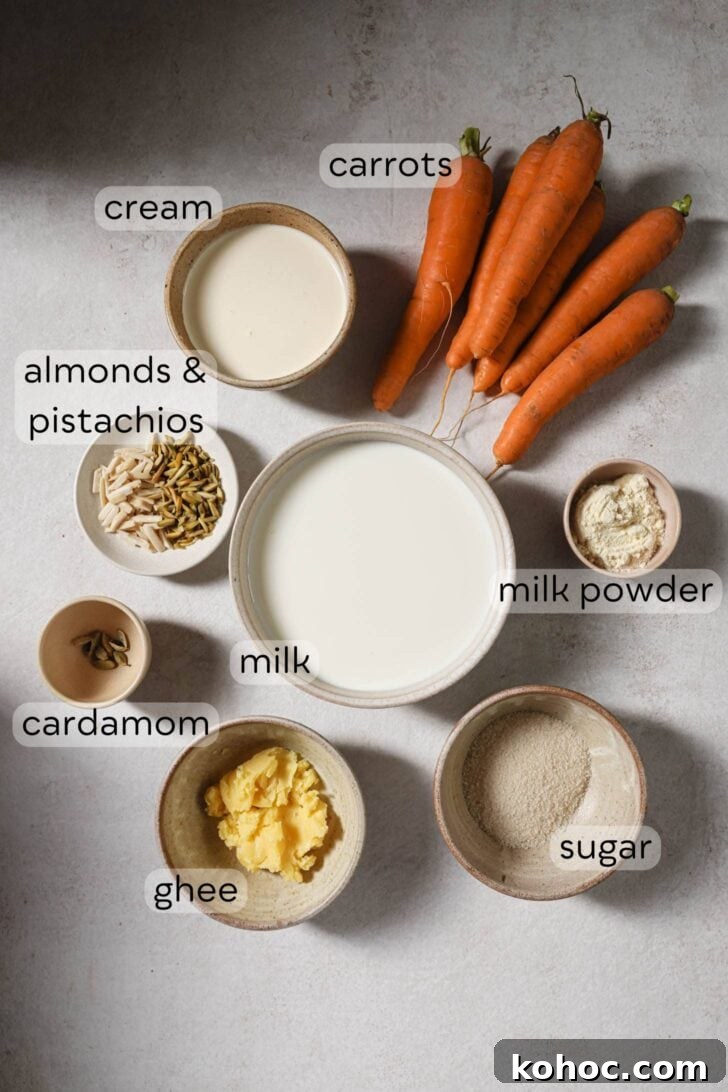
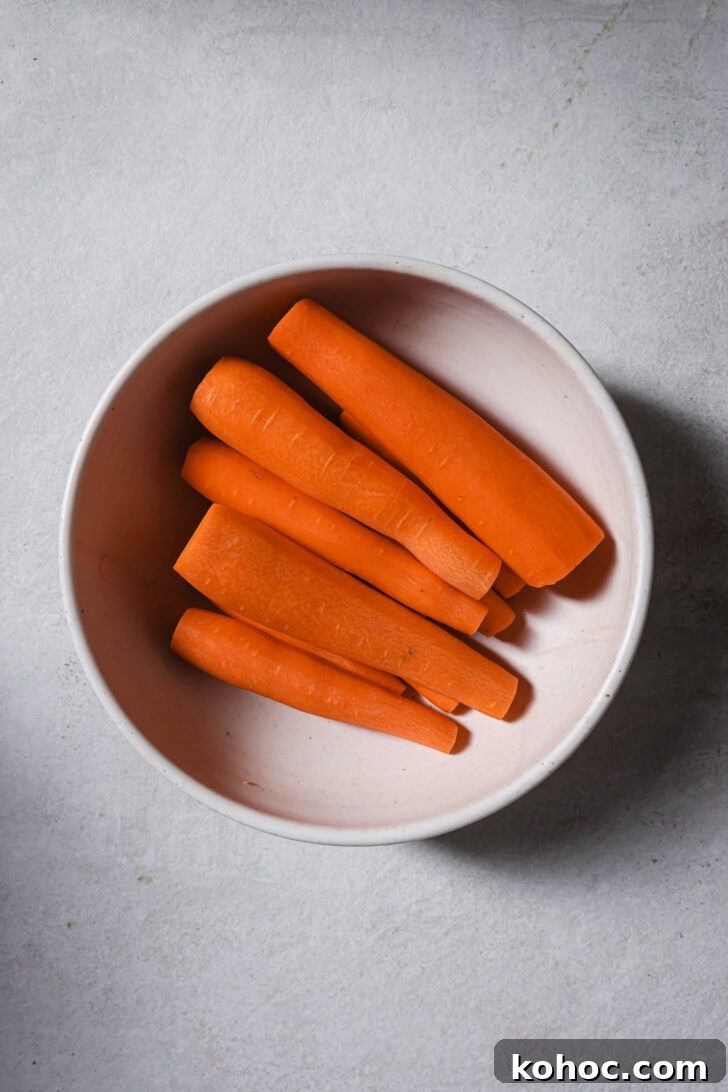
- Carrots: Use whole carrots (not baby or pre-shredded) for the best flavor and texture. Organic carrots are recommended.
- Ghee: A generous amount adds the characteristic aroma and mouthfeel.
- Green cardamom pods: Lightly cracked to release aroma. For a stronger note, grind the seeds and add them at the end.
- Whole milk + heavy whipping cream: Milk helps soften the carrots and contributes milky flavor; cream increases richness. Half-and-half can substitute for cream if needed.
- Raw cane sugar: Light brown or turbinado sugar adds depth and caramel notes. White sugar yields a flatter flavor.
- Dry milk powder: Adds body and milky flavor. Whole milk powder is ideal, but nonfat works fine. Omit if unavailable.
- Nuts: Slivered blanched almonds and chopped pistachios for garnish. Omit for nut-free preferences.
- Khoya (mawa) (optional): Adds rich, crumbly milk solids for a restaurant-style finish. Use sparingly; it’s optional and not necessary for a great halwa.
Dairy-free option: Replace ghee with neutral oil, use plant-based milk and vegan heavy cream (or extra-creamy oat milk). This yields a dairy-free version with similar texture.
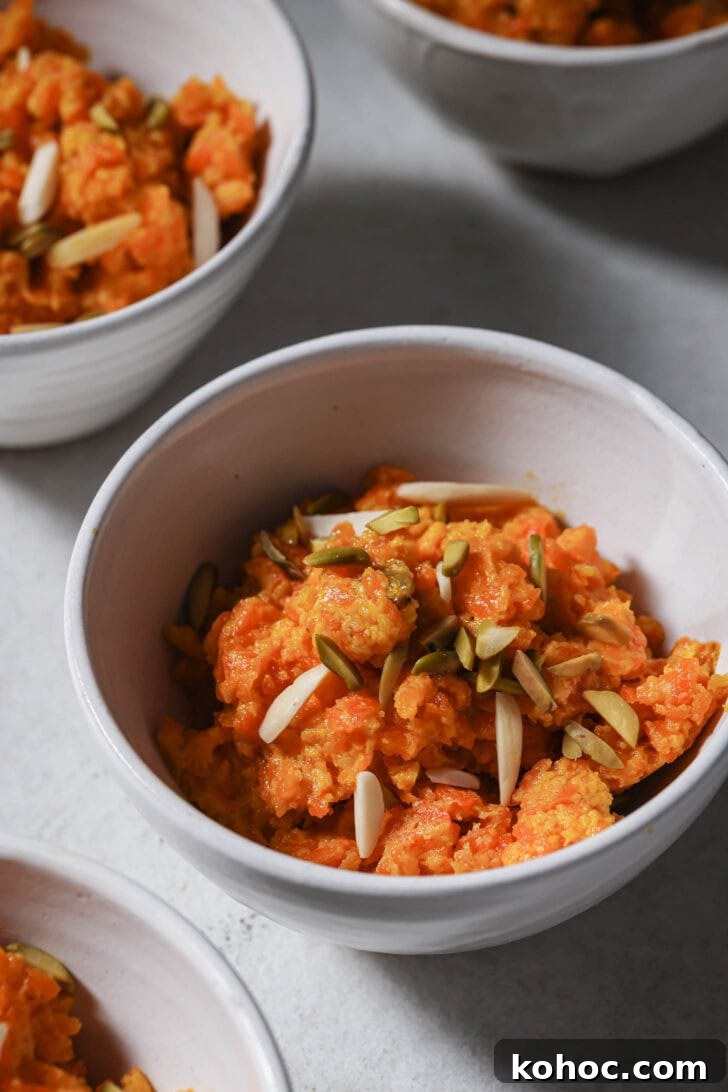
How to make Carrot Halwa
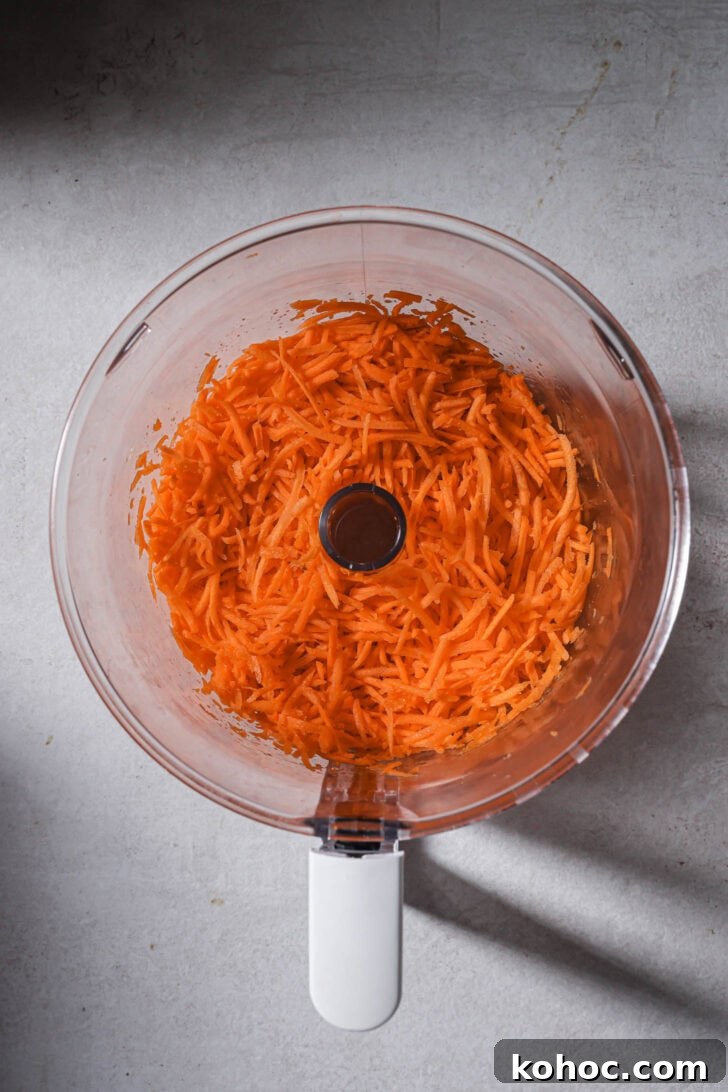
1 – Shred the Carrots
- Use a food processor shredder attachment or a hand grater. Medium-thickness shreds hold texture well; very fine shredding will create a softer, more uniform halwa.
- Shredding preserves structure so small strands remain distinct in the finished dish; if you prefer a mushier texture, finely chop instead.

2 – Sauté the Carrots
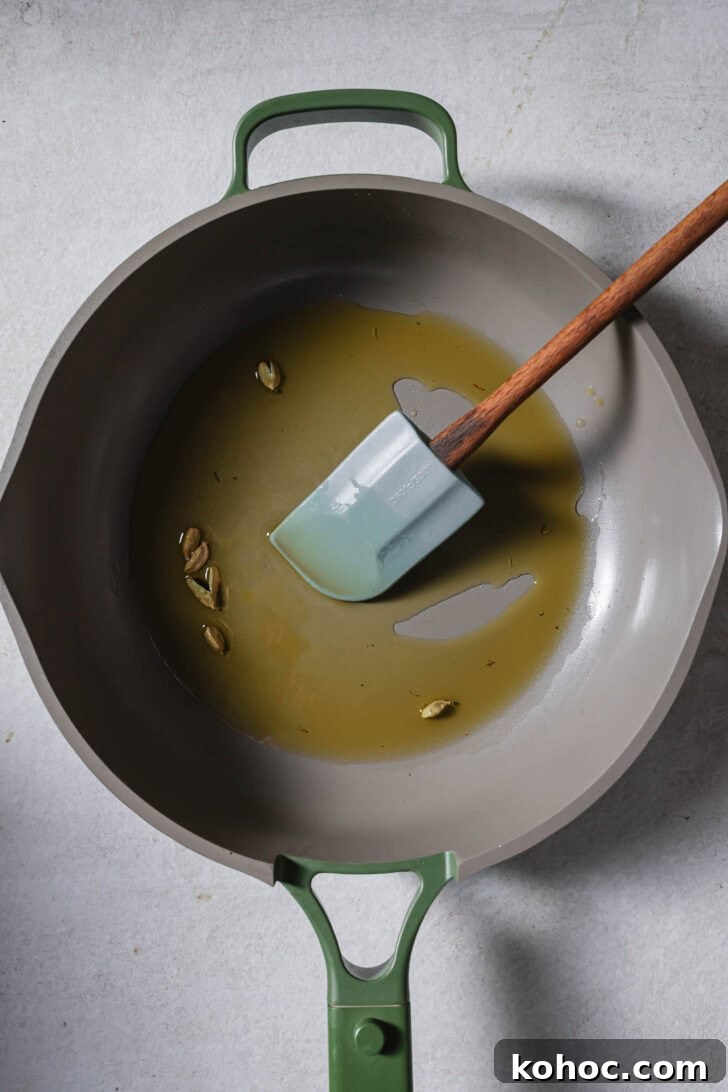
- Use a heavy-bottomed pan or nonstick Dutch oven to avoid scorching. Heat most of the ghee, add the cardamom pods, and sauté briefly until aromatic. Add shredded carrots and sauté until they soften and reduce slightly—when a shred breaks easily between your fingers, they’re ready for milk.
3 – Simmer Milk + Cream with Carrots
- Add whole milk and heavy cream, bring to a boil, then reduce to a simmer. Cook, covered or partially covered, stirring occasionally. As the liquid reduces the carrots will soften further and the mixture will thicken. Look for ghee starting to separate and the halwa beginning to cling to the pan—signs you’re nearing the next stage.
Covering tip: Cooking covered helps the carrots soften without the liquid evaporating too quickly. Uncovered speeds evaporation but risks drying the mixture before the carrots are tender; covering is generally preferable.
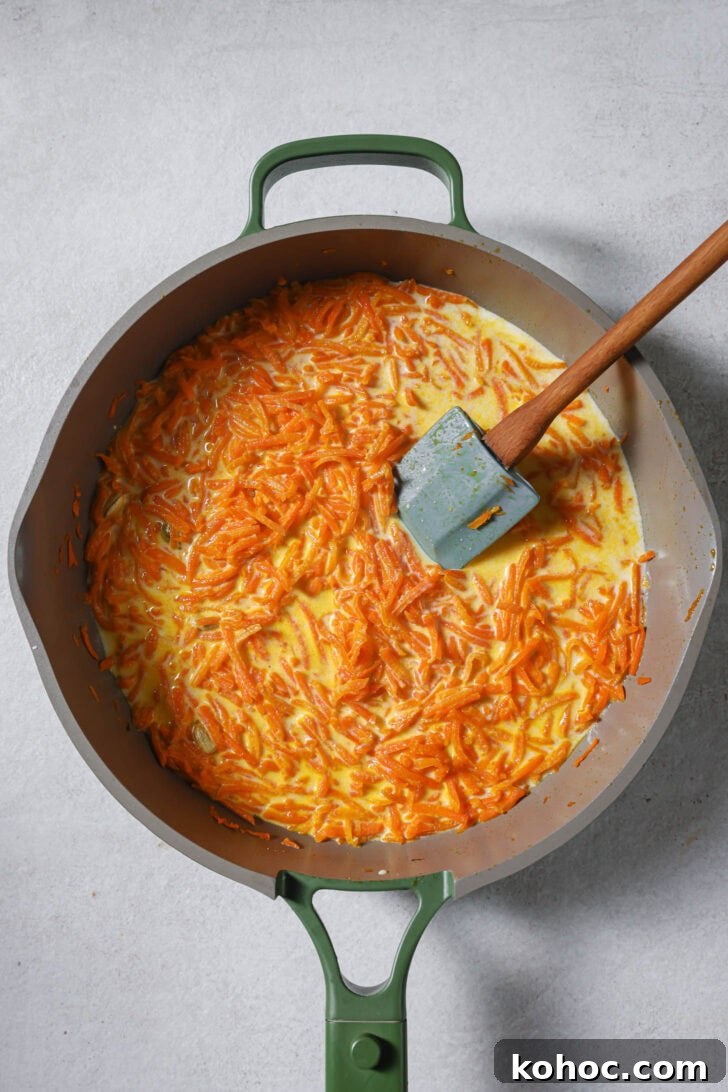
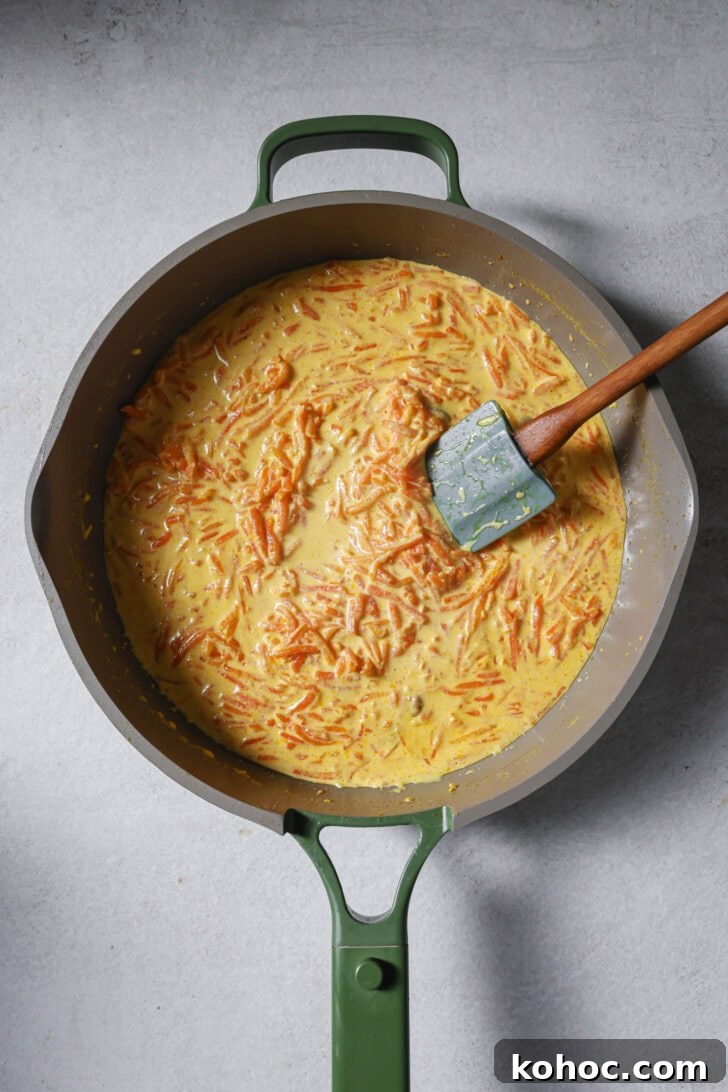
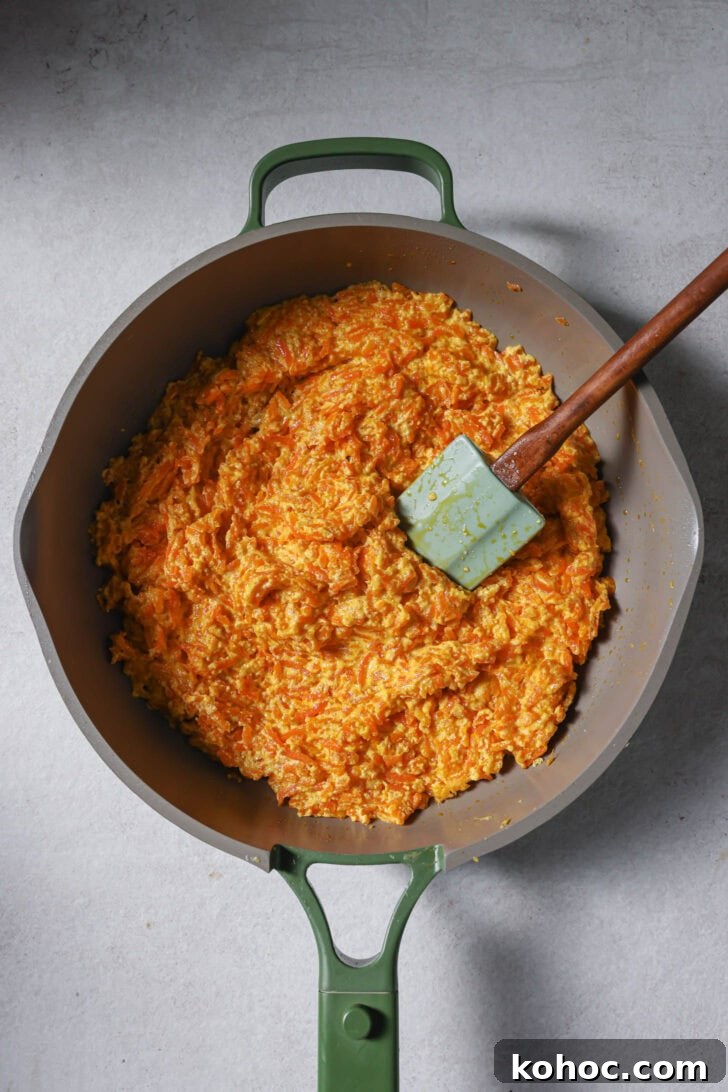
4 – Add Sugar and Sauté
- Raise the heat and add sugar, stirring constantly to dissolve. Once sugar melts it will thin the mixture initially, then the halwa will thicken again as moisture evaporates. Stir frequently here to prevent scorching—sugared halwa can burn quickly.
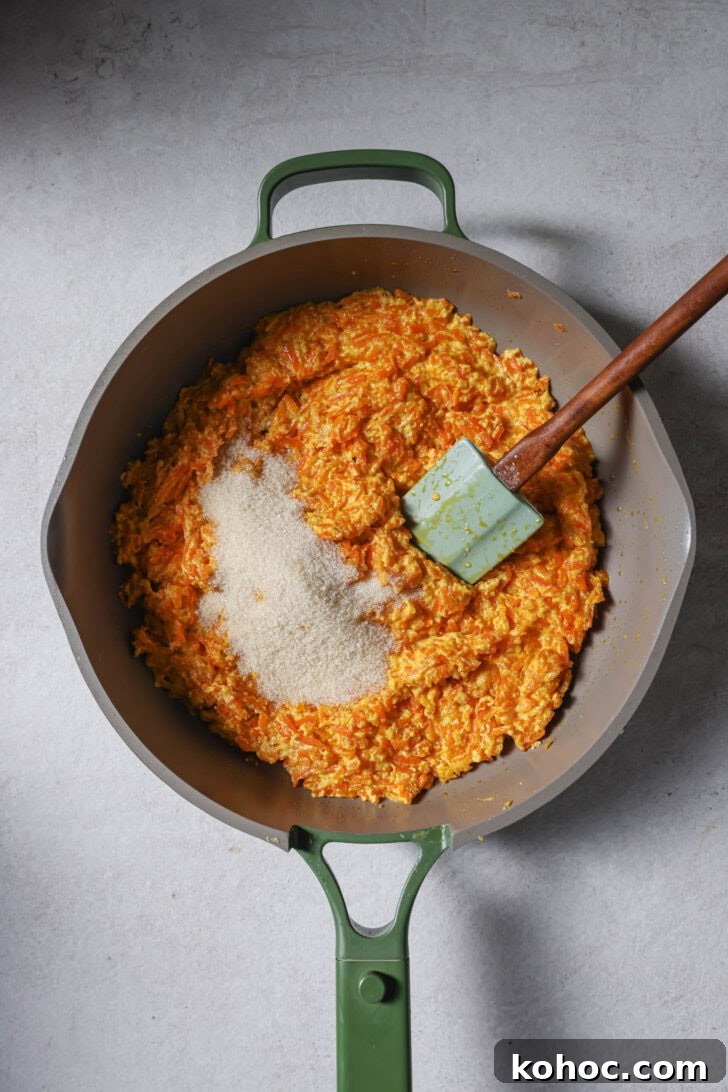
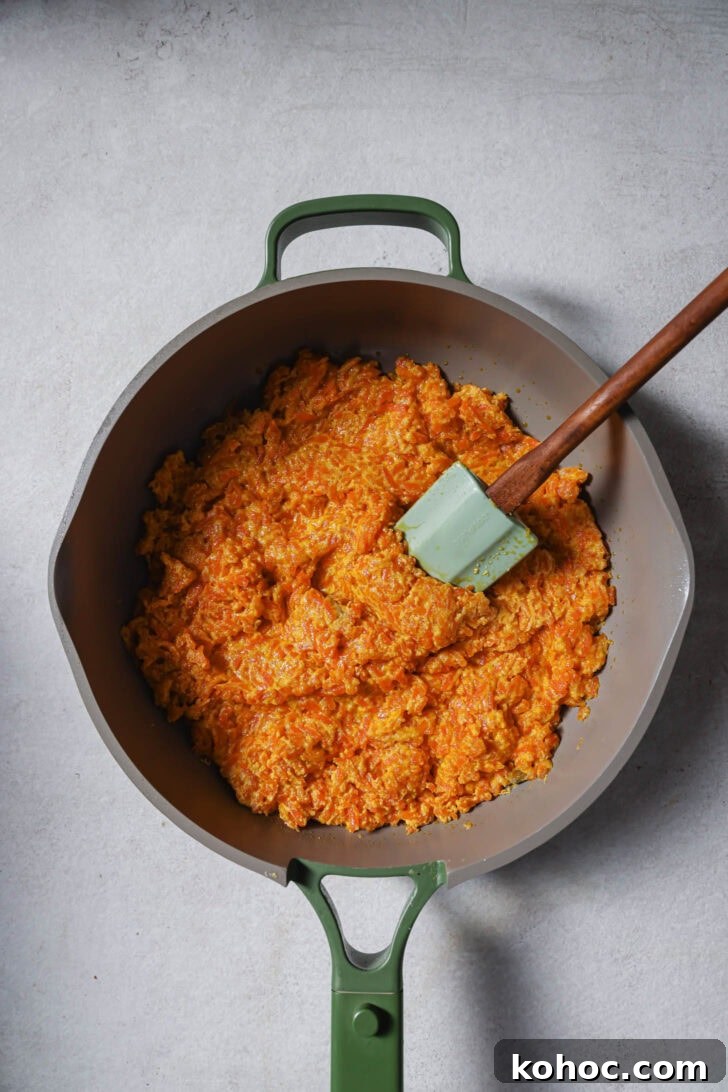
5 – Add Milk Powder + Ghee
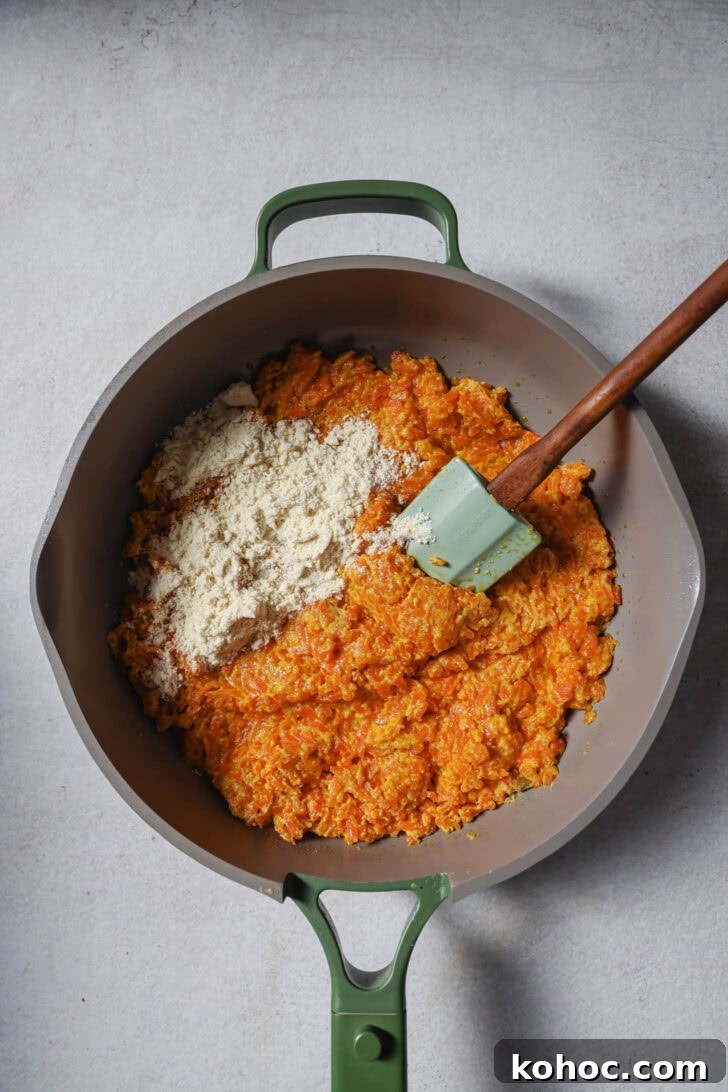
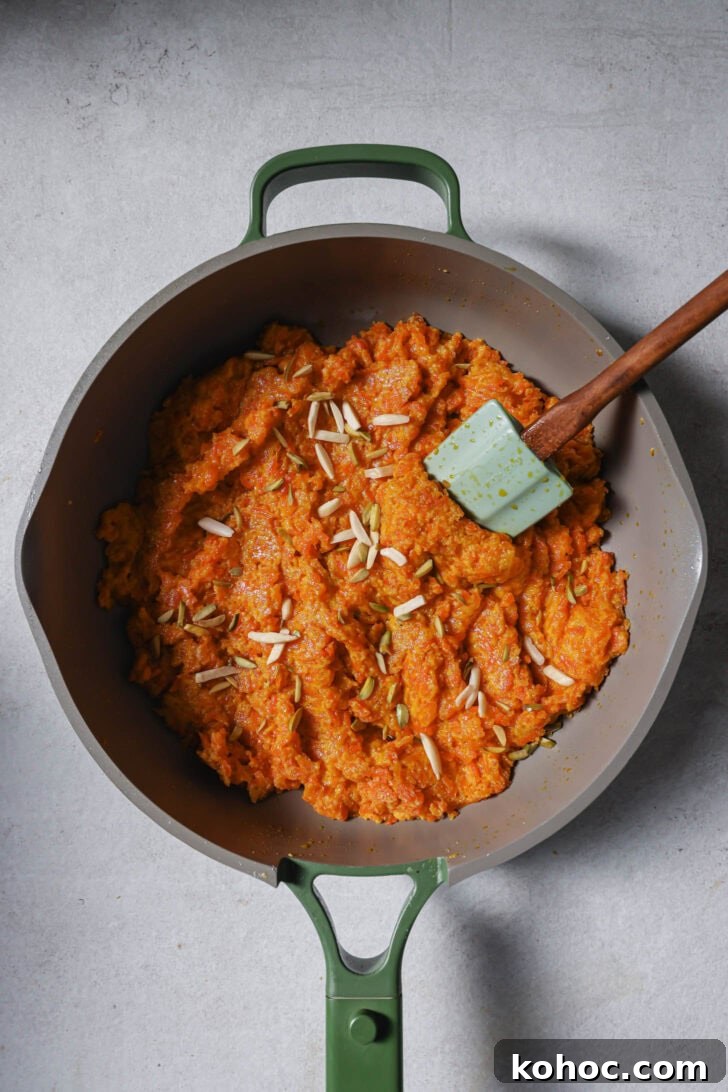
- Sprinkle dry milk powder evenly over the halwa to avoid clumping. Add the remaining ghee and the khoya if using, then continue sautéing (bhunai) for 5–10 minutes. This step deepens color and caramelized flavor—watch closely so the carrots don’t begin to crisp.
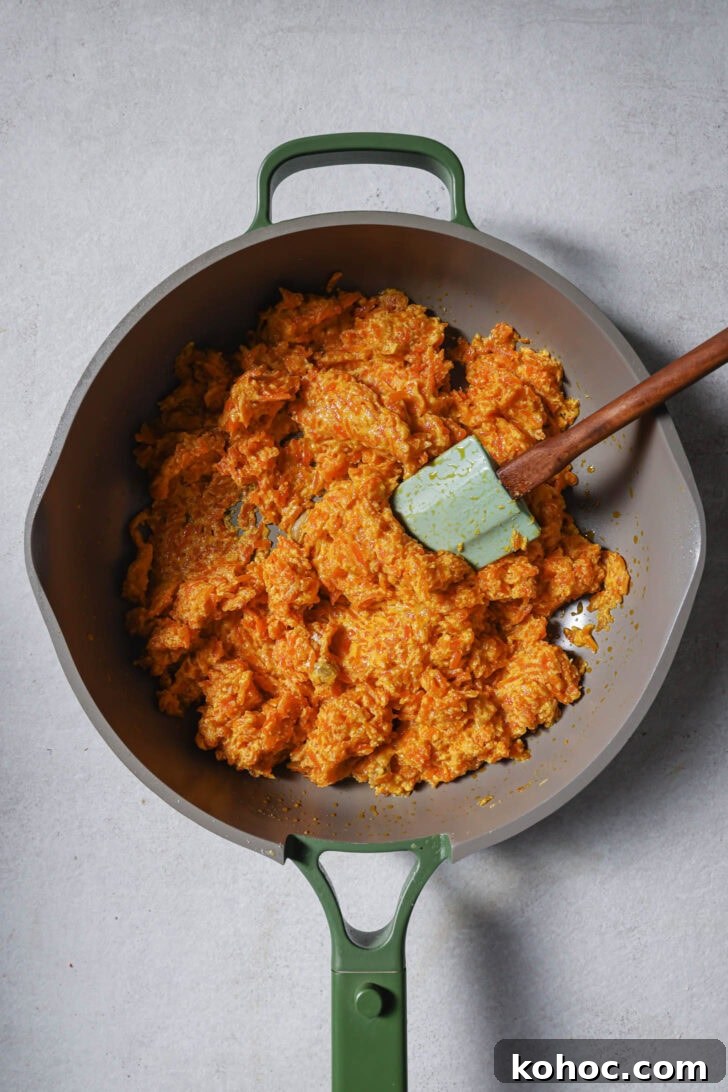
- When ghee separates noticeably and the halwa turns a deep orange color, remove from heat. If it seems dry or no ghee separates, add a little more ghee to finish.
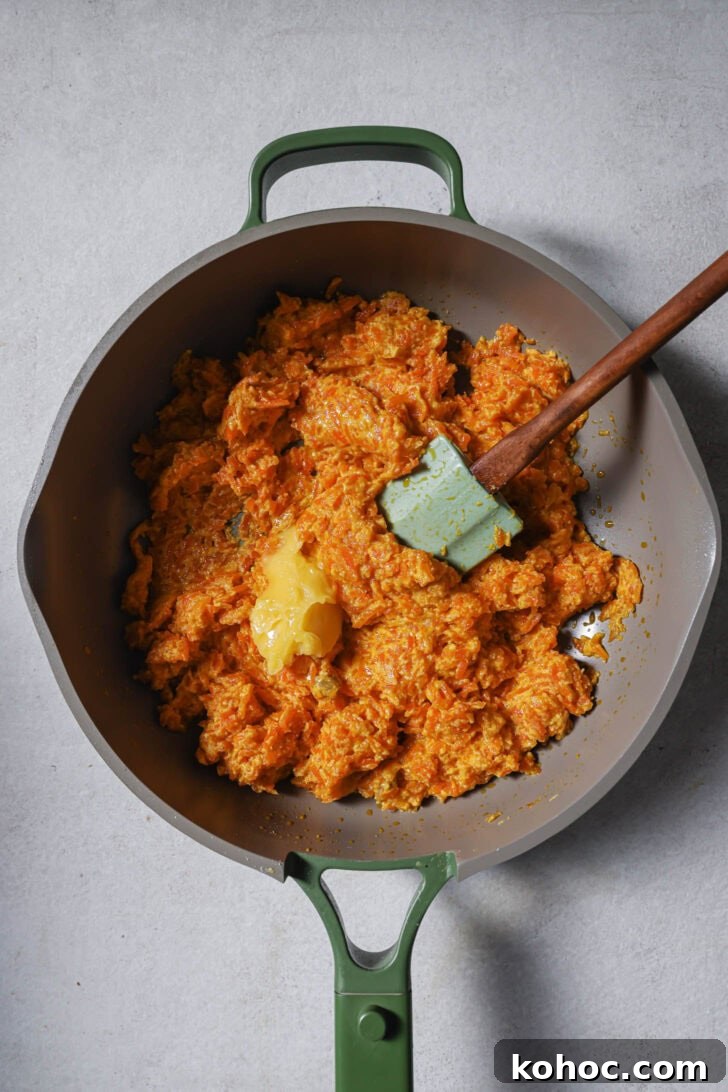
6 – Garnish and Serve Hot
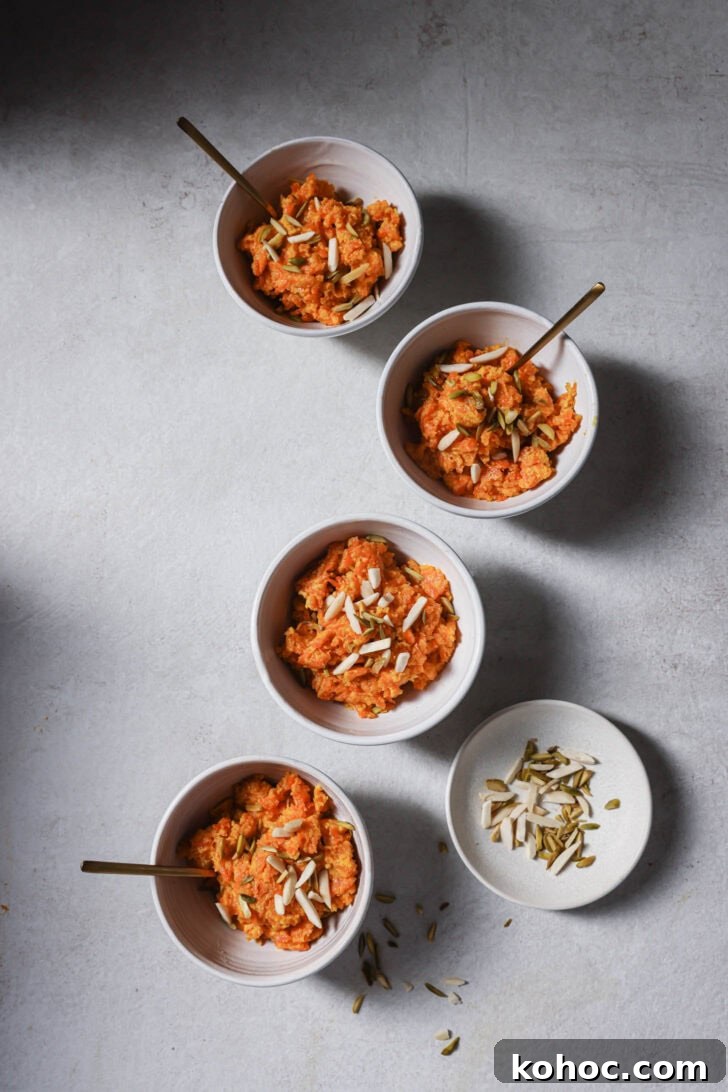
- Don’t over-bhunai—the carrots should stay soft, not crisp. Turn off the heat, garnish with almonds, pistachios, and extra khoya if desired, and keep covered until serving. Carrot Halwa often tastes even better the next day once flavors meld.
How to freeze and Reheat Carrot Halwa
Carrot Halwa freezes well. Pack cooled halwa in an airtight container and freeze up to two months. To reheat, thaw in the fridge, then warm in a pan over medium heat, adding a little ghee to refresh texture and flavor. Stir until heated through.
How to Double or Triple the Recipe
When scaling up, follow these adjustments:
- Use the largest heavy-bottomed pot you have and sauté longer at each stage.
- Reduce liquids proportionally to speed reduction (for double, try 3 cups milk instead of 4, and 1 cup cream instead of 1.5 cups).
- For very large batches, start the carrot sauté covered for 5–10 minutes to help them soften before longer finishing.
- Cut back slightly on ghee when multiplying quantities, as excess can remain after cooking.
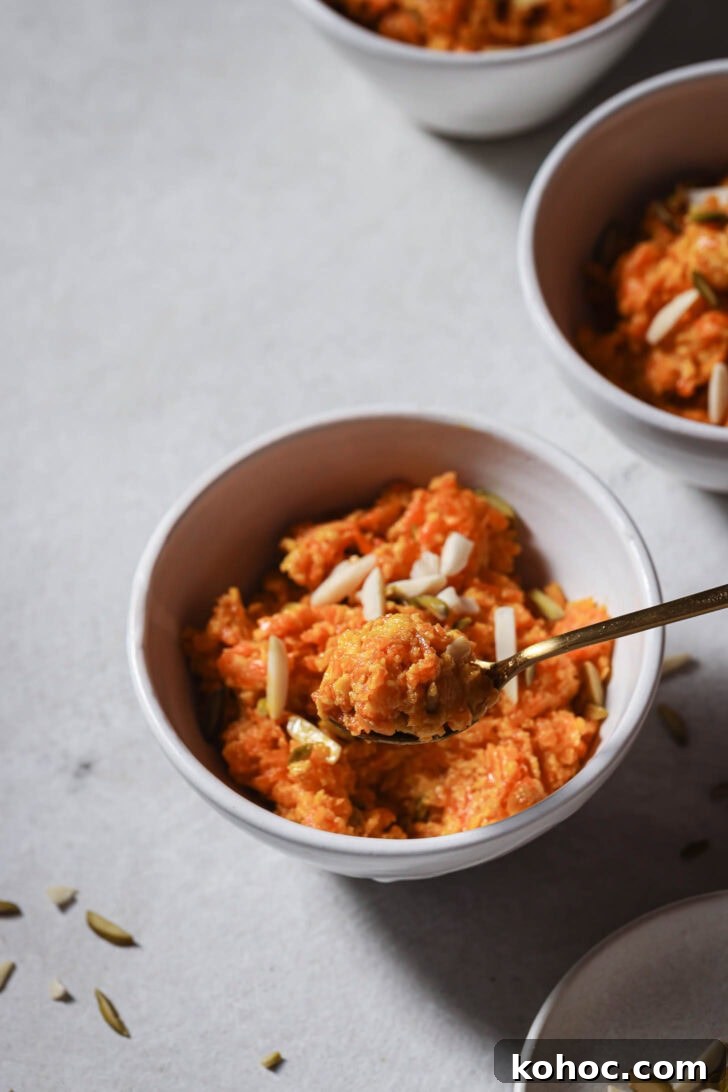
Tried this? If you make the recipe, consider leaving a comment with your results or a photo. I enjoy seeing your versions and hearing how you adapted it for your kitchen.

Carrot Halwa (Gajar Ka Halwa) – Classic but easier!
Ingredients
- 1.5 lb (680 g) organic carrots , (weighed after removing tops & ends), tops removed and peeled – this is 3 small bunches for me
- 1/4 cup ghee, divided
- 6 green cardamom pods, a few cracked open
- 2 cups whole milk
- 3/4 cup heavy whipping cream
- 1/4 cup + 3 tbsp (~87 g) raw cane sugar, more to taste – Note 1
- 2 tbsp whole or nonfat dry milk powder
- 3/4 cup (80 g) shredded/crumbled khoya (mawa), optional, plus more for garnish – Note 2
- 1-2 tsp blanched slivered almonds, for garnish
- 1 tsp slivered/chopped pistachios, for garnish
Equipment
-
shredder
Instructions
-
Grate the carrots using a shredder attachment or a hand grater. Use a medium shred for best texture; if needed, work in batches.
-
Heat 3 tbsp ghee in a large, deep nonstick pan or Dutch oven over medium-high heat. Add cracked cardamom and sauté briefly until aromatic. Add shredded carrots and sauté about 10 minutes, stirring occasionally, until color deepens and they reduce slightly. Add whole milk and heavy cream, stir, and cover to bring to a rolling boil.
-
Lower heat to medium and simmer, uncovered or partially covered, stirring occasionally for about 30 minutes. The mixture will thicken, the carrots will soften further, and ghee will start to separate.
-
Reduce heat to low-medium and continue cooking, stirring more often as it thickens, for another 10–15 minutes. Scrape any bits that stick to the bottom so the halwa becomes homogeneous and creamy.
-
Increase heat to medium-high, add the sugar, and sauté while stirring almost constantly for about 7 minutes. Taste and adjust sweetness; add an extra tablespoon if you prefer it sweeter or if using khoya.
-
Sprinkle dry milk powder evenly to avoid clumps. Add the remaining 1 tbsp ghee and khoya if using, and continue bhunai for another 5–10 minutes until the halwa develops deep color and ghee separates. Be careful not to overcook.
-
When the halwa reaches a deep orange color and ghee is visible, remove from heat. Garnish with almonds, pistachios, and extra khoya if desired. Keep covered until serving.
Notes
Note 2: Khoya is often available at Indo-Pak grocery stores (freezer section). It adds richness but is optional—reduce to 1/2 cup for a lighter halwa.
Scaling tips:
- Use the largest pot available.
- Sauté longer at each step when increasing quantity.
- Use slightly less liquid when doubling/tripling (e.g., 3 cups milk and 1 cup cream for 2x).
- Reduce ghee slightly for large batches and blot excess after cooking if needed.