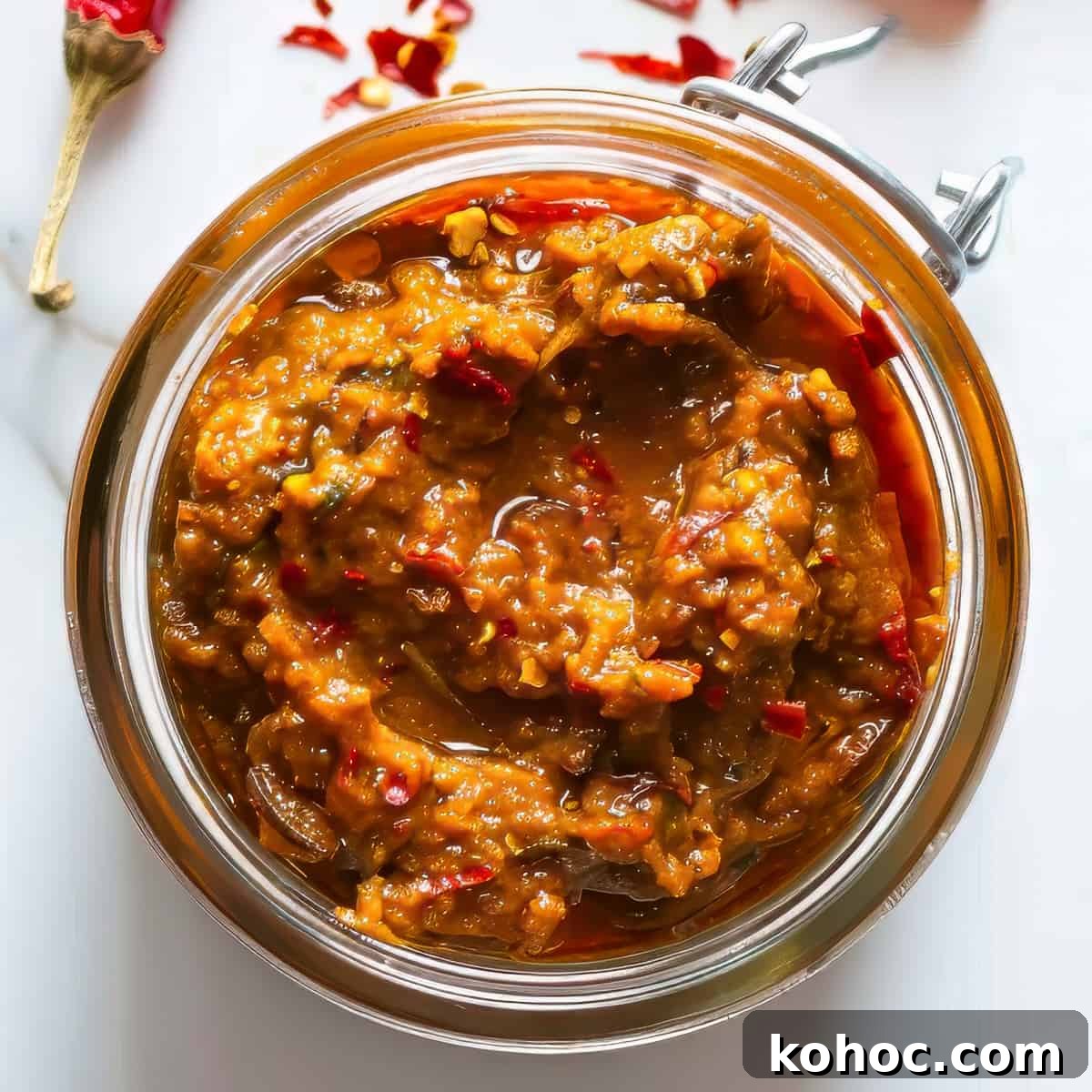
Make your own Thai red curry paste from scratch. Ready in about 15 minutes, this homemade paste delivers bright, fresh flavors and a great texture. Use it for soups, noodle bowls, or to marinate chicken, beef, pork, or tofu.
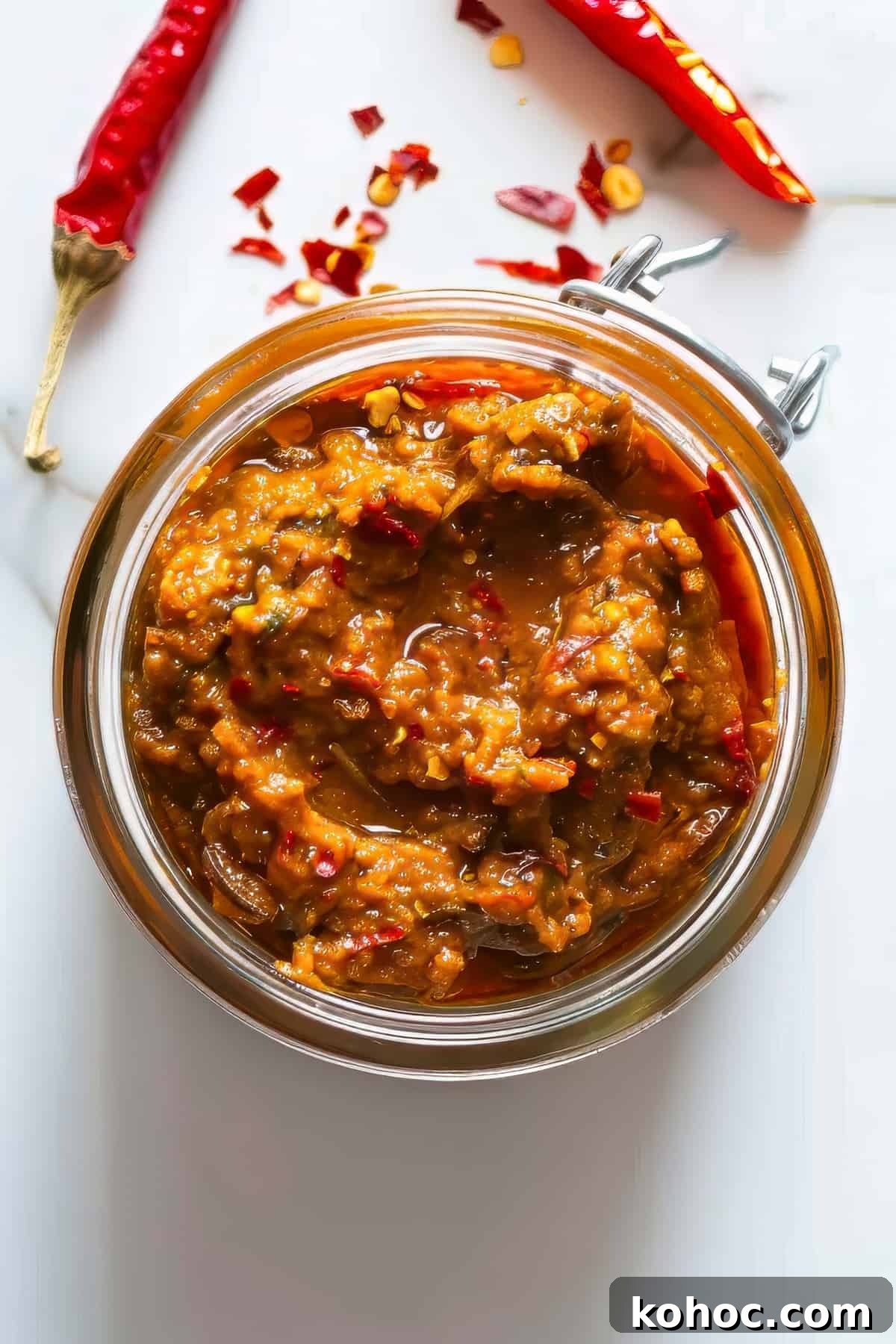
This version skips shrimp paste, making it more accessible for those avoiding seafood or who can’t find dried shrimp. It isn’t strictly traditional, but it’s rooted in classic Thai flavors and is easy to adapt to dietary needs.
⭐️ Why this recipe works
- Time-saving: A food processor replaces the mortar and pestle so you can make the paste quickly without losing flavor.
- Accessible: No shrimp paste, so it’s suitable for vegetarians, vegans (use soy sauce or tamari instead of fish sauce), and people with seafood allergies.
- Authentic flavors: Fresh aromatics and toasted spices keep the paste true to Thai taste while using modern convenience.
- Adjustable heat: Easily change the spice level by adding or removing chilies.
- Long shelf life: Keeps well in the fridge or freezer so you always have paste on hand.
- Dietary options: Fish sauce, soy sauce, or tamari lets you adapt to vegetarian or gluten-free needs.
🧾 Ingredients overview
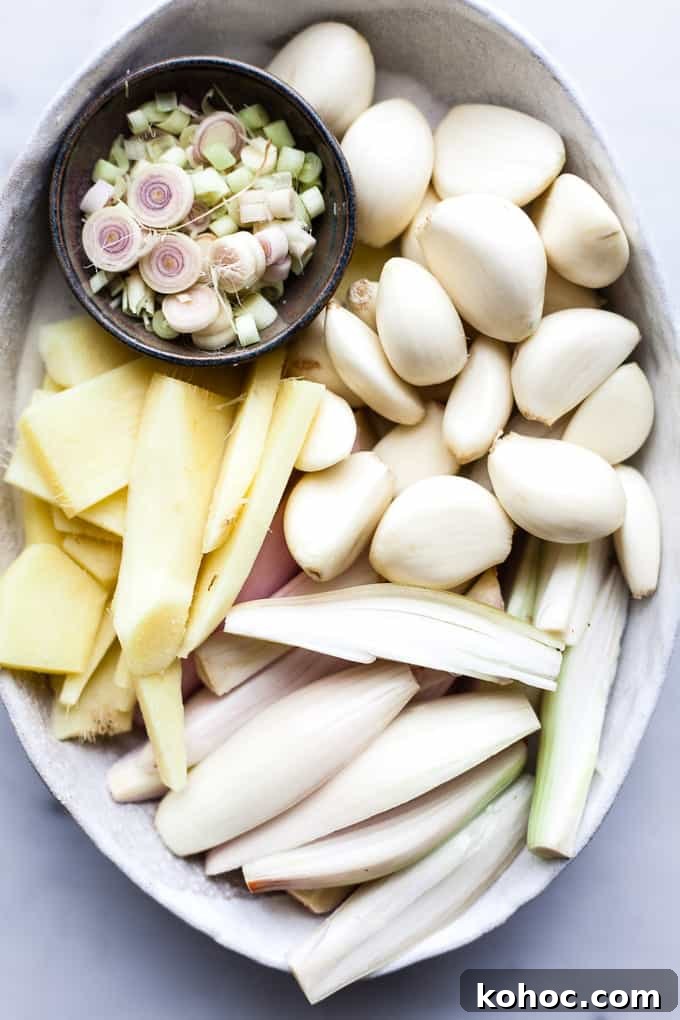
- Garlic, lemongrass, shallots, and ginger: the aromatic base that gives depth and warmth.
- Dried red chilies and a red serrano pepper: provide the characteristic heat; adjust quantity to taste.
- Cumin and coriander seeds: add earthiness and subtle citrus notes.
- Chili powder: boosts color and heat.
- Fish sauce, soy sauce, or tamari: adds savory saltiness; choose based on dietary needs.
- Palm sugar: balances heat with sweetness.
- Tomato paste: gives body and a touch of tang.
- Kaffir lime leaves: deliver signature Thai citrus aroma.
- Water (if needed): to reach the right consistency.
See the recipe card below for exact amounts and full ingredient list.
👩🏻🍳 Here’s how to make it
Homemade Thai red curry paste step-by-step
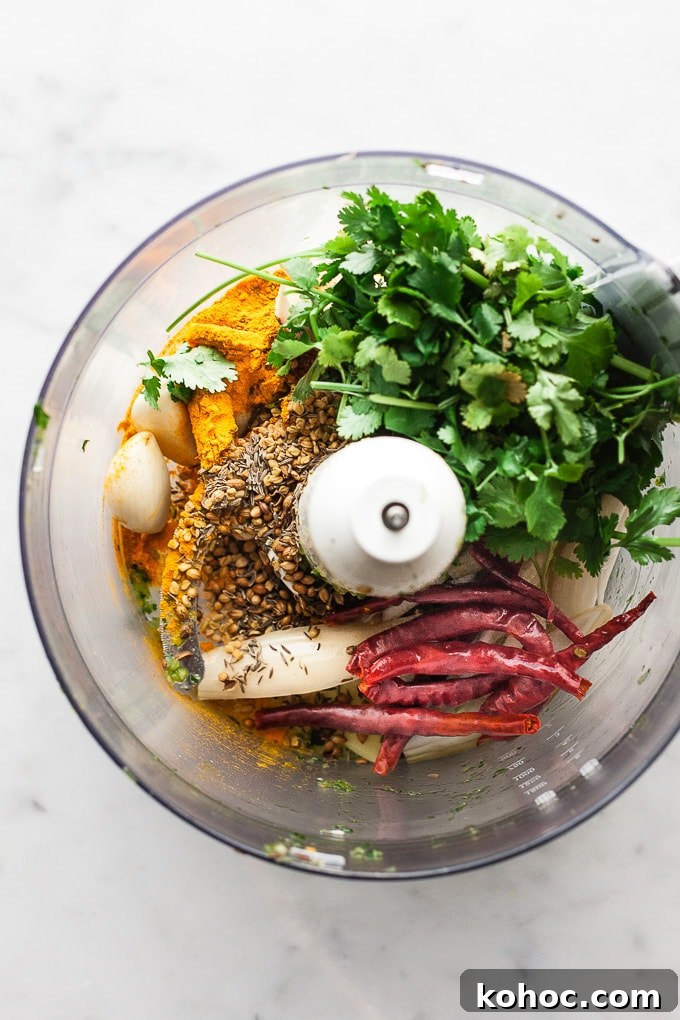
- Prepare the aromatics: Peel and roughly chop garlic, shallots, and ginger. Trim and slice the lemongrass (remove tough outer layers). Soak dried red chilies in warm water until soft, then drain.
- Combine ingredients: In a food processor, add prepared aromatics, softened dried chilies, the red serrano (stem removed), cumin and coriander seeds, chili powder, fish sauce (or soy/tamari), palm sugar, tomato paste, and torn kaffir lime leaves.
- Pulse to a paste: Pulse until a chunky, cohesive paste forms. If the mixture is too dry, add water one tablespoon at a time until you reach the desired texture.
- Season to taste: Adjust heat, sweetness, and saltiness—add more chilies, sugar, or fish/soy sauce as needed.
💡 Chef’s Guide: Expert Tips
From years in professional kitchens and culinary training, these tips will help you get the best result.
- Prep well: Finely chop ingredients before blending so the processor works evenly and creates a smoother paste.
- Control the heat: Start with fewer chilies and add more after tasting; it’s easy to make it hotter but impossible to remove heat once added.
- Use fresh aromatics: Fresh lemongrass and ginger make a big difference in brightness and aroma.
🍯 Storing curry paste
- Fridge: Keep in an airtight container for up to two weeks. Pour a thin layer of oil on top to preserve freshness.
- Freezer: Freeze flattened in a ziplock or reusable silicone bag for up to three months (or longer if well sealed). Break off portions as needed.
- Thawing: Thaw overnight in the fridge or briefly in the microwave; you can add frozen paste directly to a hot pan when cooking if you’re in a hurry.
❓Thai Red Curry FAQs
I recommend using fresh ingredients. Premade pastes lose brightness and the texture is not the same as fresh aromatics.
Start around eight dried chilies for a hot paste and increase if you want more heat. Adjust gradually.
In the fridge it will keep for up to two weeks. I suggest freezing most of the batch; properly frozen paste can last many months with only minor loss of intensity.
Yes. A mortar and pestle is the traditional method and can produce a wonderfully textured paste, but it takes more time and elbow grease.
Brown sugar or maple syrup work in a pinch, though palm sugar has a distinctive caramel-like flavor closest to traditional recipes.
Make Thai dishes with your homemade paste: use it for curries, noodle bowls, soups, or as a marinade to boost flavor quickly.
If you make this recipe, please leave a rating and share a photo on social media—I love seeing your results in the kitchen!
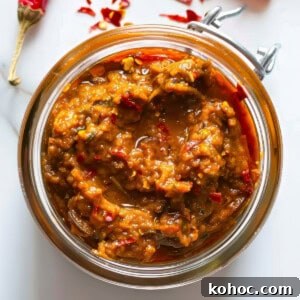
Easy Homemade Red Curry Paste
10 minutes
1 minute
10 servings
Ingredients
- 4 cloves garlic, peeled
- 2 stalks lemongrass, tough outer layers removed and sliced
- 2 shallots, peeled and roughly chopped
- 4-inch piece ginger, peeled and roughly chopped
- 8 dried red chilies, soaked until softened and drained
- 1 red serrano pepper, stem removed
- 1 teaspoon cumin seeds
- 1 teaspoon coriander seeds
- 2 teaspoons chili powder
- 2 tablespoons fish sauce (or soy sauce/tamari to substitute)
- 2 tablespoons palm sugar (or brown sugar)
- 2 tablespoons tomato paste
- 2 kaffir lime leaves, torn
- 2 tablespoons water, if needed to reach the desired consistency
Instructions
- Prep your ingredients: Peel and chop aromatics, soak chilies until soft and drain.
- Combine in a food processor: Add all ingredients to the bowl of a food processor.
- Blend: Pulse until a chunky paste forms. Add water, one tablespoon at a time, if needed to help blending.
- Store: Transfer to an airtight container for the fridge or flatten and freeze in a bag for easy portioning.
Notes
- Soaking chilies: Softening chilies releases flavor and makes them easier to blend—drain thoroughly to avoid thinning the paste.
- Adjust heat: Add or reduce chilies and the serrano to match your spice tolerance.
- Substitutions: Use soy sauce for vegetarian and tamari for gluten-free options.
- Lemongrass: Use the tender inner stalks for more fragrance; discard the tough outer layers.
- Kaffir lime leaves: Fresh is best, but dried can be used if necessary.
- Freezing tip: Freeze flat in bags so you can break off just what you need.
Nutrition
Carbohydrates: 8 g |
Protein: 1 g |
Fat: 1 g |
Sodium: 324 mg

Meet the Chef!
Hi, I’m Debs. I’m Cordon Bleu trained and a recipe developer. I focus on helping you get delicious dinners on the table fast with clear, fool-proof recipes and practical tips from a decade in professional kitchens.
Learn more about me →