Shortly after my daughter was diagnosed with celiac disease, we met with a pediatric nutritionist. As newcomers to the gluten-free world, we wanted practical guidance on how to follow the diet safely and support her overall health. The nutritionist explained that a gluten-free diet would improve many symptoms, but it can also increase the risk of certain nutrient gaps because many gluten-containing processed foods are fortified with vitamins and minerals. She recommended focusing on a variety of whole foods to replace those nutrients.
I left that first appointment with a list of key vitamins and minerals to watch and began researching natural, gluten-free food sources for each. I compiled the foods below to help others who are navigating a gluten-free, dairy-free diet—many people with celiac disease are also lactose intolerant, so the selections avoid dairy. This list highlights foods rich in nutrients commonly depleted when eliminating fortified gluten-containing products. For personalized recommendations and daily intake targets, consult your healthcare provider.
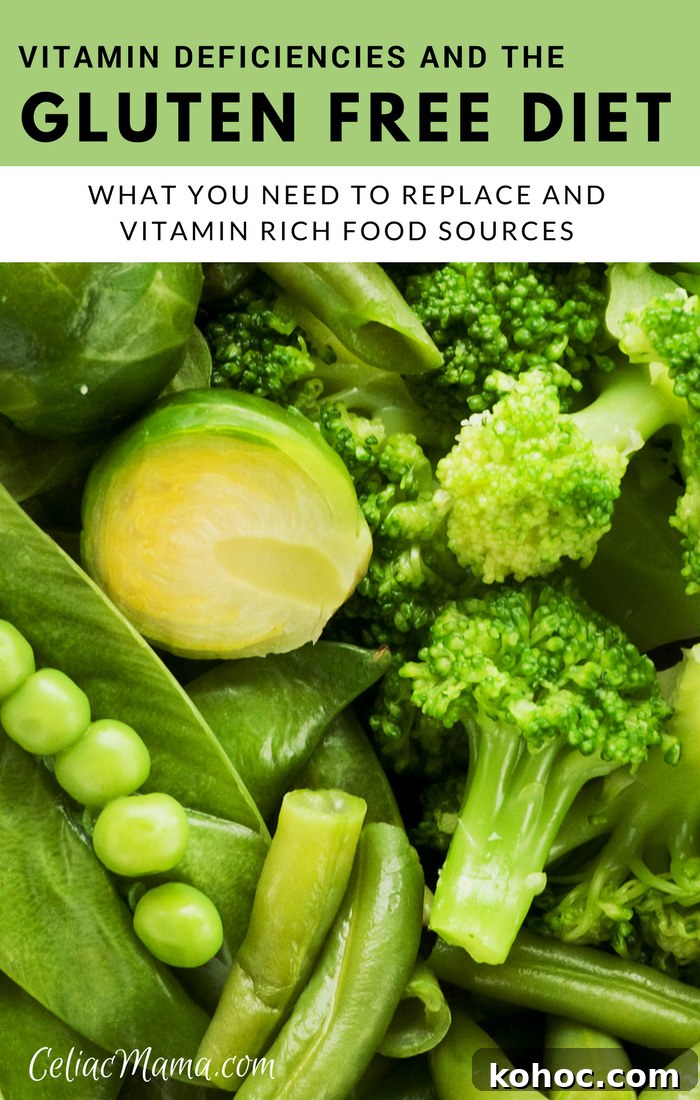
Vitamin-Rich Gluten-Free Food Sources
- Calcium: Strawberries, cooked kale, spinach, romaine lettuce, turnip greens, almonds, broccoli, watercress, bok choy, okra
- Folate (Vitamin B9): Chickpeas (garbanzo beans), lentils, pinto beans, spinach, asparagus, avocado, beets, black-eyed peas, broccoli, green peas, Brussels sprouts
- Iron: Spinach, red and white meats, soybeans, tofu, lentils, dark chocolate, black beans, pistachios, raisins
- Magnesium: Spinach, pumpkin seeds, sunflower seeds, black beans, almonds, avocado, figs, dark chocolate, banana
- Niacin (Vitamin B3): Avocado, broccoli, tuna, salmon, meats and poultry, portobello mushrooms, pumpkin seeds, peanuts, green peas, sunflower seeds
- Riboflavin (Vitamin B2): Meats, almonds, soy products, mushrooms, spinach, sun-dried tomatoes, salmon, eggs
- Thiamin (Vitamin B1): Green peas, asparagus, Brussels sprouts, sesame seeds, sunflower seeds, pistachios, black beans, tuna, lentils, lima beans, acorn squash
- Vitamin B12: Fish, meats, eggs
- Vitamin D: Salmon, tuna, shrimp, fortified orange juice, mushrooms
This list focuses on whole, naturally gluten-free foods that supply vitamins and minerals commonly missed when people replace fortified wheat-based products with unfortified gluten-free options. Including a range of vegetables, legumes, nuts, seeds, fish, and lean meats helps cover many of these nutrients. For those following a fully plant-based diet or who have difficulty meeting needs through food alone, a healthcare provider or registered dietitian can advise on appropriate supplements and testing.
To determine specific daily targets and whether supplementation is necessary, please consult your family doctor or a qualified nutrition professional. They can recommend testing, monitor levels, and tailor guidance to age, growth needs, and any additional intolerances or medical conditions.