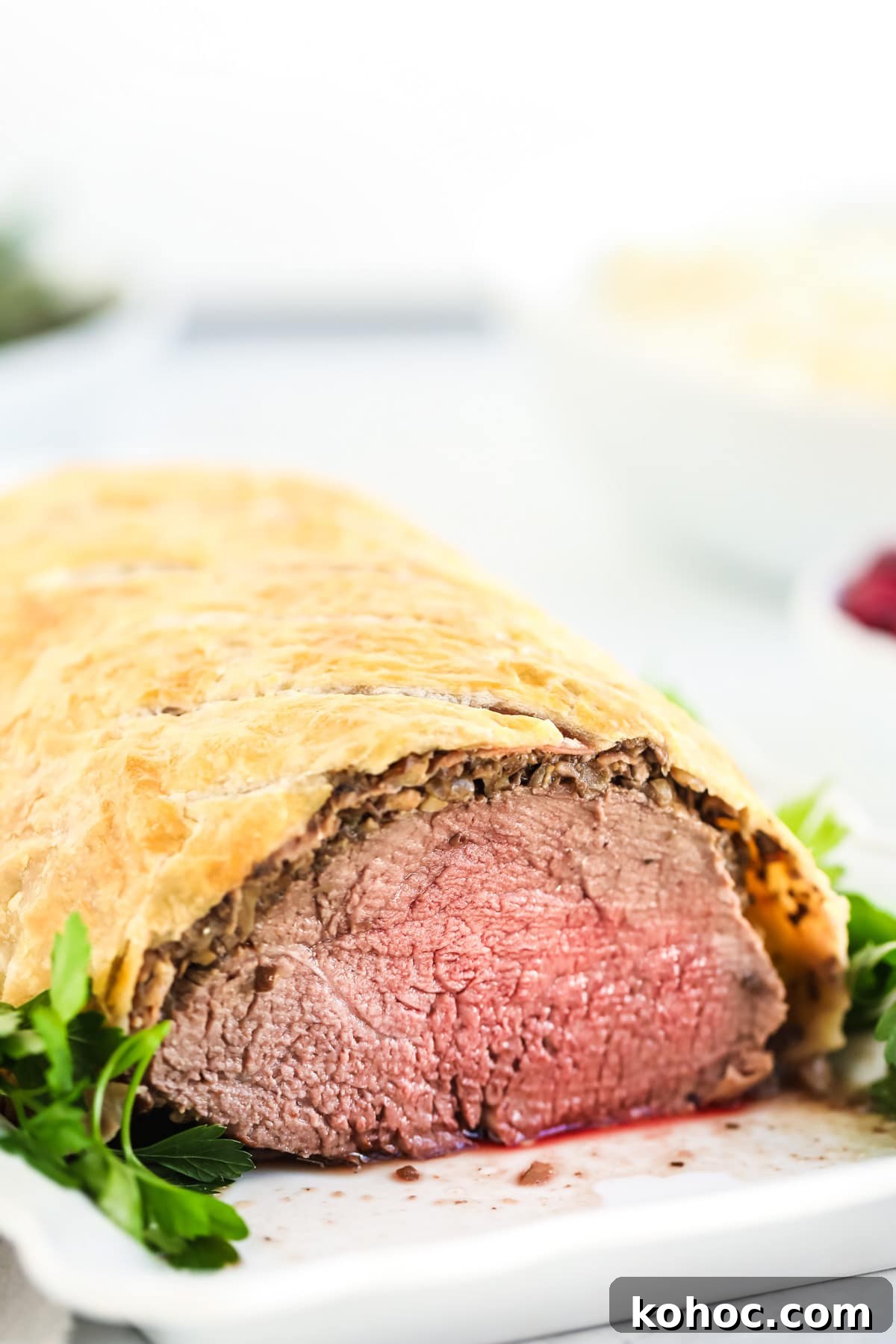
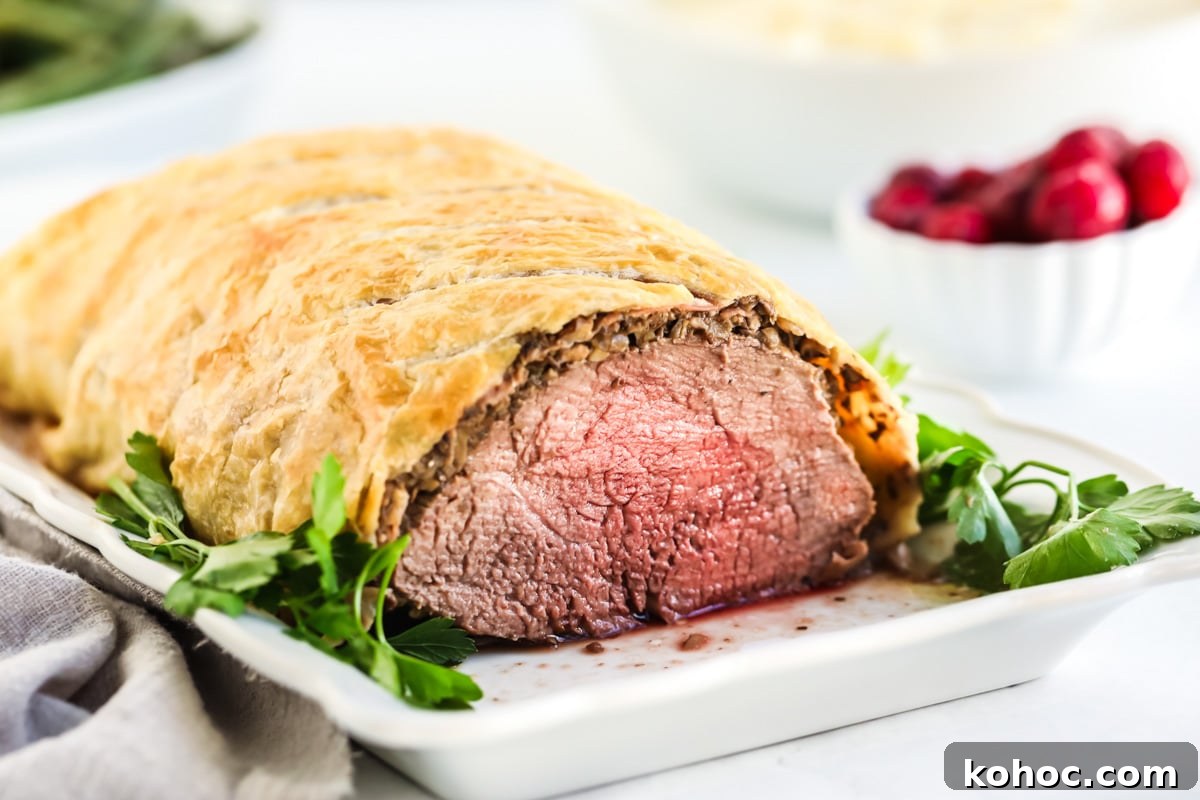
Beef Wellington: A tender beef tenderloin filet wrapped in a savory mushroom and shallot duxelles, salty prosciutto, and a flaky golden puff pastry crust.
Welcome to Homemade Holiday Inspiration. Each week of November we share recipes, decorating ideas, crafts, and homemade gift ideas to spark your holiday creativity.
If you want an impressive main course for a special dinner, Beef Wellington delivers. This version comes from my mother’s recipe box and has long been a holiday favorite — but it’s delicious any time of year.
Although it looks elegant and complex, the recipe breaks down into clear steps and is straightforward to make. Below is a practical, foolproof method to get a perfectly cooked Beef Wellington every time.
What is Beef Wellington?
Beef Wellington is a center-cut beef tenderloin coated with a flavorful duxelles — a finely chopped mixture of mushrooms, shallots (or onions), herbs and butter — then wrapped in prosciutto and encased in puff pastry. The result is tender, juicy beef surrounded by a savory mushroom layer and a crisp, golden pastry shell.
How to Make Beef Wellington
Make this recipe in three main stages: prepare the duxelles, sear and dress the tenderloin, then wrap and bake. Taking each stage step by step simplifies the process and helps ensure consistent, delicious results.
Ingredients
For the Beef:
- 2 lb beef tenderloin (center-cut)
- 2 Tablespoons extra virgin olive oil
- Salt and pepper
- 8–12 slices prosciutto (enough to overlap and wrap the roast)
- 2 Tablespoons Dijon mustard
- Flour, for rolling pastry
- 1 lb puff pastry, thawed (usually 2 sheets)
- 2 eggs, beaten (for egg wash)
For the Duxelles:
- 1½ lb white button mushrooms, finely minced
- 2 shallots (or about ½ cup onion), minced
- 1–2 teaspoons fresh rosemary, finely chopped
- 2 Tablespoons unsalted butter
- 2 Tablespoons olive oil
- Salt and pepper, to taste
How to make Duxelles
Duxelles is a finely chopped mixture of mushrooms, shallots (or onions) and herbs sautéed until concentrated and nearly dry. It adds deep, savory flavor and a moist barrier between the prosciutto and pastry.
Finely chop the mushrooms, shallots and rosemary by hand or pulse briefly in a food processor until the pieces are between a chop and a mince. Heat the olive oil and butter in a large skillet over medium heat. Add the mushroom mixture, season with salt and pepper, and cook, stirring occasionally, until the mixture is tender and most of the moisture has evaporated, about 8–10 minutes. If excess liquid remains, drain and press the mixture in a strainer or use a spoon to press out extra liquid so the duxelles is fairly dry.
Preparing the Roast
Trim and tie the tenderloin in several places with kitchen twine to maintain a consistent cylinder shape. Rub the roast with olive oil and season with salt, pepper and a little chopped rosemary if desired. Heat a heavy-bottomed skillet over medium-high heat and sear the tenderloin on all sides until well browned. Remove from heat and brush the entire roast with Dijon mustard while still warm.
On a sheet of plastic wrap, lay the prosciutto slices slightly overlapping to form a sheet large enough to wrap the roast. Spread the cooled duxelles in a thin, even layer over the prosciutto. Center the mustard-coated tenderloin on the prosciutto and use the plastic wrap to pull the prosciutto and duxelles tightly around the roast. Twist the ends of the plastic wrap to form a tight log and refrigerate for at least 30 minutes to help it hold its shape.
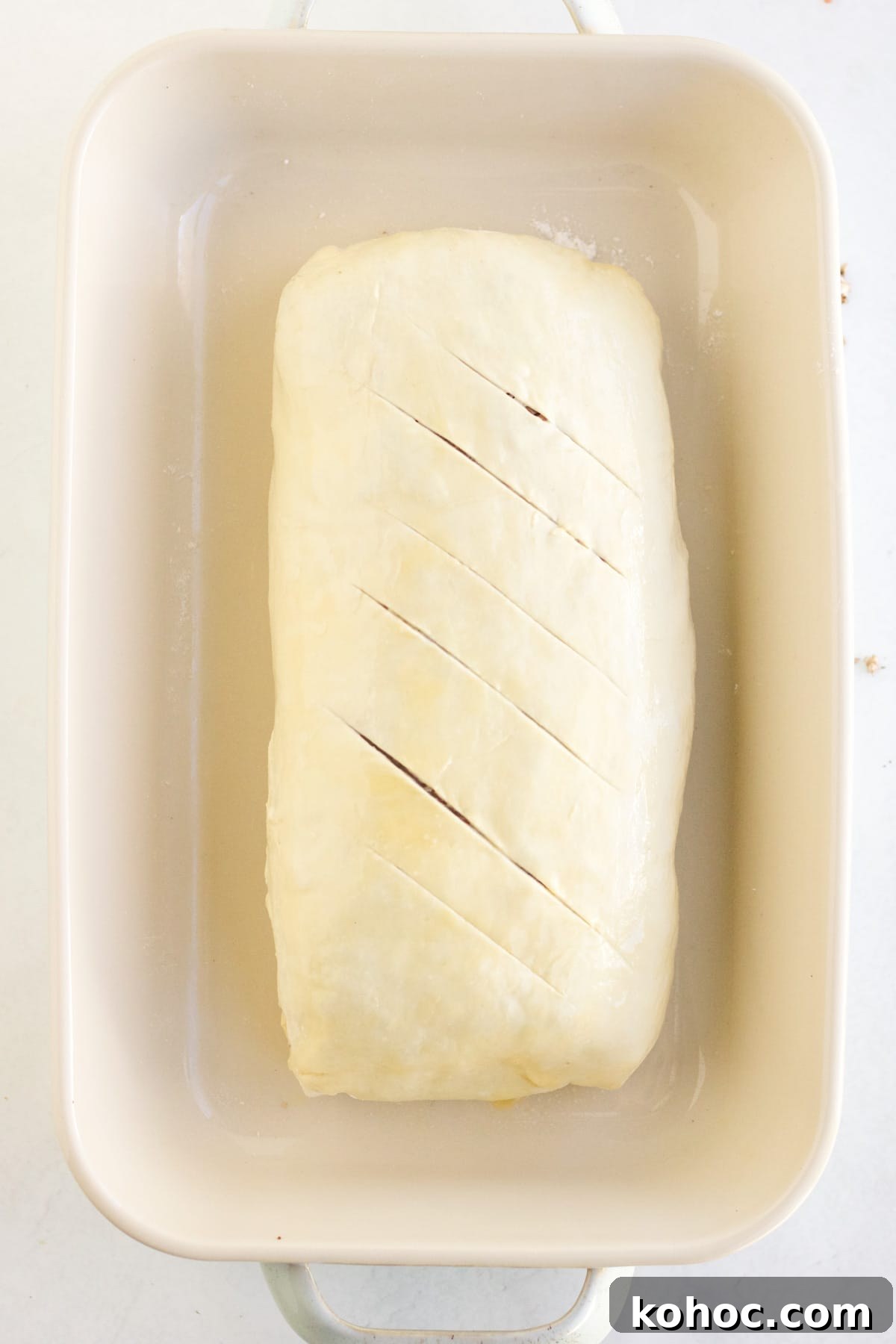
On a floured surface, join the two sheets of thawed puff pastry side by side and roll them together to about ¼” thickness so they form a single sheet large enough to enclose the roast. Remove the wrapped tenderloin from the refrigerator and place it in the center of the pastry. Fold the short sides in, brush the edges with beaten egg to seal, then fold and wrap the pastry tightly around the roast. Trim any excess pastry, place the seam side down on a baking sheet, and brush the top with egg wash. Cut small vents or decorative slashes to allow steam to escape.
Roasting Tips
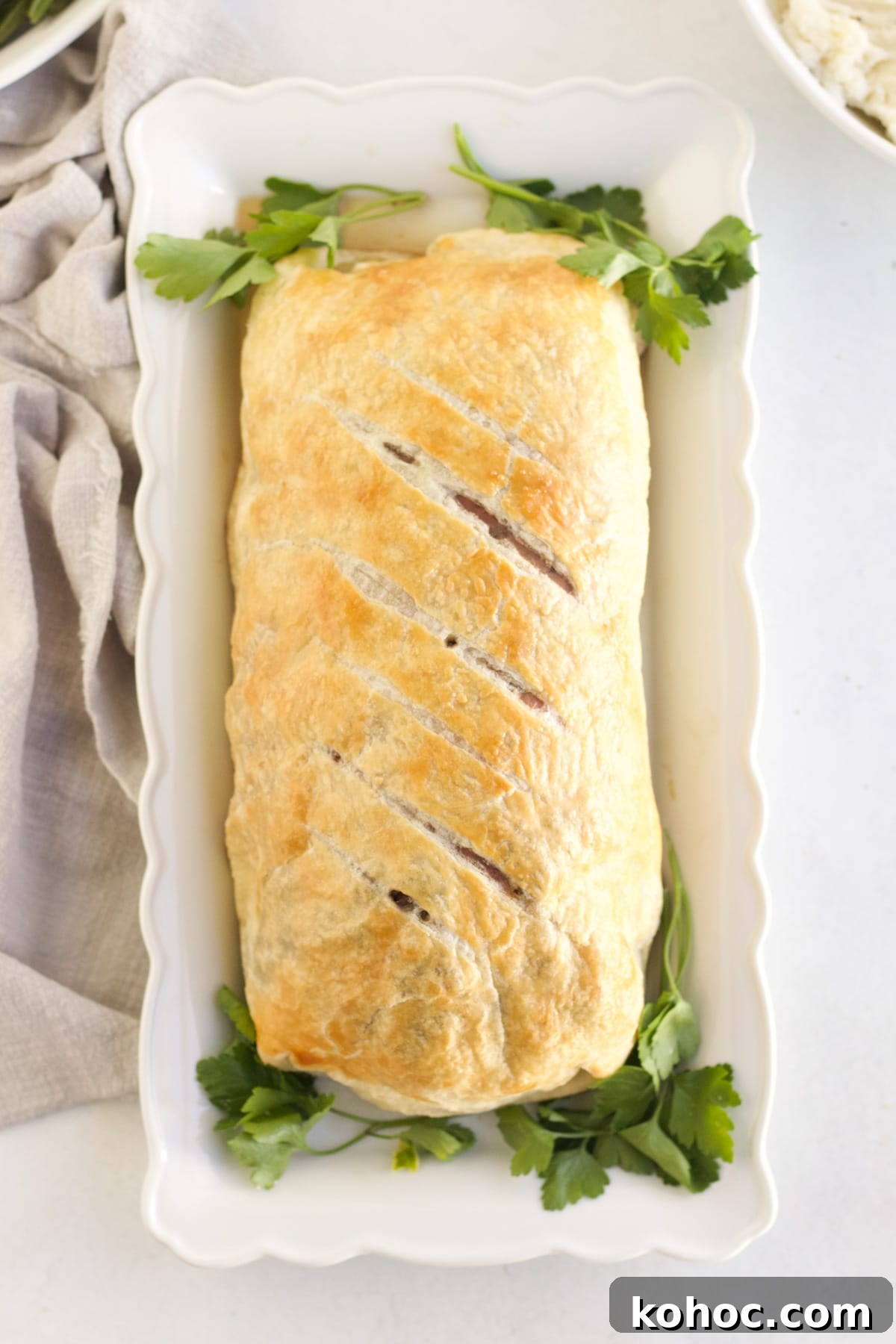
Preheat the oven to 425°F (220°C). Bake the wrapped roast for about 40–50 minutes, or until the pastry is golden and an instant-read thermometer inserted into the center of the beef reaches your desired doneness. Use these internal temperature guidelines:
- Rare: 125–130°F
- Medium Rare: 130–140°F
- Medium: 140–150°F
- Medium Well: 150–160°F
- Well: 160°F and above
Always check temperature in the thickest part of the roast. Avoid cutting it open to test doneness — doing so releases juices and reduces final tenderness. Once the roast reaches the target temperature, remove it from the oven and let it rest for 10–15 minutes before slicing; this helps the juices redistribute and makes slicing neater.
Preventing Overbrowning
If the pastry is browning too quickly before the internal temperature is reached, lightly tent the roast with aluminum foil to slow browning and allow the meat to cook through evenly.
What to serve with Beef Wellington
Keep side dishes simple so the Wellington stays the star. Steamed or sautéed green vegetables like spinach, broccoli, or roasted Brussels sprouts pair well. Classic options include mashed potatoes, roasted root vegetables, or a simple pan sauce or red wine reduction served alongside.
Substitutions for Prosciutto in Beef Wellington
While prosciutto is traditional, you can substitute Jamón Serrano, thin ham, pancetta, bresaola, or even thinly sliced bacon or salami if preferred. You can also omit it if you want just the duxelles and pastry.
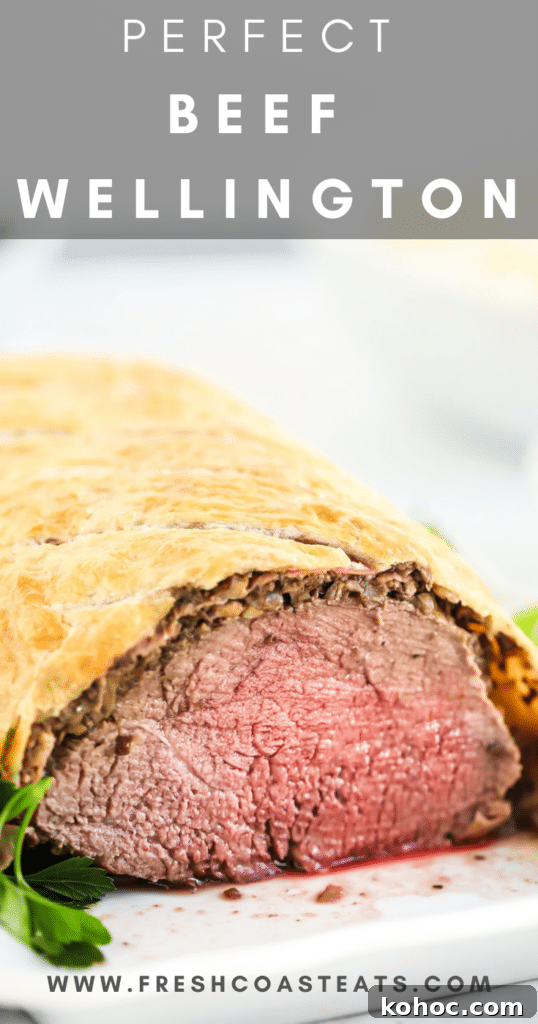

Enjoy this classic center-of-the-table dish for your next celebration. Follow the steps above for a reliable, elegant Beef Wellington that will impress family and guests.