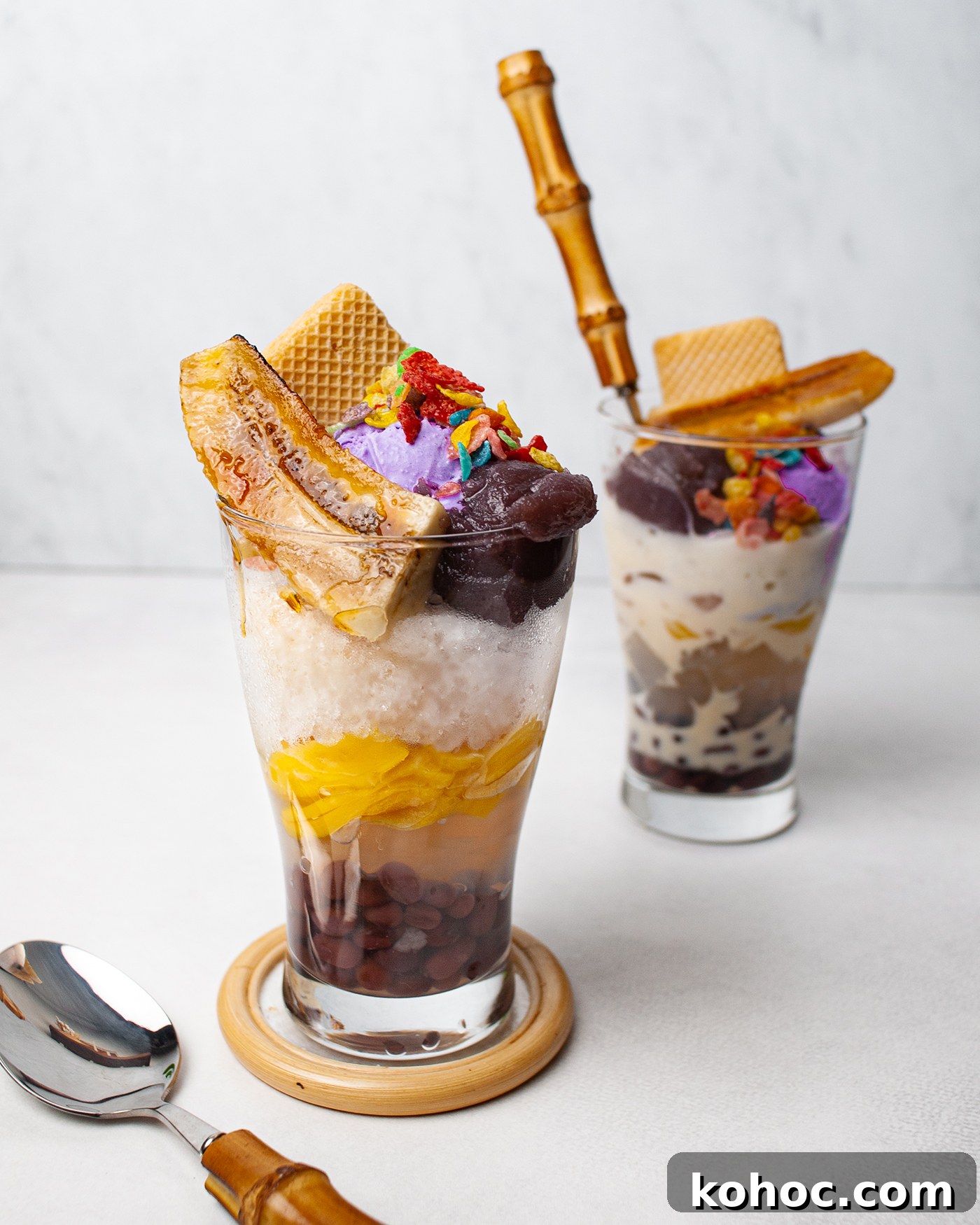
If there’s one dessert that captures the bright, refreshing flavors of the Philippines, it’s halo-halo.
Halo-halo is a Filipino iced dessert whose name means “mix-mix” in Tagalog. It’s built by layering sweet components, topping them with crushed ice, evaporated milk, and often a scoop of ice cream.
This colorful treat appeals to all ages and has grown in popularity beyond the Philippines, showing up at Filipino restaurants and food festivals worldwide.
When you make halo-halo at home, prepare extra ingredients—everyone will want seconds.
Below you’ll find a straightforward halo-halo recipe plus tips for customizing each bowl to your taste.
Table of Contents
- Introduction to Halo-Halo
- Origins of Halo-Halo
- The Cultural Significance of Halo-Halo
- How to Eat Halo-Halo
- Must-Have Ingredients for Making Halo-Halo
- Step-by-Step Guide to Making Halo-Halo
- Serving Suggestions for Halo-Halo
- Our Favorite Way to Halo-Halo
- Exploring Variations of Halo-Halo
- Final Thoughts
- More Recipes You’ll Love
- References & Further Reading
Introduction to Halo-Halo
Halo-halo—literally “mix-mix”—is a layered, colorful shaved-ice dessert that combines sweet beans, jellies, fruits, and creamy elements for a delightful contrast of textures and flavors.
In many countries you can find halo-halo at Filipino chains and independent restaurants, and it’s become a favorite at Asian American night markets and food festivals where chefs experiment with creative twists.
Halo-halo can be served in single portions or as large, shareable bowls. There are no strict rules about what goes in it, which makes the dessert ideal for personalization.
Get $20 of Grocery Credit for Weee! Grocery App
Origins of Halo-Halo
Halo-halo evolved in the Philippines from influences such as Japanese kakigori (shaved ice) and local ingredients. The introduction of manufactured ice in the early 20th century helped popularize shaved-ice treats and paved the way for what we now know as halo-halo.
Over time, cooks layered available sweets, fruits, and preserves with ice and milk to create the distinctive, mixed dessert enjoyed today.
The Cultural Significance of Halo-Halo
Halo-halo reflects the Philippines’ diverse culinary history. Its components—ice, sweet beans, jellies, leche flan, fruits, and more—highlight influences from different cultures while forming a uniquely Filipino identity.
As a shareable, easy-to-make dessert, halo-halo also symbolizes community and family traditions. Though it shares similarities with other Asian shaved-ice desserts, it stands on its own as a creative fusion central to Filipino cuisine.
How to Eat Halo-Halo
There’s no single correct way to enjoy halo-halo, but these tips help you experience its variety of flavors:
- Start by tasting a few components separately to appreciate their textures and flavors.
- Take a few spoonfuls from different layers to create room for mixing.
- Mix vertically at first to bring the layers together without spilling, then stir in a circular motion as space opens up.
- As the ice melts, you can sip the sweet milk. A crispy wafer straw is fun to use, though it can soften if left in the dessert too long.
Must-Have Ingredients for Making Halo-Halo
For a simple halo-halo, gather the following:
- 1 jar halo-halo mix (see Note 1)
- crushed or shaved ice
- ube halaya
- ube ice cream
- evaporated milk
Note 1. A jar of halo-halo mix usually contains a variety of fruits, jellies, beans, and macapuno. You can find these mixes at Asian supermarkets and Filipino grocery stores. A single jar typically makes about two servings, depending on extra toppings used.
Additional toppings for customization:
- nata de coco
- langka (sweetened jackfruit)
- boba
- sago
- macapuno (sweetened young coconut strips)
- sliced fruit — bananas, mango, pineapple, papaya, strawberries
- cereal — corn flakes, fruity pebbles
- pinipig (toasted pounded rice)
- leche flan
- crispy wafer (straw or cubed)
Many ingredients are sold individually so you can mix and match. We often buy a jar of halo-halo mix and add a few specialty toppings like langka or macapuno to suit our preferences.
Step-by-Step Guide to Making Halo-Halo
- In a tall glass or bowl, layer beans, jellies, and fruits until about two-thirds full.
- Make shaved ice by pulsing ice in a blender to either fine or chunky texture. Add ice to nearly fill the cup and pat down gently.
- Top with ube halaya, scoops of ube ice cream or vanilla, and pour evaporated milk over the top. Serve immediately.
Serving Suggestions for Halo-Halo
Halo-halo is an ideal dessert to cool off on a hot day or to finish a festive Filipino meal. It pairs beautifully with savory classics like chicken adobo, pancit bihon, and lumpia.
Because halo-halo is both refreshing and filling, it often becomes the welcome finale at gatherings and feasts.
Our Favorite Way to Halo-Halo
Halo-halo is a nostalgic favorite for many of us. Some personal touches we enjoy:
- Adding extra langka (sweetened jackfruit)
- Brûlée’d banana slices—sprinkle sugar on banana slices and caramelize with a torch
- Tasting a spoonful of leche flan or ube ice cream before mixing
- Using a wafer straw to sip and then eat
Exploring Variations of Halo-Halo
Halo-halo’s flexibility invites many variations. Mais con yelo is a corn-based version, and iskrambol offers a chocolate-marshmallow twist. Restaurants also experiment with seasonal ingredients, like watermelon granita or inverted compositions that swap the usual base and toppings.
Experimenting with different bases, fruits, and textures is part of the fun—try new combinations to find your favorite.
Final Thoughts
As a beloved shaved-ice dessert, halo-halo delights the sweet tooth and celebrates Filipino flavors. “Mix-mix” your way to a perfect bowl with these simple steps and personalize it however you like.
Ninja QB3001SS Ninja Fit Compact Personal Blender, for Shakes, Smoothies, Food Prep, and Frozen Blending, 700-Watt Base and (2) 16-oz. Cups & Spout Lids, Black
Thank you for reading! If you try the recipe, please leave a rating and share your creations on Instagram by tagging @itsforkandspoon.
Halo-Halo – Filipino Mixed Beans & Fruit Dessert
Equipment
- Ninja Blender
- dough/ice cream scooper
Ingredients
Simple and Easy Halo-Halo
- 1 jar halo-halo mix — See Note 1.
- 1 cup crushed or shaved ice
- 2 scoops ube ice cream
- 2 tbsp ube halaya
- ½ cup evaporated milk
Additional Toppings for Customization
- nata de coco (coconut jelly)
- langka (sweetened jackfruit)
- boba
- sago
- macapuno (sweetened coconut strips)
- sliced fruit — bananas, mango, pineapple, papaya, strawberries
- cereal — corn flakes, fruity pebbles
- pinipig (toasted pounded rice)
- leche flan
- crispy wafer (straw, rectangle, or cubed)
Instructions
- Layer beans, jellies, and fruits in a tall glass or bowl until about ⅔ full.
- Pulse ice in a blender to make shaved ice. Add ice to nearly fill the cup and pat down gently.
- Top with ube halaya and ice cream, then pour evaporated milk over the top. Serve immediately.
Notes
Note 1. A jar of halo-halo mix contains a medley of fruits, jellies, beans, and macapuno. Find them at Asian supermarkets or Filipino grocery stores. The exact contents vary by brand. One jar typically makes about two servings but can yield more with extra toppings.
Note 2. To brûlée banana slices, sprinkle a thin layer of sugar on top and caramelize with a torch.
More Recipes You’ll Love
Check out this recipe
Check out this recipe
Check out this recipe
References & Further Reading
For more on halo-halo’s history and context, consult reputable food history sources and cultural articles that trace the dessert’s evolution and regional variations.