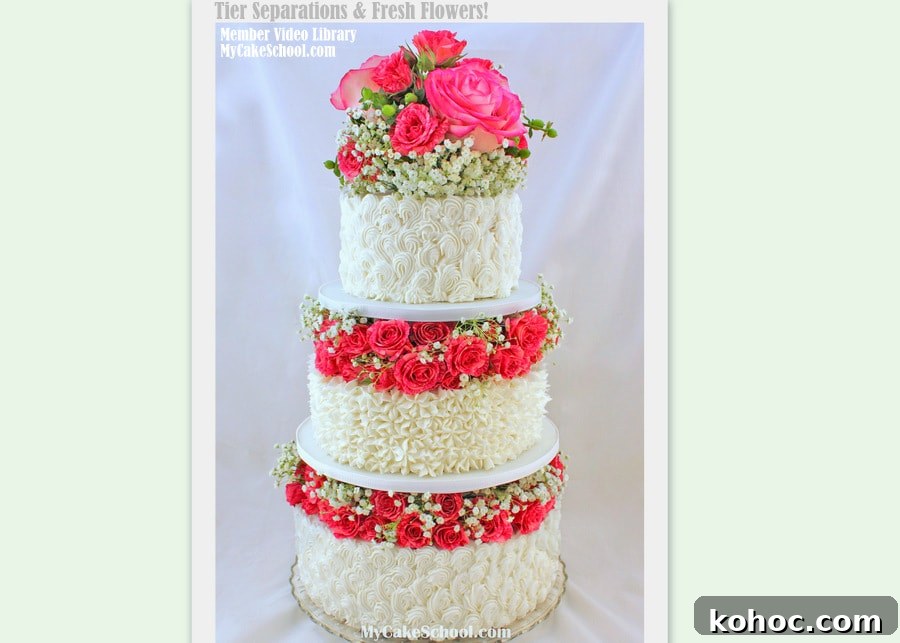
Hi everyone! You asked for guidance on working with fresh flowers, creating separations between cake tiers, and piping a vertical reverse shell pattern — so this tutorial covers all three requests.
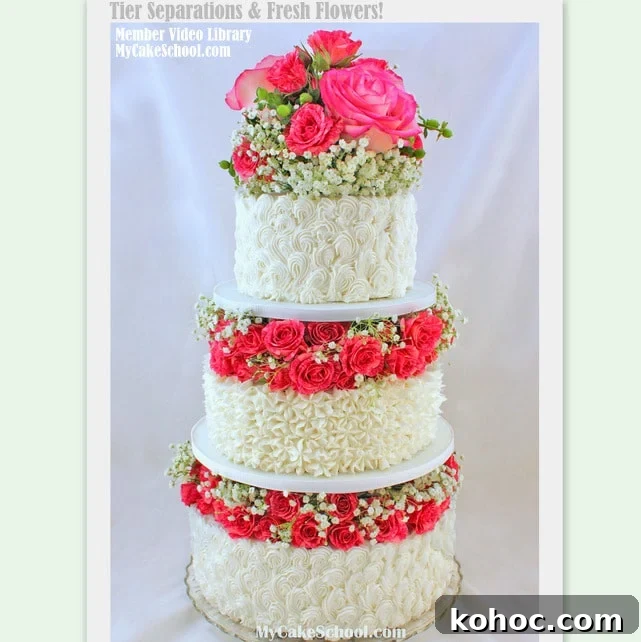
This video tutorial demonstrates how to assemble a multi-tiered cake with visible separations, how to decorate it using fresh flowers safely and attractively, and how to pipe a vertical reverse shell pattern around the cake’s sides. I also show a decorative piped “ruffled star” treatment used on the middle tier.
For the tier separations shown, I use SPS plates and columns to support and space the tiers. (These are commonly available from cake-supply retailers.) There is no plate under the largest 10″ tier. An 8″ plate supports the 10″ cake board that carries the 8″ tier, and a 6″ plate supports the 8″ cake board that carries the 6″ tier. Using plates and columns lets you create distinct, even gaps between tiers while maintaining stability. My columns are clear GC-1050 9″ columns with notches to make trimming easier. Each cake base or board is constructed from two glued cardboard cake circles, covered in fondant and neatly trimmed, then finished with a ribbon for a clean appearance.
Piping tips: For the vertical reverse shell pattern I used a Wilton Tip 21, which creates rounded shell shapes stacked in a vertical row. For the “ruffled star” effect on the middle tier I used a Wilton 2D tip to create a layered, floral-like texture. Practice the motion and pressure on a scrap surface to get even shells and ruffles before piping directly on the cake.
Working with fresh flowers: For the arrangement shown we used about 1½ dozen stems made up of small rose clusters, plus three standard roses for the topper and sprigs of baby’s breath to fill in. Flower quantities will vary based on the gap between tiers, bloom sizes, and the overall design. For a safe floral topper, use a small 4″ clear plastic container with a circle of soaked floral foam (oasis) trimmed to fit, and place a layer of parchment or a barrier beneath the foam so moisture doesn’t contact the cake. Insert flower stems into the foam, not directly into the cake, and wrap stems with florist tape or use floral picks if needed to avoid any contamination.
Safety and hygiene: Always use clean tools, trim stems, remove any foliage that would sit below the waterline, and consider using floral picks or food-safe barriers when flowers touch the cake. Change the water in any flower container used on the cake and replace foam if it becomes discolored. For edible decorations near fresh flowers, keep a clear separation and avoid direct contact when possible.
Assembly notes: Build and chill tiers thoroughly before stacking. Use dowels or columns rated for cake weight where necessary. When installing plates and columns, test the alignment and level at each stage. When stacking tiers with visible separations, ensure each cake board is well-centered and securely supported so the final presentation is straight and stable.
Final touches: After piping and placing floral accents, step back and assess balance and negative space. Trim any excess ribbon or fondant around the board edges for a polished finish. Small additions, like a few tucked baby’s breath sprigs or a lightly dusted petal, can harmonize the design without overwhelming it.
If you have any specific questions about tools, flower choices, or piping technique, let me know and I’ll be happy to help.