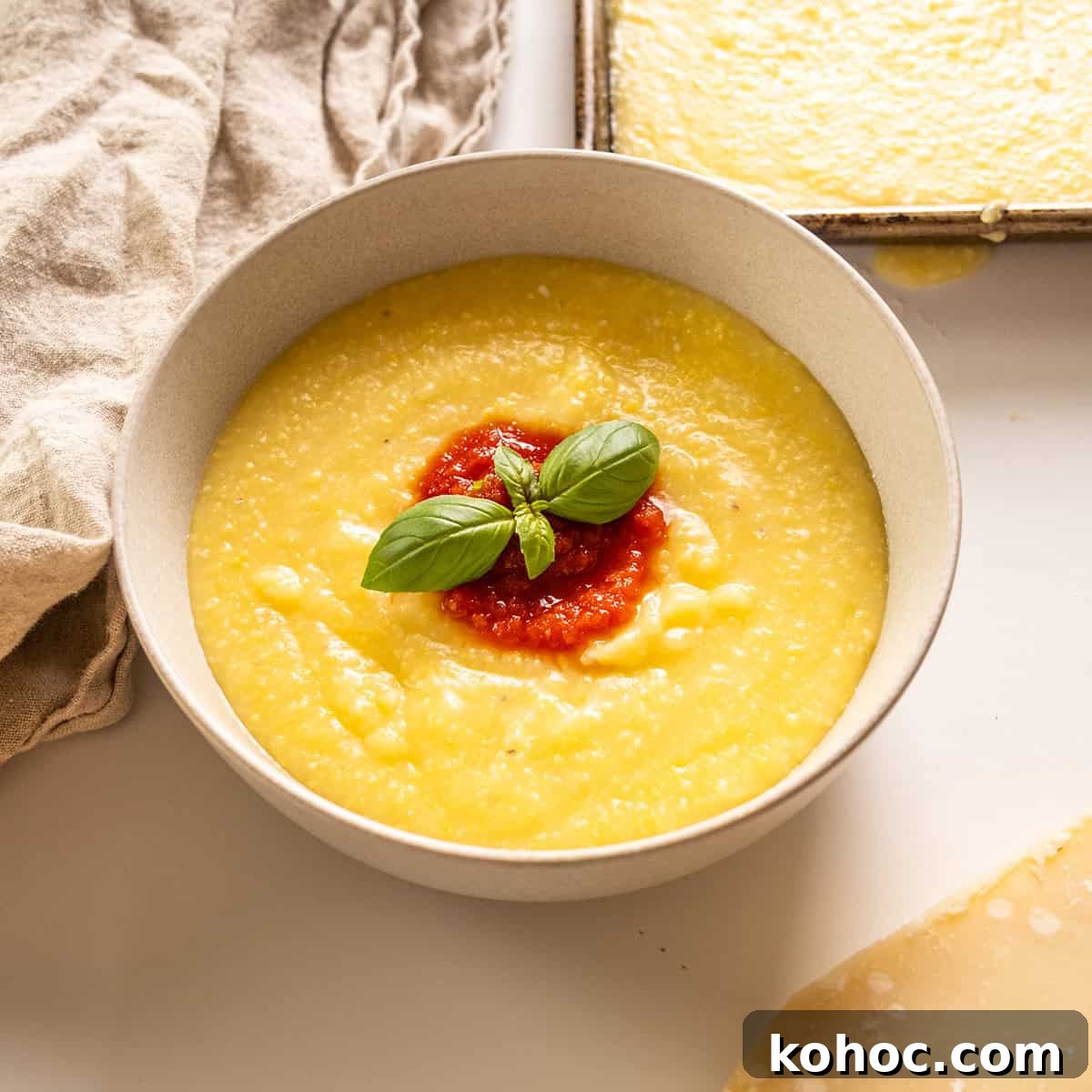
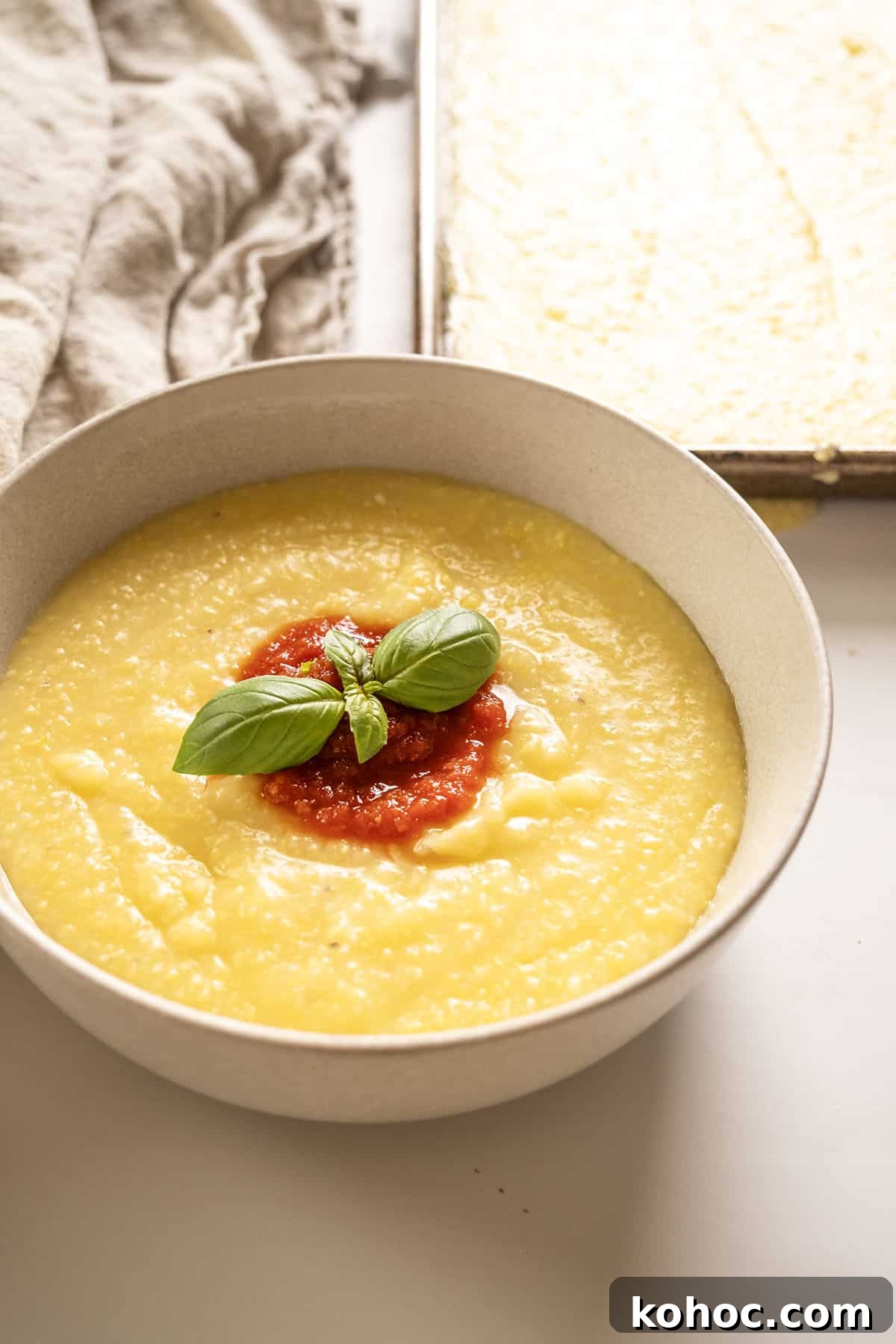
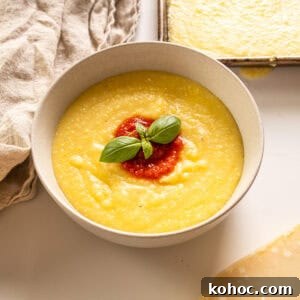
Classic creamy polenta is simple, comforting, and deeply flavorful when it is cooked with care. The best version has a soft, smooth texture and a rich buttery finish, with freshly grated Parmigiano stirred in for a warm, cheesy flavor. Serve it with a spoonful of marinara sauce, use it as a base for braised meats, or chill it for grilled or fried polenta later.
If you enjoy classic Italian comfort food, you may also like Zucchini Risotto or The Creamiest Mushroom Truffle Risotto.
Why Classic Italian Recipes
There is a reason simple Italian recipes continue to be made for generations. Dishes like creamy polenta with marinara sauce rely on a short list of ingredients, but each one matters. Good cornmeal, extra virgin olive oil, butter, salt, and Parmigiano come together to create something warm, satisfying, and easy to serve with almost any meal.
Polenta deserves a place in every home cook’s recipe collection for three simple reasons.
- It is versatile. Creamy polenta can be served with many Italian dishes, from Traditional Italian Meatballs to Easy Chicken Cacciatore. It also works beautifully with rustic mains such as Restaurant-Style Chicken Scarpariello or Italian Pork Roast.
- It can be used again. Serve polenta soft and creamy right away, or chill the leftovers and turn them into Grilled Polenta with Marinara and Pesto or fried polenta.
- It is affordable and comforting. Like buttered pasta, polenta is budget-friendly and filling. It is also a great way to use leftover sauce or to round out a weeknight meal such as Chicken Pizzaiola.
Ingredient Notes and Substitutions
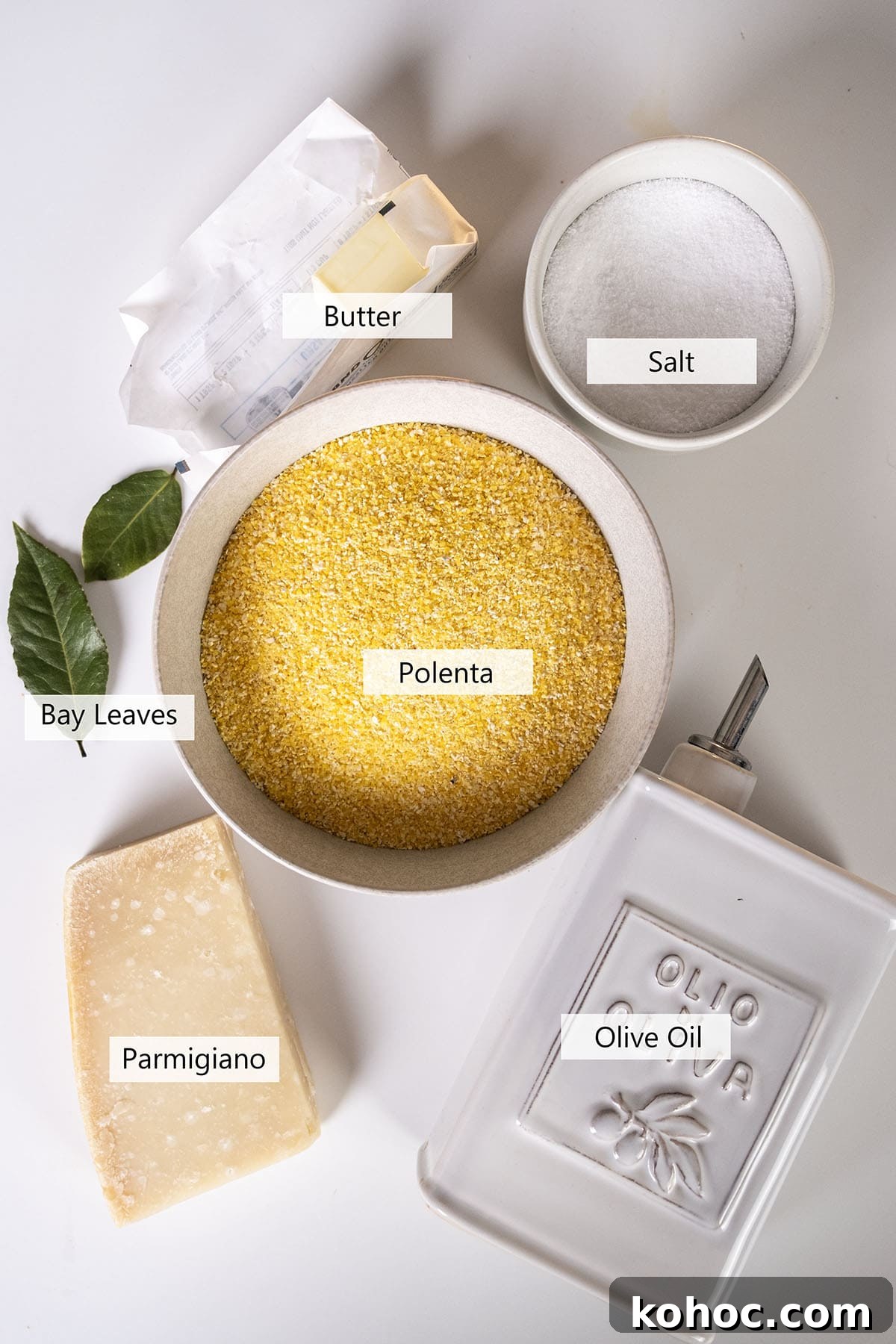
- Polenta. Use medium-grain polenta for the best creamy texture. Grits are not the same and will not create the same result.
- Parmigiano. Parmigiano gives the polenta a smooth, nutty, savory finish. Pecorino can be used instead if you prefer a sharper flavor.
- Olive oil. Use a good extra virgin olive oil because its flavor comes through in this simple recipe.
- Butter. Unsalted butter adds richness and helps create a silky finish. You can use up to one stick, depending on how buttery you want the polenta to be. Like risotto, polenta benefits from a final addition of butter, similar to the way butter enriches Creamy Cherry Tomato Risotto.
- Water. Water keeps the flavor clean and classic. Chicken broth can be used for a more savory and slightly saltier result.
Please see the recipe card for ingredient amounts and full instructions.
How to Make Creamy Polenta
The key to creamy polenta is preventing clumps and sticking. Add the polenta slowly to cold liquid while whisking so it disperses evenly. If you pour dry polenta into hot water too quickly, it can clump almost immediately. Once it begins cooking, stay near the pot and stir often. The process is similar to risotto: steady attention creates the best texture.
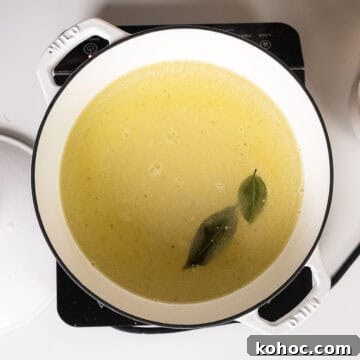
Step 1: Add the water, olive oil, bay leaves, and salt to a large Dutch oven or heavy pot. Slowly pour in the polenta in a thin stream while whisking constantly. Once it is fully mixed in, the liquid should look cloudy and evenly combined.
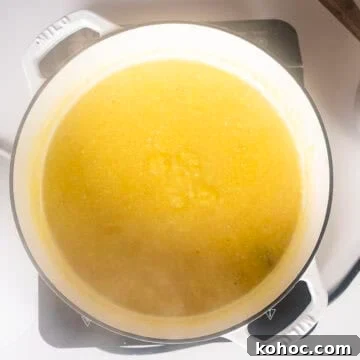
Step 2: Set the heat to medium-low and bring the mixture to a very gentle simmer. Whisk often so the polenta does not settle and stick to the bottom of the pot. Once it reaches a low simmer, continue cooking for about 25 to 30 minutes.
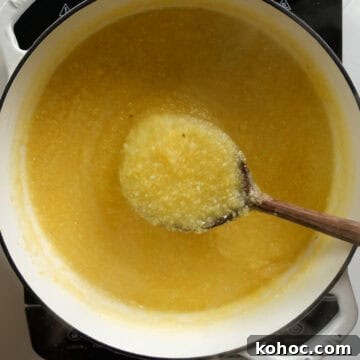
Step 3: When the polenta thickens, switch from a whisk to a wooden spoon. Keep stirring frequently. The polenta is ready when it pulls away from the sides of the pot as you stir.
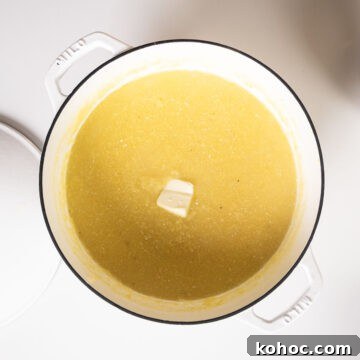
Step 4: Remove the pot from the heat. Stir in the butter one cube at a time until fully melted. Then slowly mix in the Parmigiano until the polenta is creamy, smooth, and ready to serve.
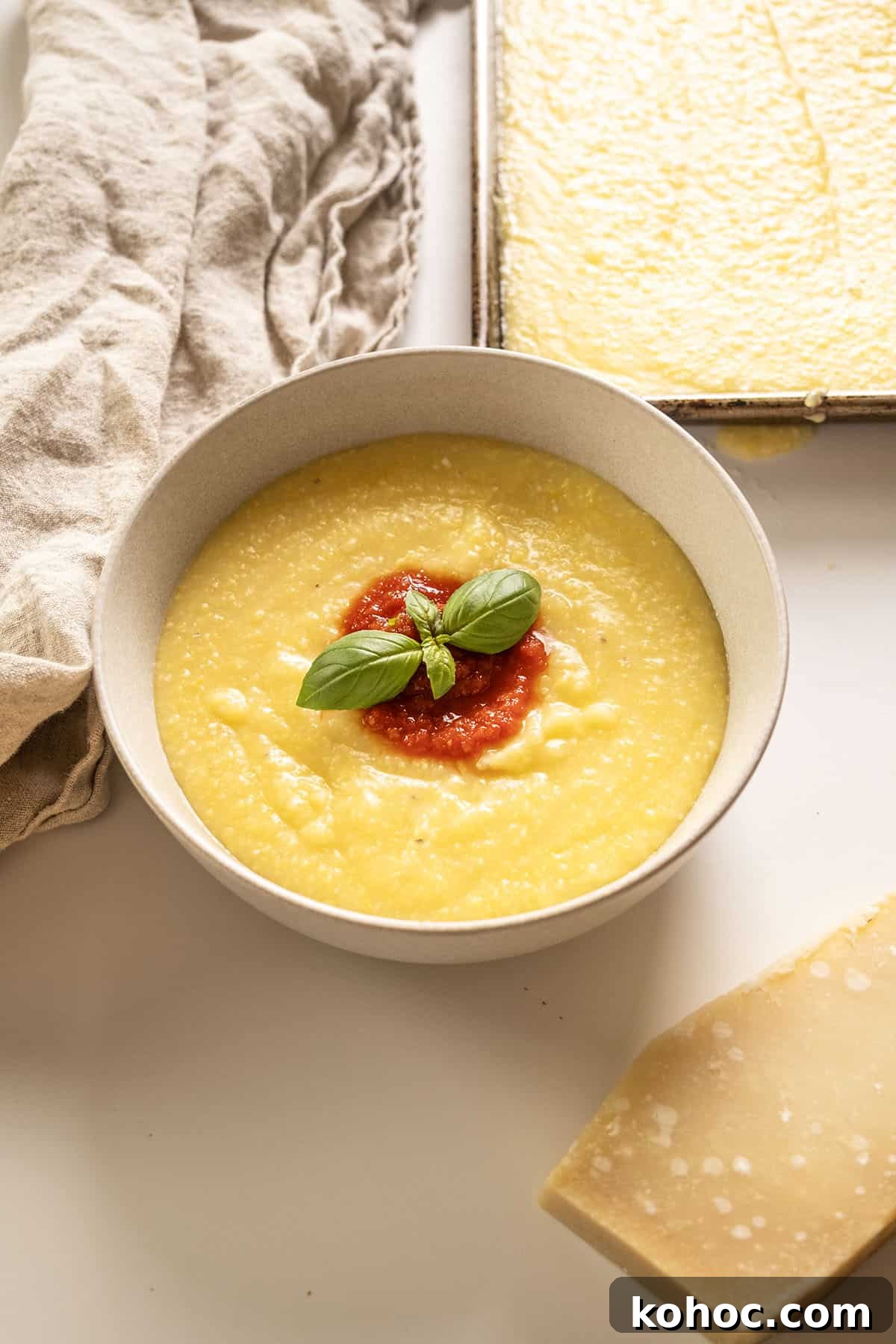
Serve creamy polenta with a spoonful of marinara sauce, or use it as a base for rich braised dishes such as Italian Short Ribs, Fennel Chicken Thighs in Red Wine, or Authentic Italian Braciole.
Pro-Tips
- Stay near the pot while the polenta cooks. Stir every 2 to 3 minutes so it does not stick to the bottom.
- Butter is optional, but it gives the polenta a richer, creamier finish. It is highly recommended for the best texture and flavor.
- If you plan to chill the polenta for grilled or fried polenta, grease the cooling dish with olive oil or butter first.
Recipe FAQs
Polenta pairs well with simple red sauces, marinara, meat sauce, bolognese, ragu, pesto, and braised meats. It can be served as a side dish or used as the main base of a meal.
No. Polenta and grits are made from different types of corn and create different textures. Grits are usually starchier and closer to mashed potatoes, while polenta is a little sweeter and more finely textured.
Polenta is best served fresh, but it can be reheated in a pot with simmering water or broth. For the best use of leftovers, chill the polenta and cook it again as grilled or fried polenta.
More Classic Italian Recipes
- Authentic Bolognese
- Authentic Italian Lasagna
- Easy Chicken Cacciatore
- Authentic Italian Sunday Sauce
Please leave a comment and star rating below in the recipe card. Your feedback helps others make this creamy polenta recipe with confidence.
Creamy Polenta
Vincent DelGiudice
Equipment
-
1 Large Dutch Oven
Ingredients
- 2 cups medium grain polenta
- 10 cups water
- 1 stick butter
- ¼ cup olive oil
- 1 teaspoon salt
- 2 cups parmigiano cheese
- 2 bay leaves
Instructions
-
Add the water, olive oil, bay leaves, and salt to a large Dutch oven. Slowly pour in the polenta in a thin stream while whisking constantly. Continue whisking until the mixture is evenly combined and slightly cloudy.
-
Set the heat to medium-low and bring the mixture to a very gentle simmer. Whisk often so the polenta does not stick to the bottom of the pot. Once simmering, cook for about 25 to 30 minutes.
-
When the polenta begins to thicken, switch to a wooden spoon. Continue stirring often. The polenta is ready when it pulls away from the sides of the pot as you stir.
-
Remove the pot from the heat. Stir in the butter one cube at a time until fully melted. Slowly mix in the Parmigiano cheese until smooth and creamy. Serve immediately or chill for another polenta dish.
Notes
- Polenta needs regular attention. Stir every 2 to 3 minutes to prevent sticking.
- Butter makes the polenta richer and creamier, so it is recommended for the best result.
- If chilling polenta for grilled or fried polenta, grease the dish with olive oil or butter before adding the hot polenta.
Nutrition
Carbohydrates: 1g
Protein: 7g
Fat: 20g
Sodium: 638mg