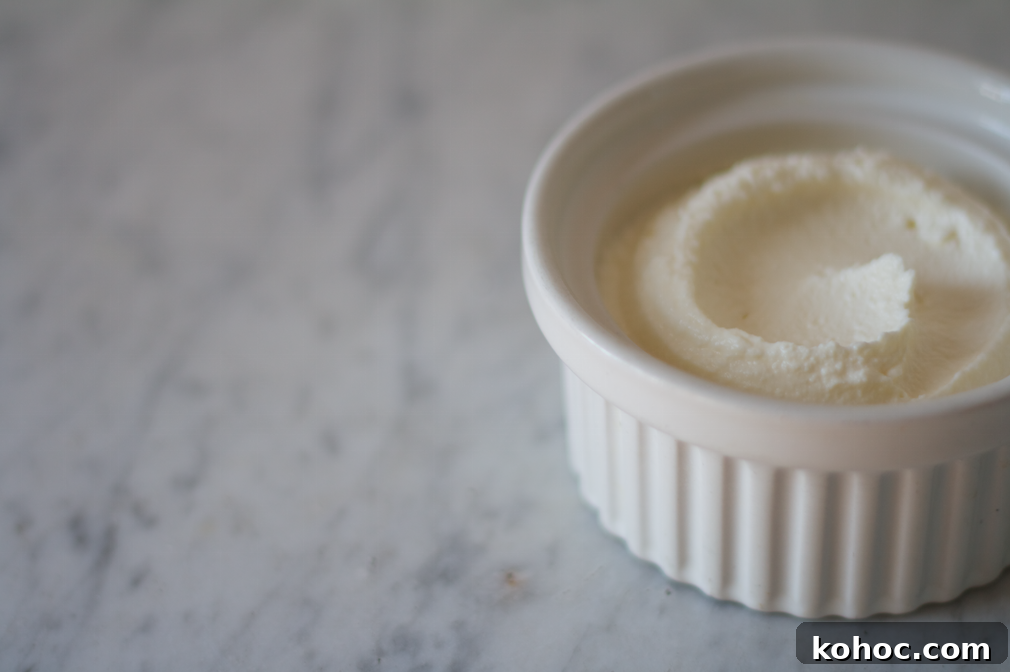
If you have an hour, a stove, and an appetite for something delicious, try making homemade ricotta. Cheese-making is far easier than most people think, and ricotta is the perfect place to begin. After a trip to Vermont and seeing cheesemakers at work, I finally cleared an hour from my weekend, gathered my tools, and made my first batch. It was simple, rewarding, and immediately made me want to try more cheeses.
Homemade ricotta is a gateway cheese: once you make it, other cheeses start to feel achievable. It’s straightforward, requires just a few ingredients, and yields a fresh, creamy result that’s far superior to store-bought. Think of this as the first step toward trying burrata or other fresh cheeses in your own kitchen.
Ricotta requires only whole milk, heavy cream, and lemon juice. A kitchen thermometer is helpful to monitor the temperature as you heat the milk and cream together, but the process itself is simple and hands-on in a pleasant, tactile way.
Begin by gently heating the milk, cream, and lemon juice together. Stir occasionally to prevent a skin from forming and to avoid scorching on the bottom of the pot. As the mixture warms, steam will rise and tiny curds will begin to appear. When the temperature reaches about 190°F, curds should form more rapidly—this is the key moment.
Once the mixture reaches 190°F and curds are forming, remove the pot from the heat and let it sit undisturbed for 10 minutes. During this rest the curds will release whey, and patience at this stage pays off in texture and yield.
While the curds rest, prepare a fine-mesh strainer lined with cheesecloth and set it over a large bowl. Use a bowl that can hold all the whey; if necessary, have a second bowl ready. Pour the curds into the lined strainer and allow them to drain for about 10 minutes. For a firmer ricotta, let it drain longer; for a softer, silkier result, drain less.
After draining, gather the corners of the cheesecloth and give the bundle a gentle squeeze to remove the last of the whey. Unwrap the ricotta, stir in a pinch of salt to taste, and transfer it to a container. Chill before serving or serve immediately at room temperature with olive oil, herbs, or your favorite toppings. Fresh ricotta is an excellent appetizer spread, a bright addition to salads, or a creamy component in both sweet and savory dishes.
One-Hour Homemade Ricotta
Makes about 1 1/2 cups
Adapted from One-Hour Cheese
Ingredients:
4 cups (1 quart) whole milk
2 cups (1 pint) heavy cream
1/4 cup fresh-squeezed lemon juice
1/4 teaspoon salt
Method:
1. In a large pot, combine the milk, cream, and lemon juice and set over medium heat. Stir every few minutes to prevent a skin from forming and to avoid scorching.
2. When steam starts to rise and the temperature approaches 190°F, curds will form quickly. Watch closely and stir gently as needed. When the mixture reaches 190°F, remove the pot from the heat.
3. Let the mixture sit undisturbed for 10 minutes to allow curds to release whey.
4. Line a fine-mesh strainer with cheesecloth and set it over a large bowl. Pour the curds into the strainer and let drain for about 10 minutes, or longer for firmer ricotta.
5. Gather the cheesecloth and gently squeeze out any remaining liquid. Unwrap the ricotta, stir in the salt, transfer to a container, and chill before serving.
Enjoy experimenting with fresh cheeses—this simple ricotta is a great starting point. Try it with a drizzle of olive oil and freshly cracked pepper, or spread it on warm bread with a sprinkle of herbs. Once you taste homemade ricotta, you’ll understand why making cheese at home is so rewarding.