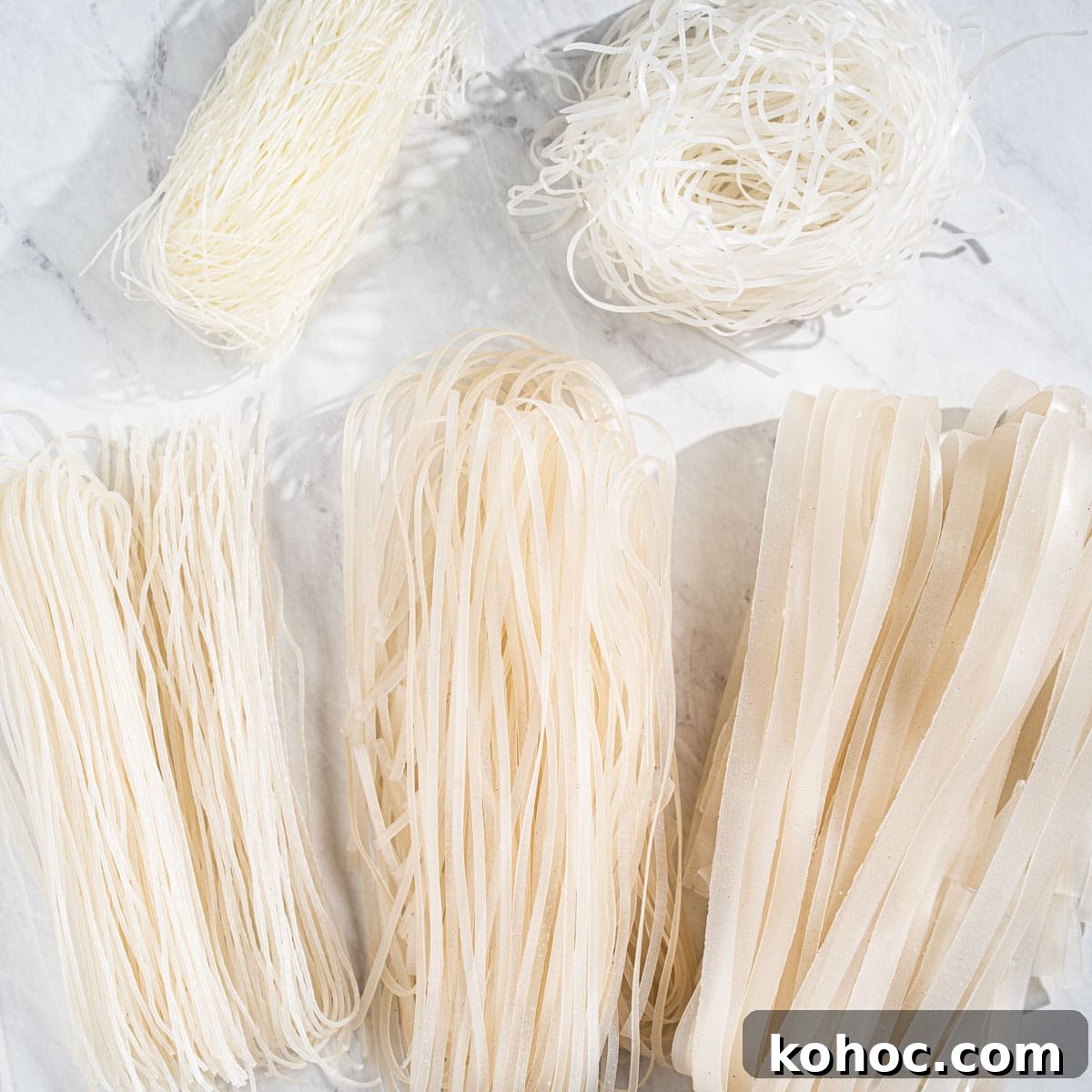
Rice noodles are a pantry staple: light, versatile, and quick to cook — but they can also go wrong fast. Overcook them and they become mushy; undercook and they’re stiff and unpleasant. Once you learn how each type behaves, rice noodles are some of the easiest noodles to work with.
Below is a clear guide to the different types of rice noodles and exactly how to cook each one, whether dried or fresh. Practical tips are included to prevent clumping and sogginess so you get the ideal texture every time.
What Are Rice Noodles?
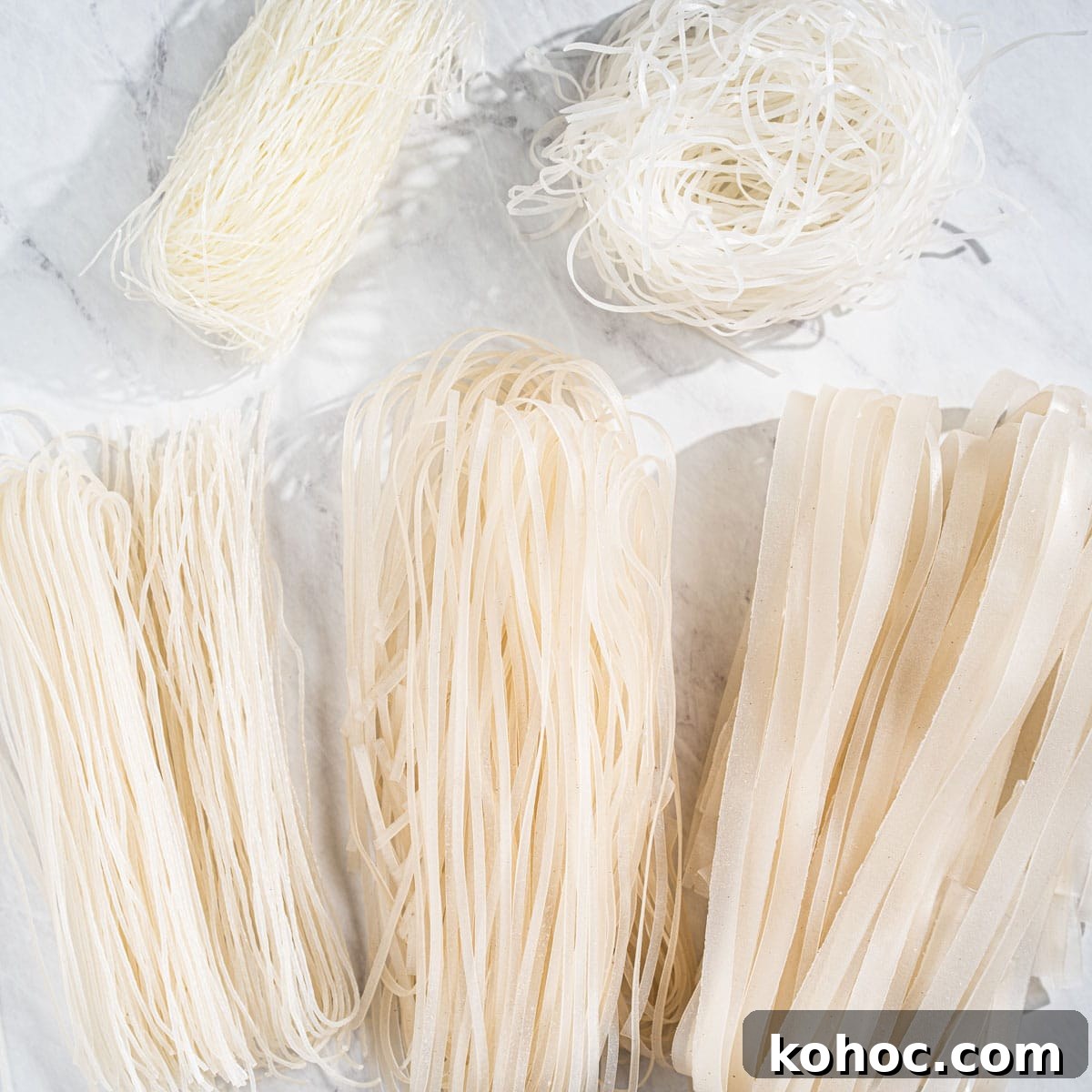
Rice noodles are made from rice flour and water; some brands add tapioca or cornstarch to increase chew. They are naturally gluten-free and come in many shapes and widths — from ultra-thin vermicelli to wide flat noodles used in soups and stir-fries. Each shape behaves differently in cooking, so matching the noodle to the dish matters for best texture.
Types of Rice Noodles
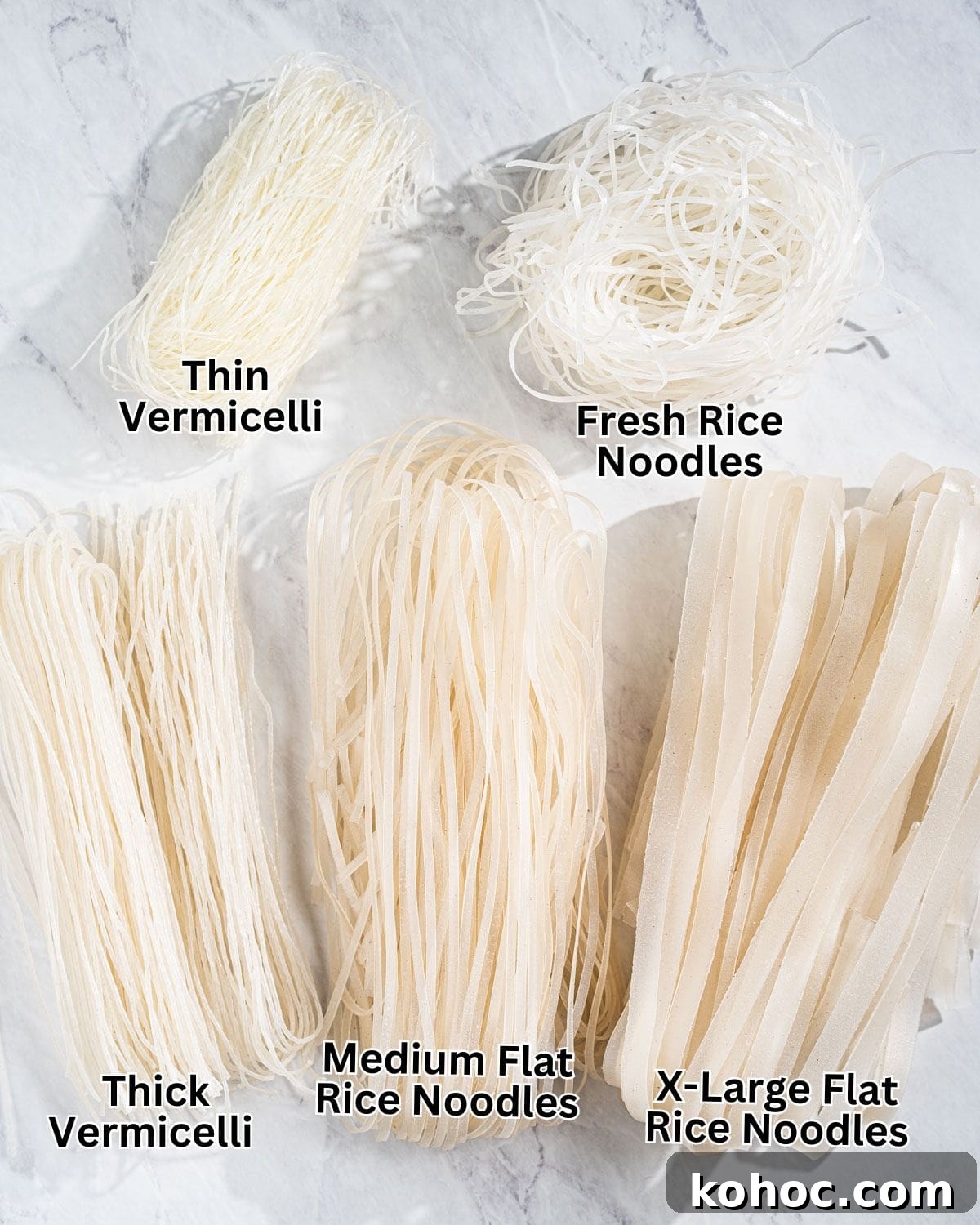
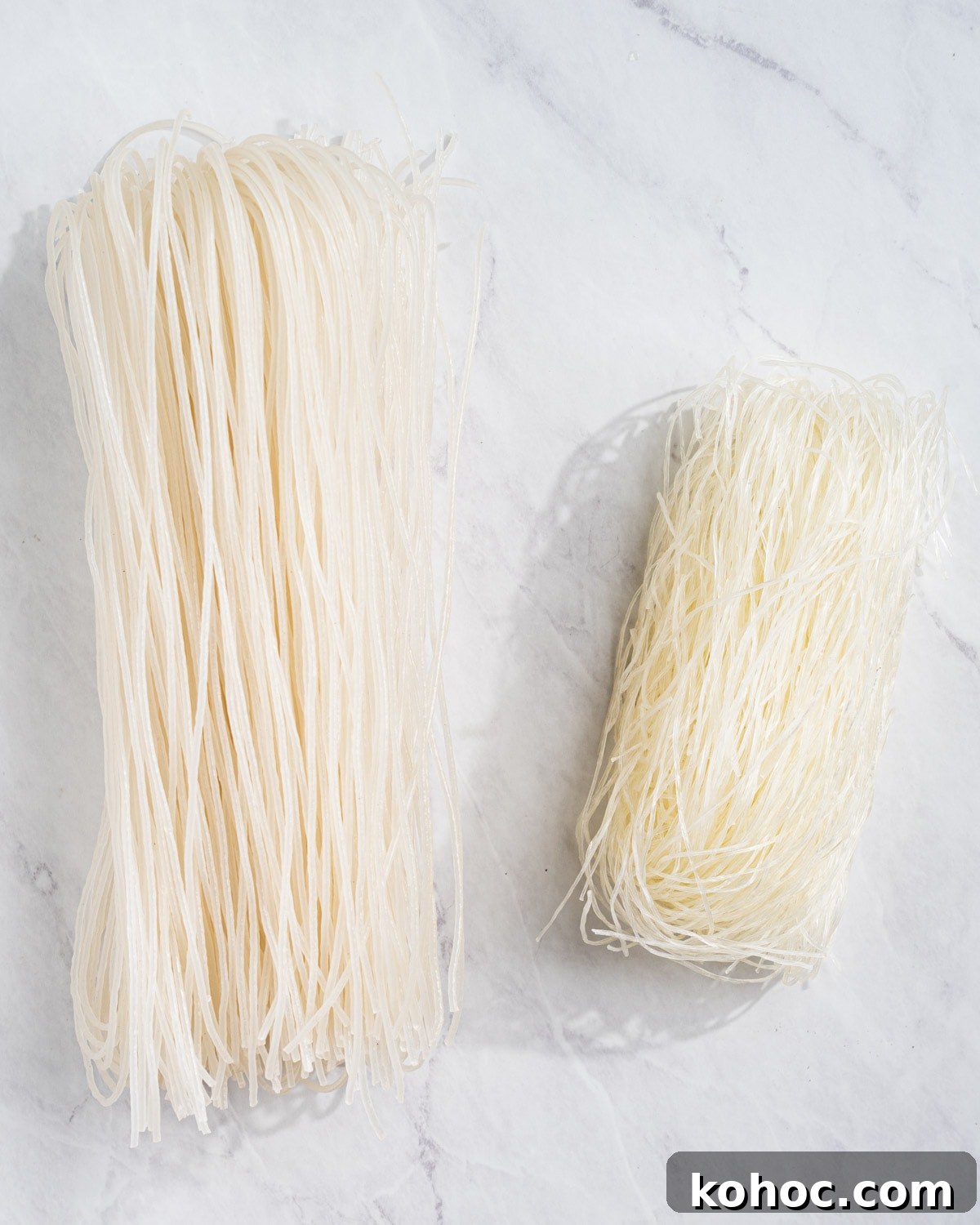
Vermicelli (Bún)
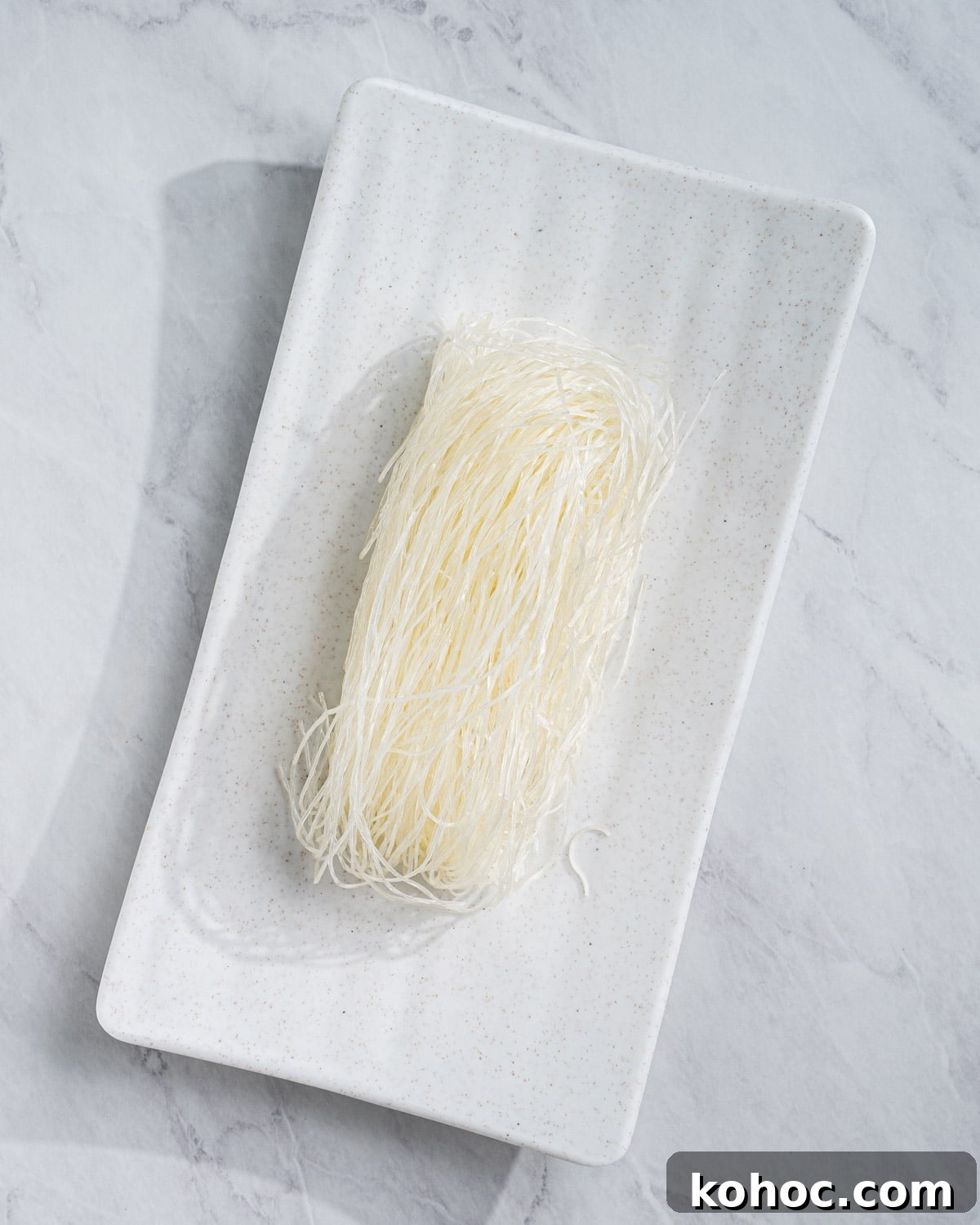
Thin round rice vermicelli is common in Vietnamese dishes such as grilled pork noodle bowls and soups. It’s also used in small amounts inside egg roll fillings or pastries. Vermicelli is soft and springy and cooks very quickly, which means it can overcook easily if you’re not watching it.
Dried Flat Rice Noodles (Phở)
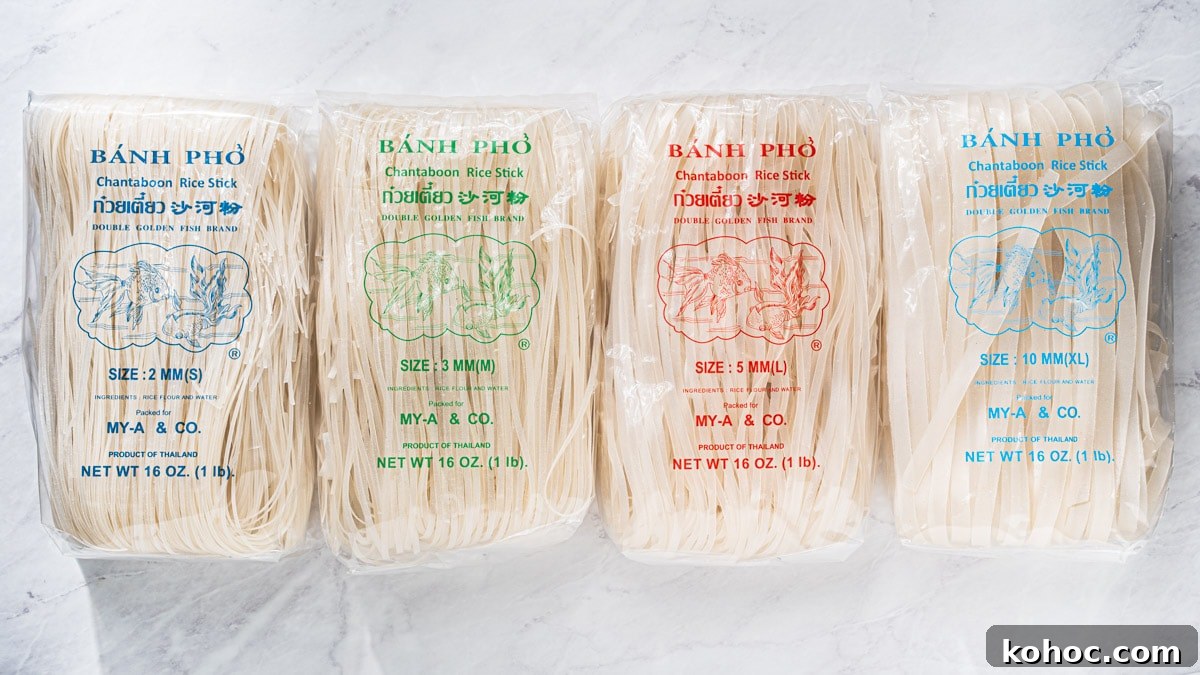
Often labeled rice sticks, flat rice noodles come in several widths. The width you choose changes the texture and how well the noodles hold up in a dish.
- Small (≈2mm): Typical for soups like pho.
- Medium (≈3mm): A versatile size for soups and stir-fries such as pad Thai.
- Large (≈5mm) and Extra Large (≈10mm): Best for stir-fries where you want chewy noodles that won’t fall apart, for example pad see ew or beef chow fun.
Fresh Rice Noodles
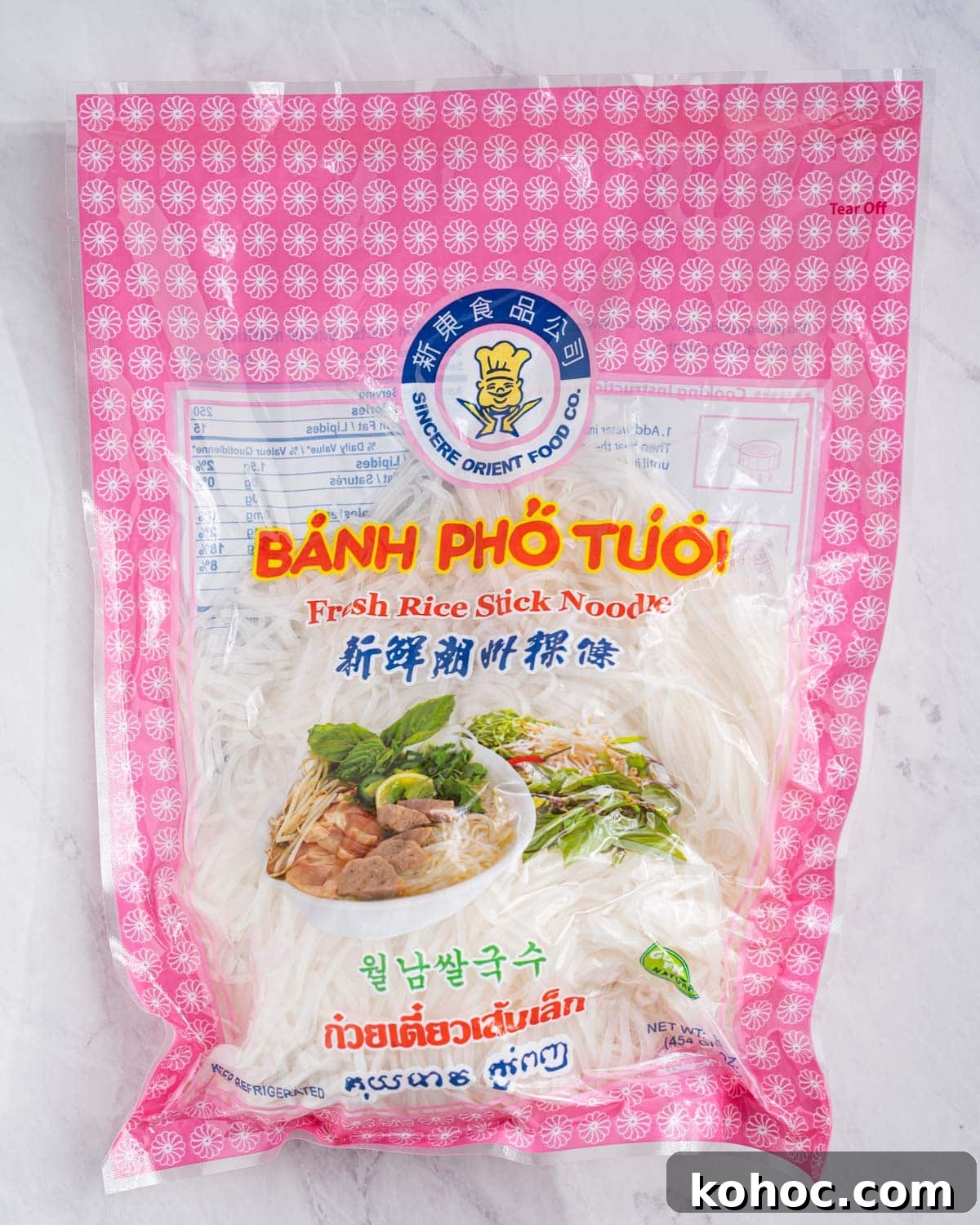
Fresh rice noodles are sold refrigerated at Asian groceries. They’re soft, pliable, and often already cooked, making them ideal for quick stir-fries or soups with minimal prep.
How to Cook Vermicelli (Bún)
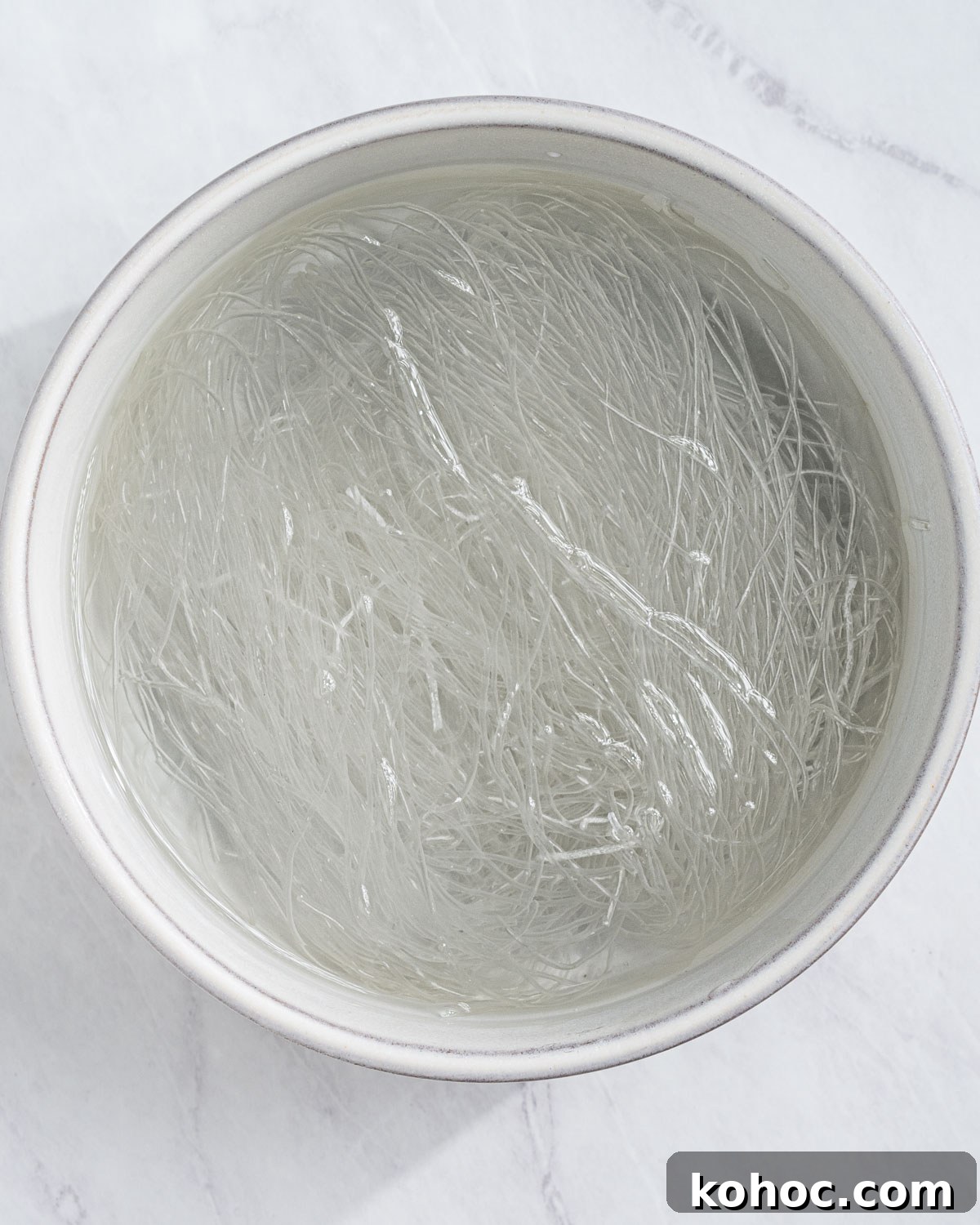
Vermicelli should be soaked before boiling. They’re ready when they bend easily without snapping. Times vary by brand, but this approach is reliable:
- Soak rice vermicelli in cold water for 30 minutes.
- Separate the noodles, then cook in boiling water for 30 seconds to 1 minute until just tender.
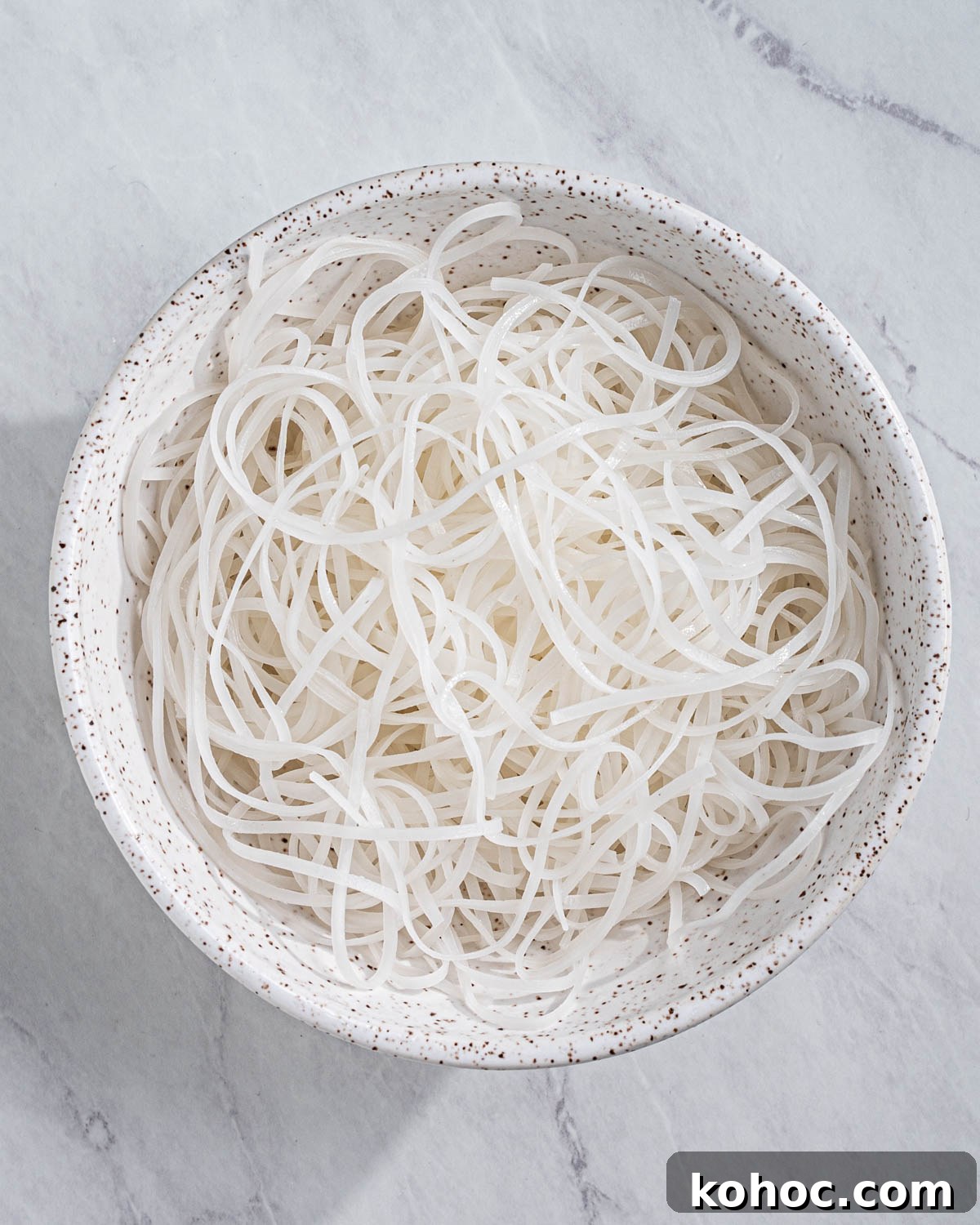
- Drain and rinse under cold water, gently separating with your hands.
Tip: Vermicelli goes from perfect to mushy quickly — err on the side of undercooking.
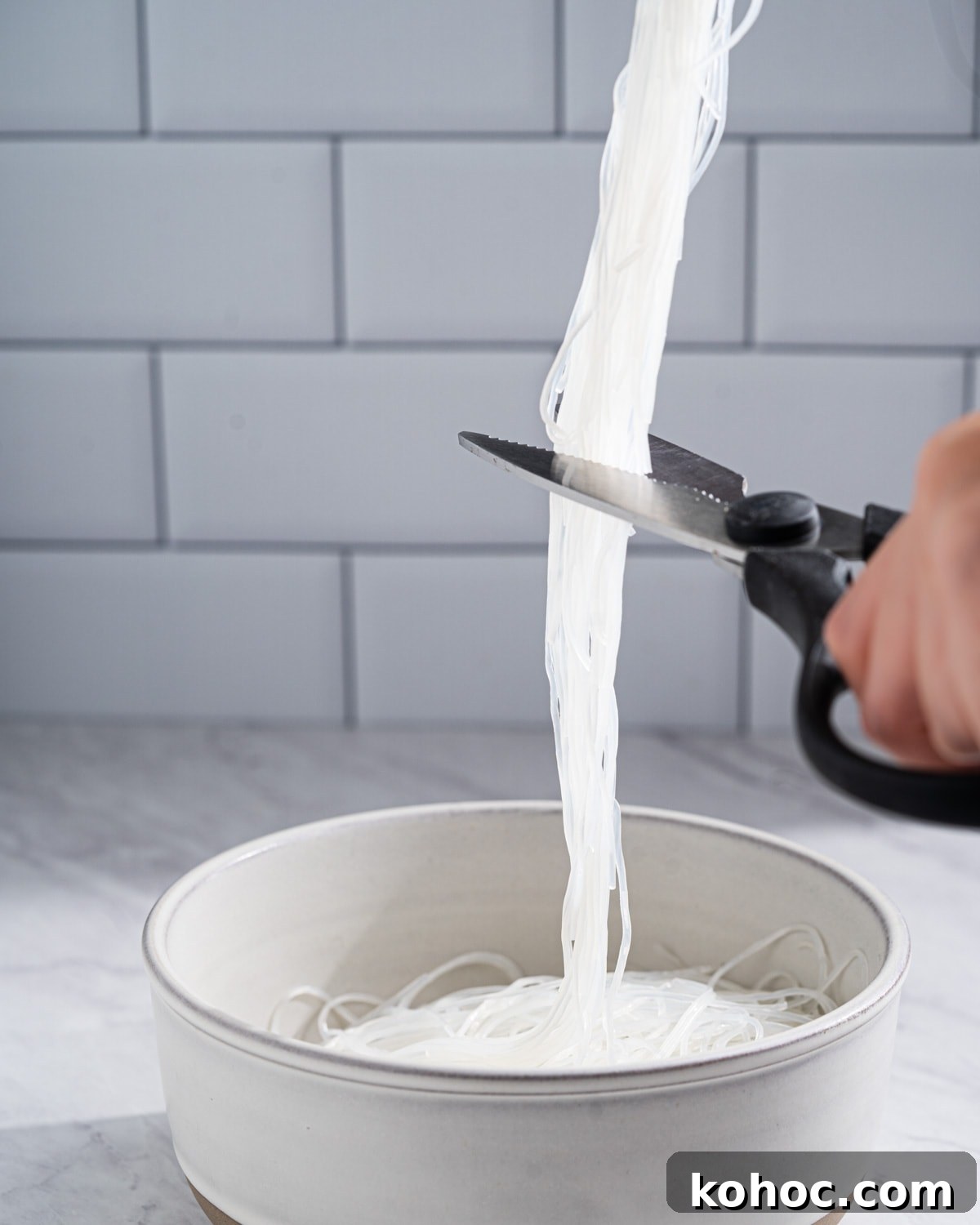
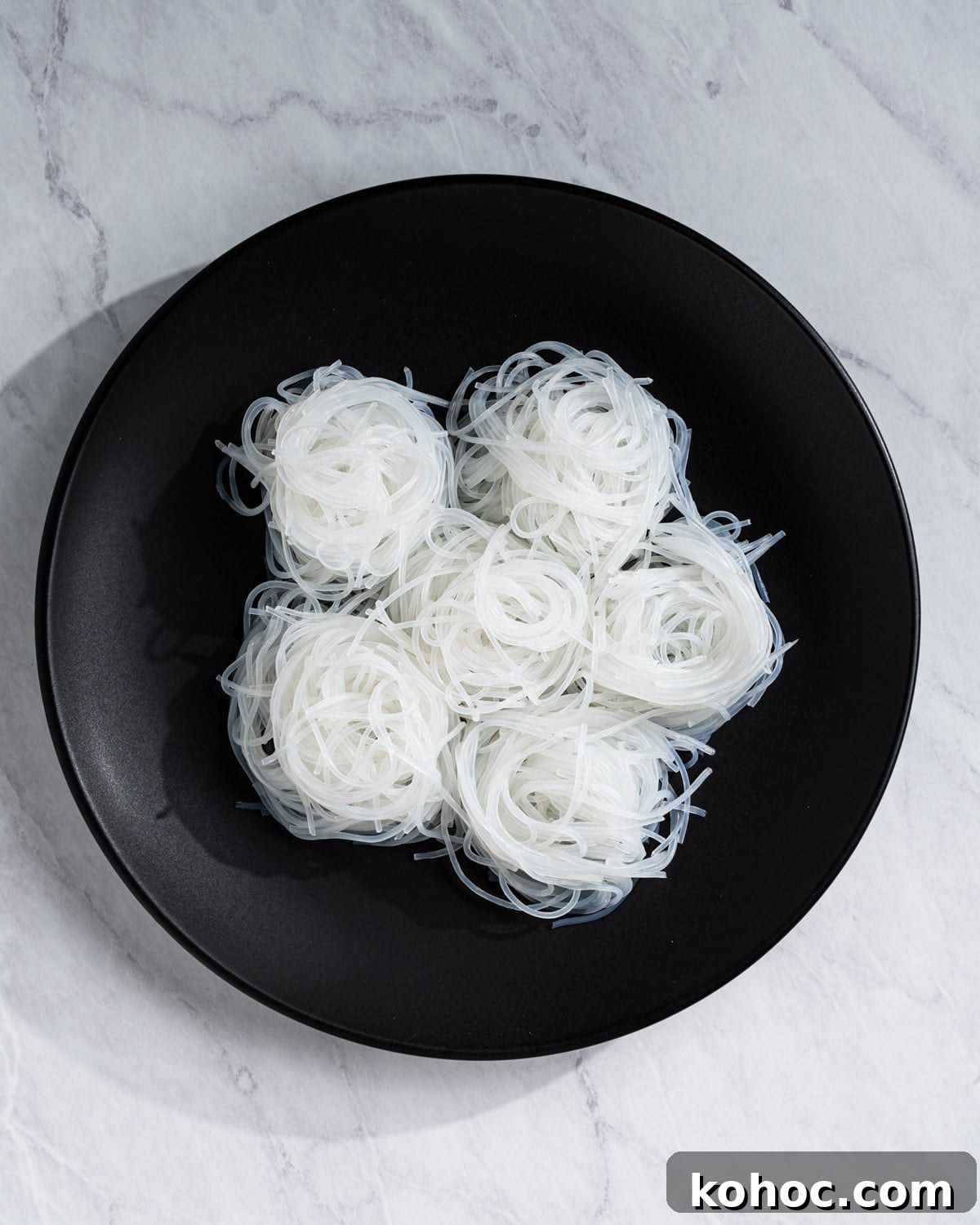
If serving with rice paper or hot pot, portion the noodles into small bundles and cut them into manageable lengths to prevent clumping.
How to Cook Dried Rice Stick Noodles
Dried flat rice noodles must be soaked before cooking. They’re ready when they bend without feeling brittle. General guidelines:
Thin Rice Noodles
- Soak in cold water for 1 hour or in lukewarm water for 30 minutes.
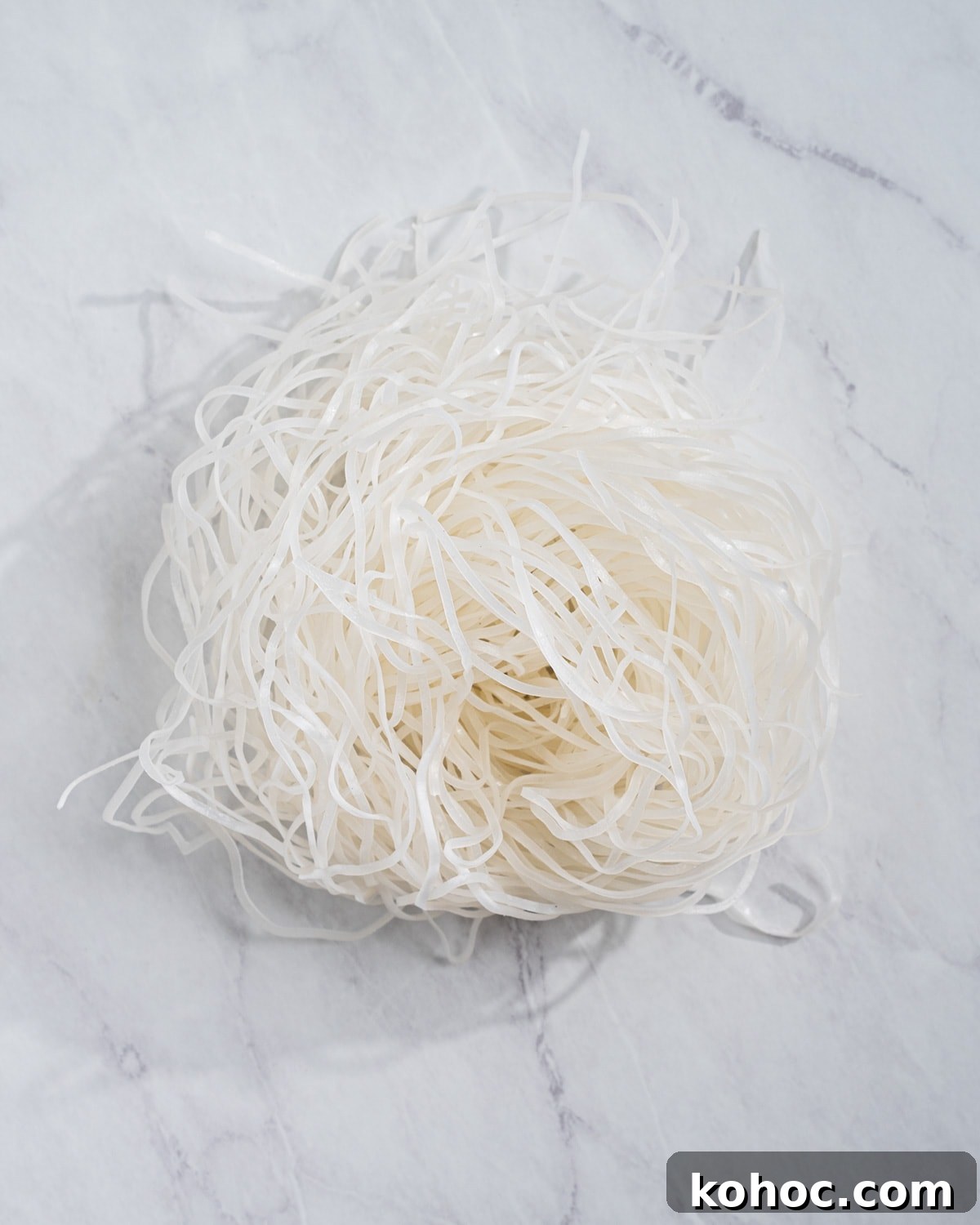
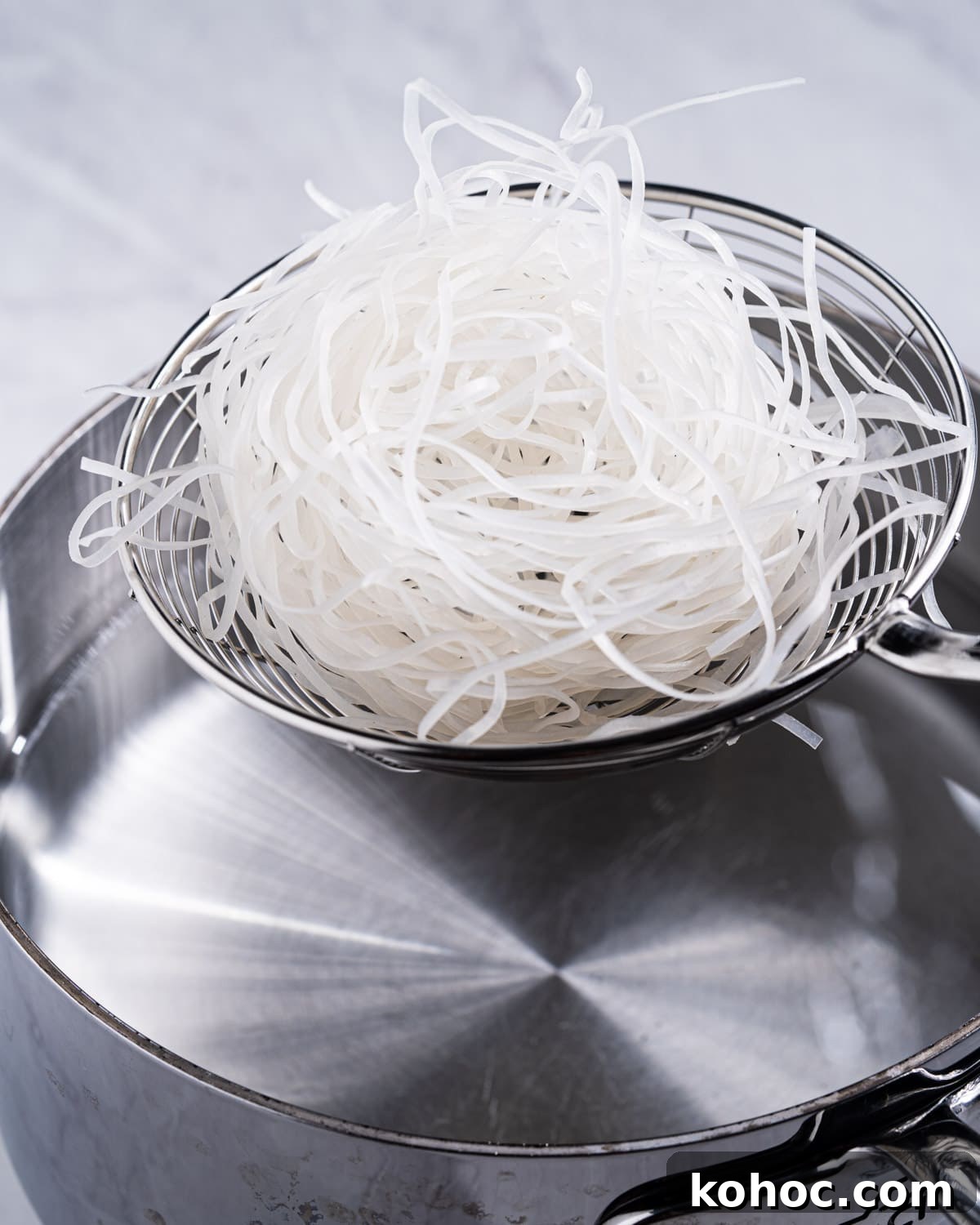
- Place one portion in a strainer and dip into boiling water for 20–30 seconds.
- Transfer directly to a serving plate or bowl.
Thick Rice Noodles
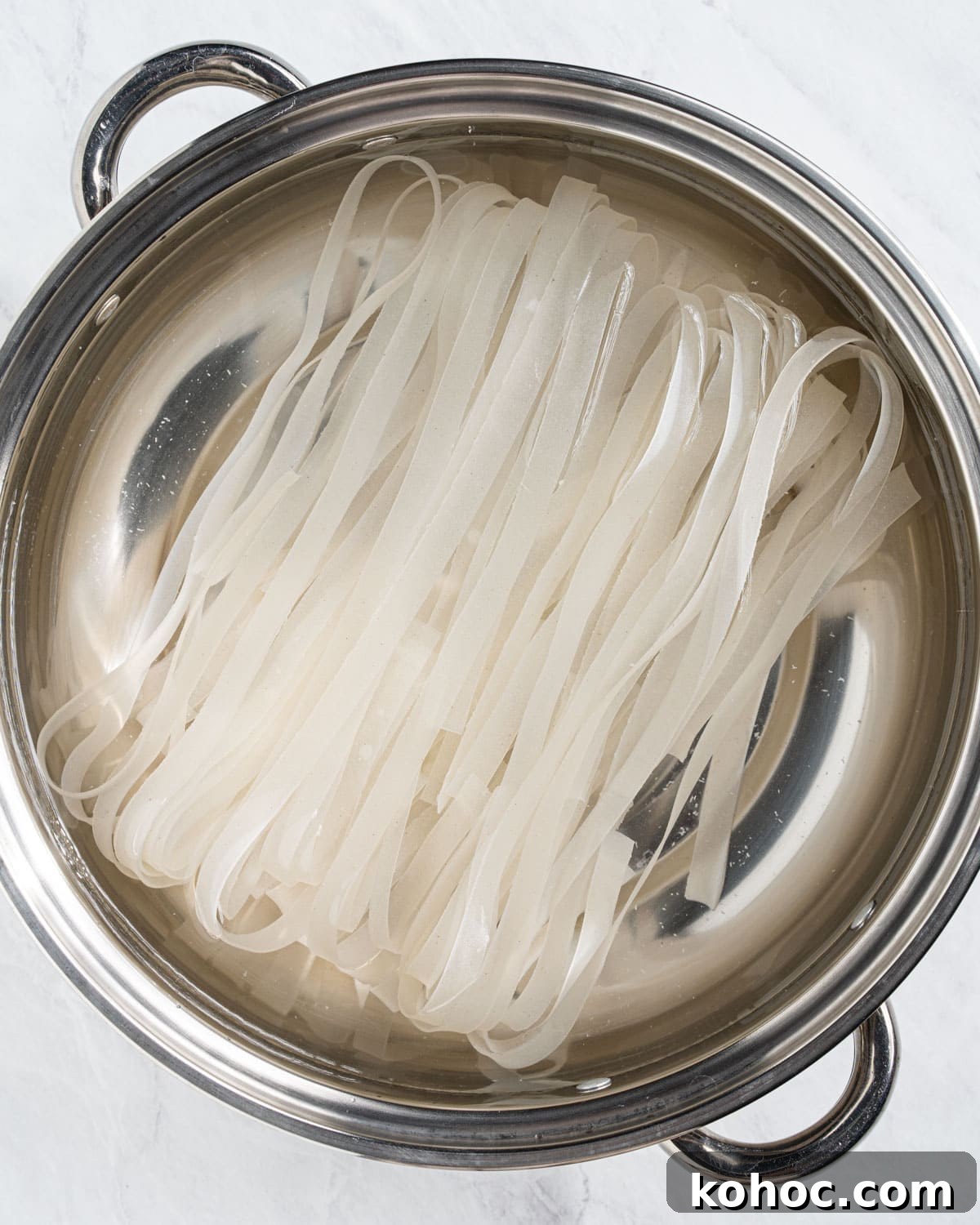
- Soak in hot water (140–160°F) for 12–15 minutes.
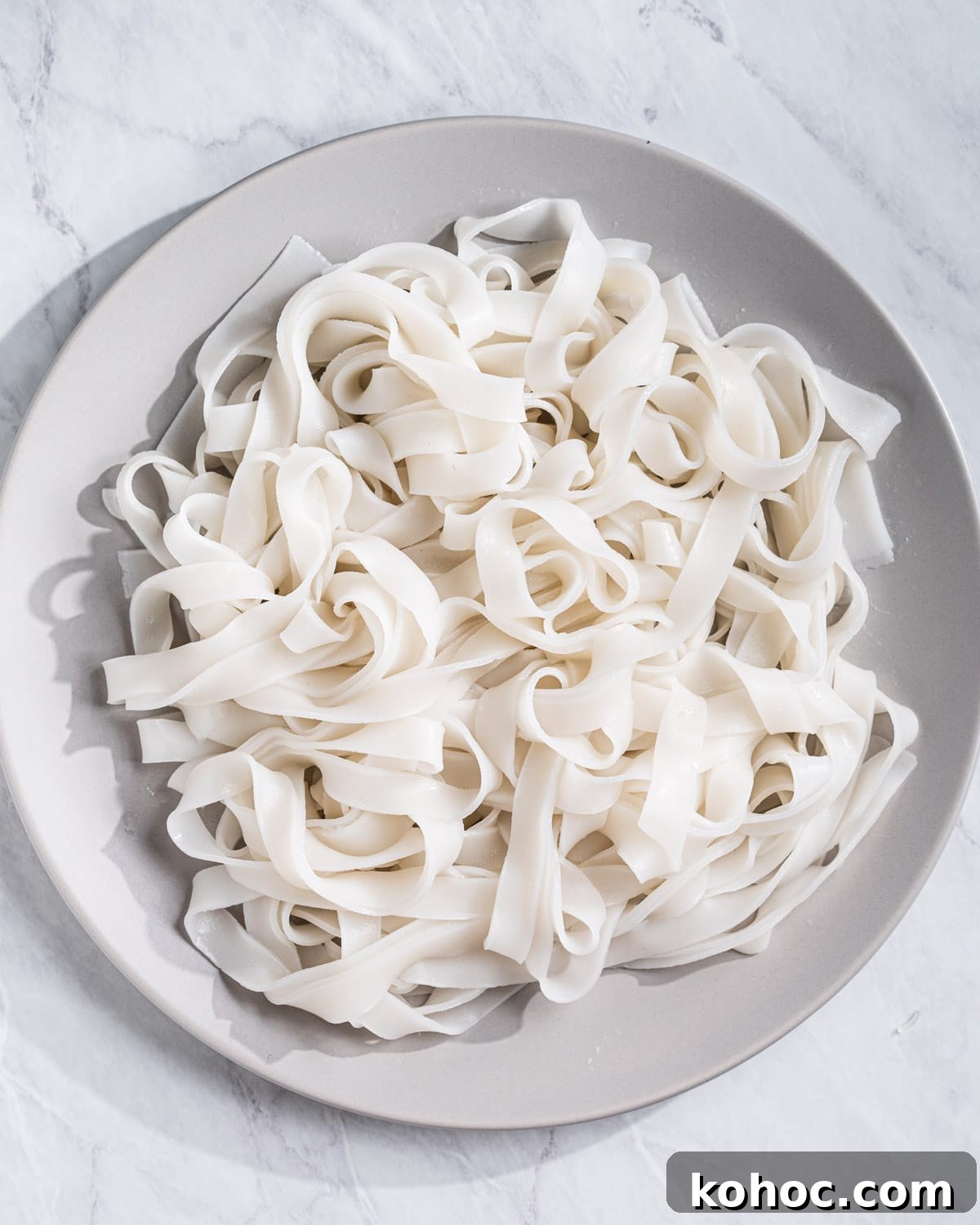
- Drain well and rinse with cold water before serving.
Tip: Packages vary by brand — always check the instructions for best results.
How to Cook Fresh Rice Noodles
Fresh rice noodles are already soft and cook very quickly:
- Place one portion in a strainer and dip into boiling water for 15–20 seconds (thicker cuts may need 1–2 minutes).
- Rinse under cold running water to stop cooking and remove excess starch.
- Transfer to a serving bowl or add directly to your dish.
Tips for Perfect Rice Noodles
✔️ Soak first: Soaking ensures even cooking and prevents breakage
✔️ Don’t overcook: Test a strand before draining
✔️ Rinse with cold water: Stops cooking and reduces sticking
✔️ Cook separately: Add noodles to soup or stir-fries after cooking for better texture control
FAQ About Cooking Rice Noodles
They were likely overcooked. Try soaking longer and boiling for less time, or rinse immediately with cold water to halt cooking.
Yes. Cook, rinse, and toss lightly with oil. Store in the fridge for up to 3 days. Reheat in hot broth or sauce.
Yes. Rinsing removes excess starch and helps prevent clumping.
Freezing is not recommended. The texture often breaks down when thawed.
Rice Noodles, Done Right
Rice noodles cook quickly, and once you understand how they respond to soaking and heat, they’re forgiving and fast. Whether you’re making pho, a vermicelli bowl, or a quick stir-fry, using the right technique will deliver the best texture.
If you have questions or tips from your own experience, leave a comment — feedback is read and appreciated.
RECIPE
How to Cook Rice Noodles
Ingredients
- vermicelli noodles
- dried flat rice noodles
- fresh wide rice noodles
Instructions
Vermicelli (Bún)
- Soak in cold water for 30 minutes until pliable.
- Cook in boiling water for 30 seconds to 1 minute until just tender.
- Drain and rinse under cold water, gently separating the noodles with your hands.
Dried Flat Rice Noodles (Rice Sticks)
- Small/Medium (Thin Noodles): Soak in cold water for 1 hour or lukewarm water for 30 minutes. Place one portion in a mesh strainer and dip into boiling water for 20–30 seconds. Drain and transfer to serving bowls.
- Large/Extra Large (Thick Noodles): Soak in hot water (140–160°F) for 12–15 minutes until soft and flexible. Drain and rinse under cold water to stop cooking.
Fresh Rice Noodles
- Loosen the noodles and separate any stuck pieces.
- Place one portion in a mesh strainer and dip into boiling water for 15–20 seconds (or 1–2 minutes for thicker cuts).
- Rinse under cold water and serve.
Notes
- Soak first: Soaking ensures even cooking and prevents noodles from falling apart.
- Don’t overcook: Rice noodles go from perfect to mushy quickly; always test for doneness before draining.
- Rinse with cold water: Stops the cooking process and reduces sticking.
- Cook separately: Prepare noodles separately from soups or stir-fries to control texture.