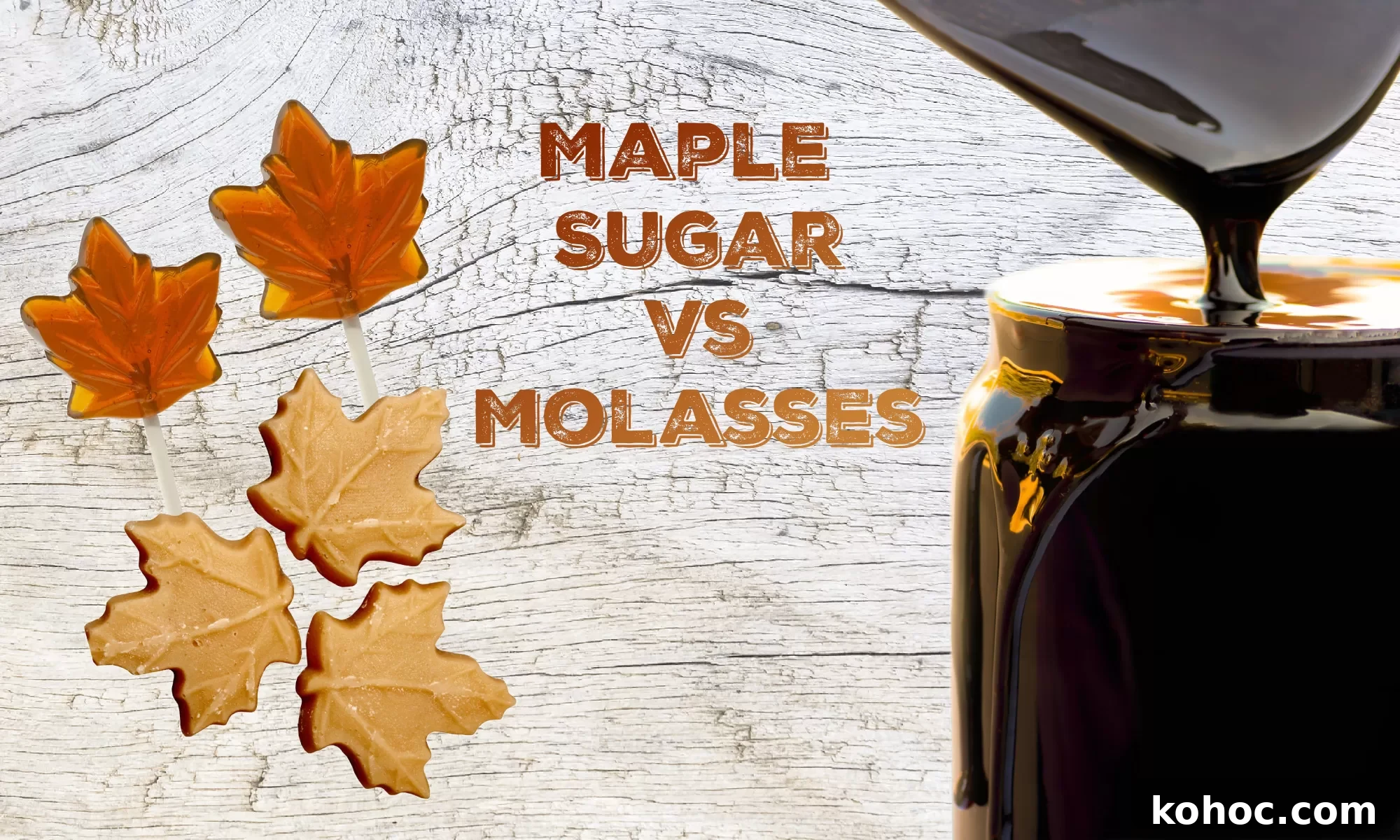
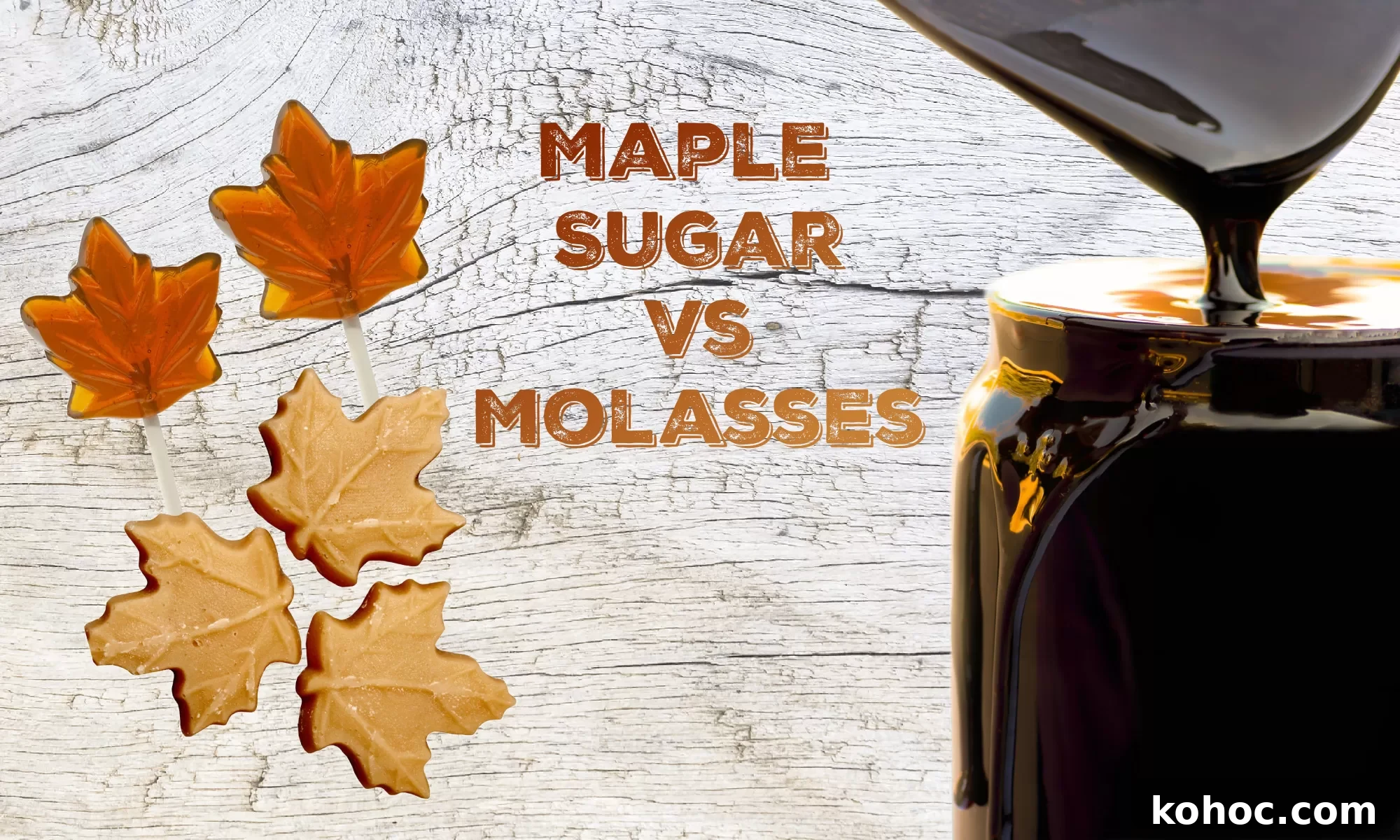
In the world of sweeteners, two distinct alternatives deserve attention: maple sugar and molasses. Maple sugar is a traditional sweetener made from the concentrated sap of maple trees, delivering a warm, natural maple flavor in a dry granulated form. Molasses is a thick, dark syrup produced as a byproduct of sugar refining, prized for its deep, smoky, and slightly bitter notes. Both have culinary strengths and particular applications; this article compares their flavor, uses, nutrition, storage, and environmental considerations to help you choose which best suits your kitchen and diet.
Comparing Maple Sugar vs Molasses
| Maple Sugar | Molasses | |
| Substitution ratio | 1 cup maple sugar: ¾ cup molasses | ¾ cup molasses: 1 cup maple sugar |
| Gluten-free? | Yes | Yes |
| Keto-friendly? | No | No |
| Paleo-friendly? | Yes | Yes |
| Common Allergens | Maple | Sugarcane |
| Pantry shelf life (unopened/sealed) | 2 years | 1 year |
| Best for baking | Any recipes that call for brown sugar | Gingerbread, BBQ sauces, smoky marinades. |
Differences Between Maple Sugar And Molasses
Maple sugar and molasses come from plant sources but differ in production and form. Maple sugar is made by boiling maple sap until almost all water is removed, producing a crystalline sugar that is primarily sucrose with small amounts of glucose and fructose. Molasses is the viscous residue left after extracting sugar from sugarcane (or sugar beets), containing sucrose, glucose, and fructose, along with minerals and flavor compounds concentrated during boiling.
Maple sugar appears as a dry, granulated sweetener with a clear maple aroma. It’s often used as a 1:1 replacement for brown sugar in recipes where a maple nuance is desirable. Molasses is liquid, intensely flavored, and darker the longer it is boiled; this intense, smoky profile makes it a powerful ingredient in baked goods, savory sauces, and marinades.
Taste and Culinary Uses
Molasses delivers a robust, deep sweetness with smoky, slightly bitter undertones. Its flavor varies by type—light molasses is milder, while blackstrap is intensely flavored and mineral-rich. Molasses pairs exceptionally well with warming spices such as ginger, cinnamon, and nutmeg, which is why it’s a classic in gingerbread, molasses cookies, and rich barbecue sauces. It also adds depth to savory dishes and certain Caribbean-inspired beverages.
Maple sugar offers a clean sweetness with a distinct maple character. Its texture is similar to brown sugar but without added molasses, and it performs well in baking as a granulated sweetener. Use it to sweeten oatmeal, yogurt, baked goods, or to finish desserts with a crunchy maple note. Maple sugar can also be combined with maple syrup to create an intense maple topping for French toast or pancakes, and it works well in rubs and glazes where a gentle maple flavor is preferred.
Are Maple Sugar and Molasses Substitutes for Each Other?
They are not perfect substitutes due to differences in moisture, texture, and flavor intensity. Granulated maple sugar won’t replicate the moisture and strong smoky character of molasses. If needed, a rough conversion is 1 cup maple sugar to ¾ cup molasses (and vice versa) for a similar sweetness level, but expect changes in texture and flavor. Adjust other recipe ingredients, especially liquids, when substituting a liquid sweetener like molasses for a dry sugar.
Nutritional Profile And Health Benefits
Typical nutrient snapshots:
- Molasses (1 tbsp): ~60 calories, 16 g total carbs, 14 g sugars, Glycemic Index ~55.
- Maple sugar (2 tsp): ~30 calories, 8 g total carbs, 7 g sugars, comparable GI to maple syrup (~54).
Blackstrap molasses stands out for its mineral content—iron, calcium, magnesium, potassium, phosphorus—and vitamin B6, plus antioxidants. These nutrients can support iron levels, bone health, and other functions when consumed as part of a balanced diet. Maple sugar also contains antioxidants and a mineral profile that may be slightly more favorable than refined white sugar. Neither is a health food, however; both are forms of added sugar and should be used in moderation.
Diet Suitability
Neither molasses nor maple sugar is keto-friendly in typical amounts because both are predominantly carbohydrate. Maple sugar is suitable for vegan diets since it is plant-derived and not processed with bone char. Both can fit into paleo-style diets, though they are not allowed on strict Whole30 or keto programs. For people avoiding specific allergens, note that maple and sugarcane derivatives may be relevant to individual sensitivities.
How to Store Maple Sugar and Molasses
Store molasses at room temperature in a cool, dark place and keep the container sealed to preserve flavor and texture. Granulated maple sugar should be kept in a cool, dry, airtight container to prevent clumping and moisture absorption. Proper storage extends shelf life and keeps both sweeteners at peak quality.
Price and Availability
Molasses is generally inexpensive and readily available in most grocery stores. Maple sugar is more costly and often sold through specialty retailers or online; price varies by quality and source. Expect a clear difference in cost per pound between the two due to production methods and scale.
Environmental Impact
Molasses itself can harm aquatic environments if large quantities enter waterways, since the high organic load can deplete oxygen and affect marine life. Maple syrup production is typically more localized and can be sustainable when managed correctly; sugar maple forests support biodiversity and help sequester carbon. Sustainable forestry and responsible agricultural practices influence the overall environmental footprint for both products.
Maple Sugar vs. Molasses: The Ultimate Verdict
Choose maple sugar when you want a gentle, unmistakable maple sweetness in dry applications or as a brown-sugar alternative in baking. Choose molasses when you need deep, smoky complexity, moisture, and a mineral-rich profile—ideal for gingerbread, robust sauces, and savory glazes. Both have places in the pantry; pick the one that complements the flavor and texture goals of your recipe.
FAQs
Maple sugar contains more antioxidants and trace minerals than refined white sugar and often more than brown sugar, which may make it a slightly better option nutritionally. Still, it remains an added sugar and should be consumed in moderation.
Unopened maple sugar stored in the pantry can keep for up to two years. Once opened, if kept dry and in an airtight container, it can last a year or longer, though best quality is typically within a year.
Tapping guidelines depend on tree size: smaller trees (about 12–20 inches diameter) are usually tapped once, medium trees (21–27 inches) can handle two taps, and large trees (over 27 inches) may sustain three taps when done responsibly.