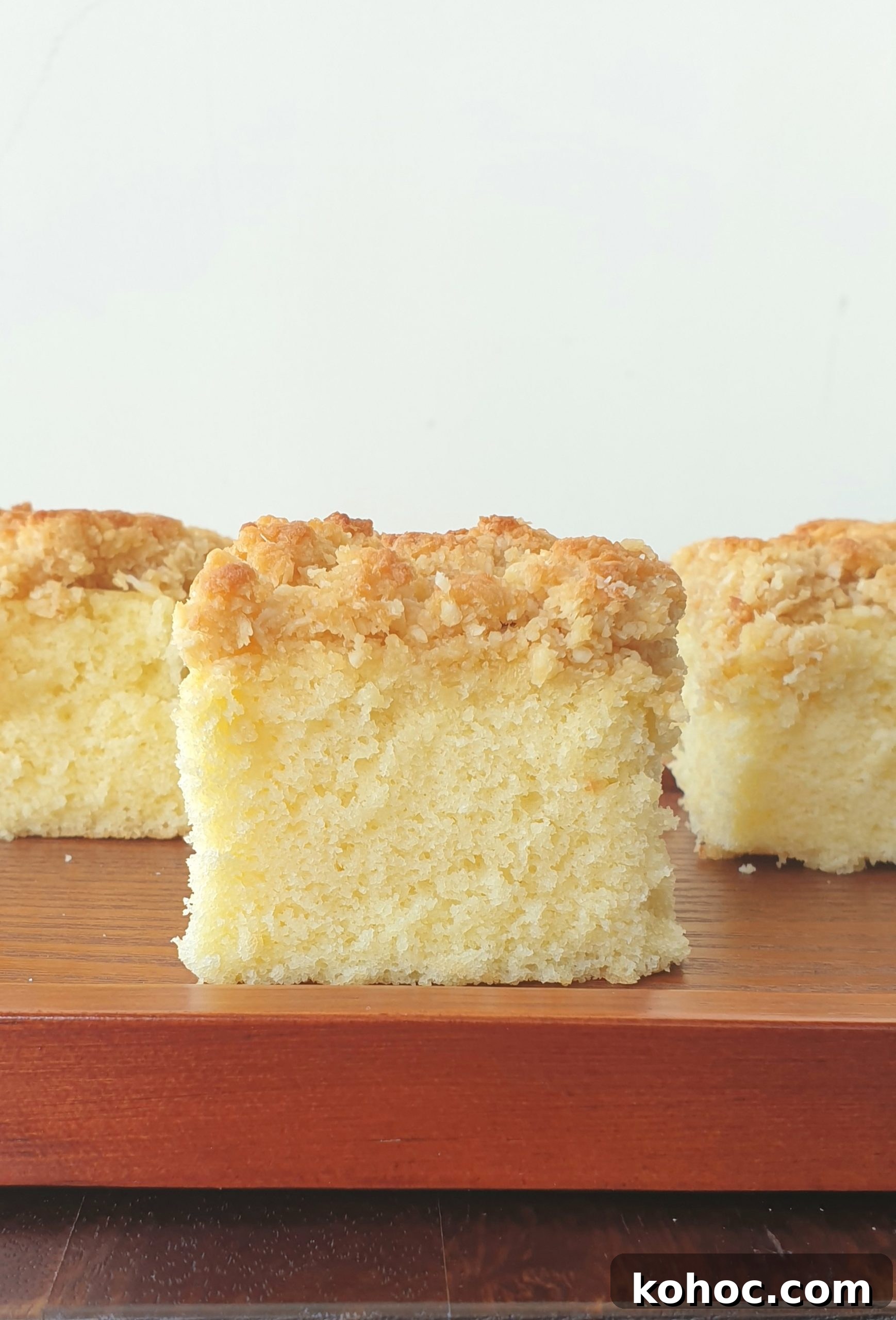
A week ago a good friend sent me a link to a Danish Dream Cake. She thought it would be good inspiration for the blog, and I was immediately hooked when I saw the cake.
I hadn’t heard of Danish Dream Cake before, so I did a bit of reading. Its official name is drømmekage, which literally means “dream cake.” The story goes that in 1960 a woman named Jytte Andersen entered a cake-baking contest organized by a major Danish food company. Her Drømmekage won, and the recipe was passed down through generations.
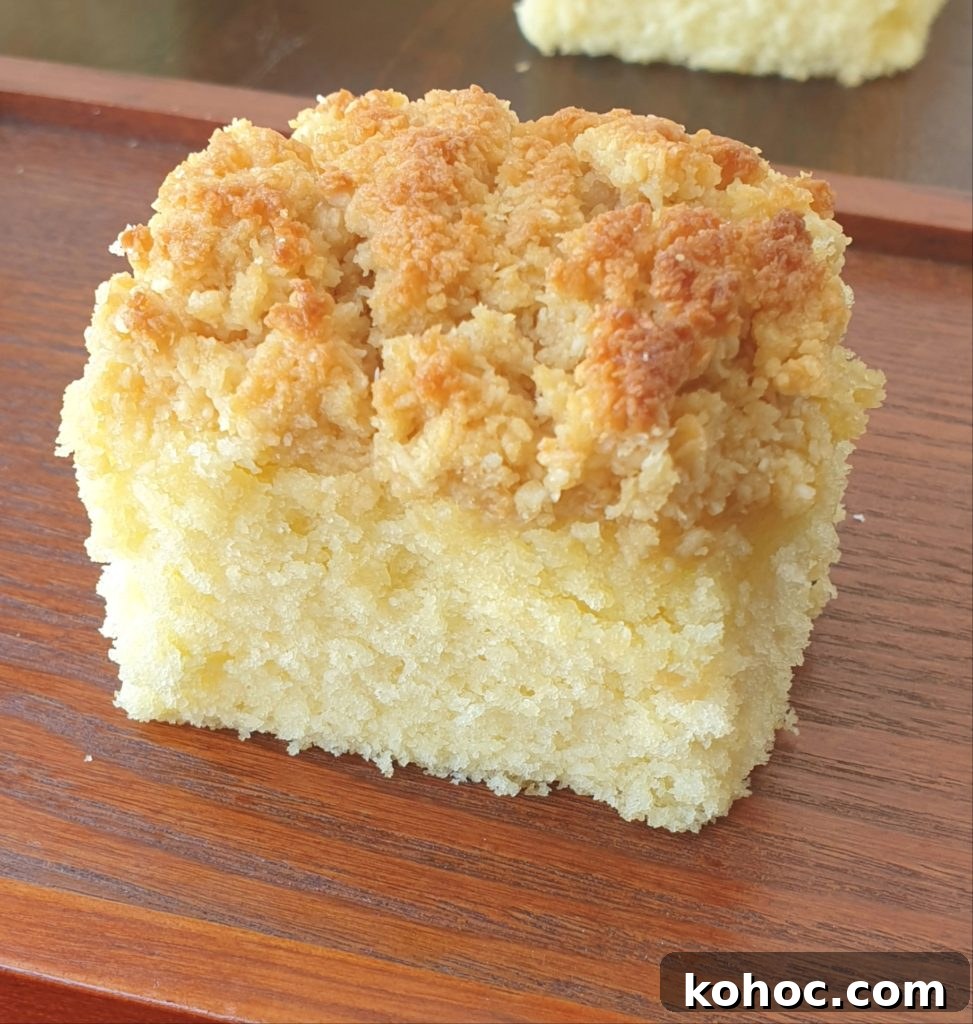
At its core, this is a simple vanilla cake topped with a caramelised coconut layer. I can’t guarantee the absolute authenticity of this version, as I combined elements from several recipes I found, but the result was delicious.
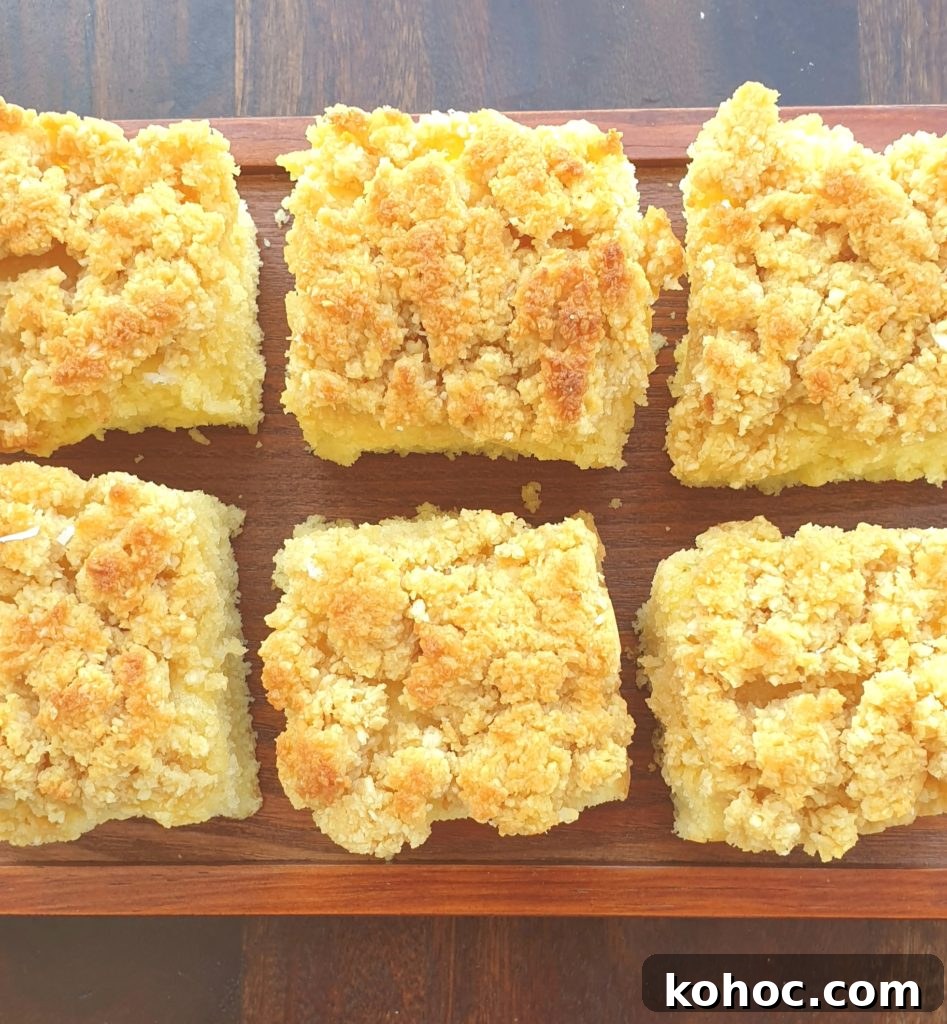
The cake batter resembles a hot milk sponge cake: eggs whipped with sugar, sifted self-raising flour folded in, and finally a hot milk-and-butter mixture added. The batter is thin, but it bakes into a thick, dense slab of cake.
Although the method is similar to the lighter hot milk sponge, the adjusted proportions make this cake denser and moister, which suits it perfectly as a snack or tea-time cake.
The topping is where this cake really shines. There are variations — some use a cooked caramel base, others use flaked coconut. My version uses brown sugar and desiccated coconut. Mine turned out a little more like a crumbly topping (probably because I reduced the sugar), but it was sweet, chewy and a perfect complement to the cake’s tender crumb.
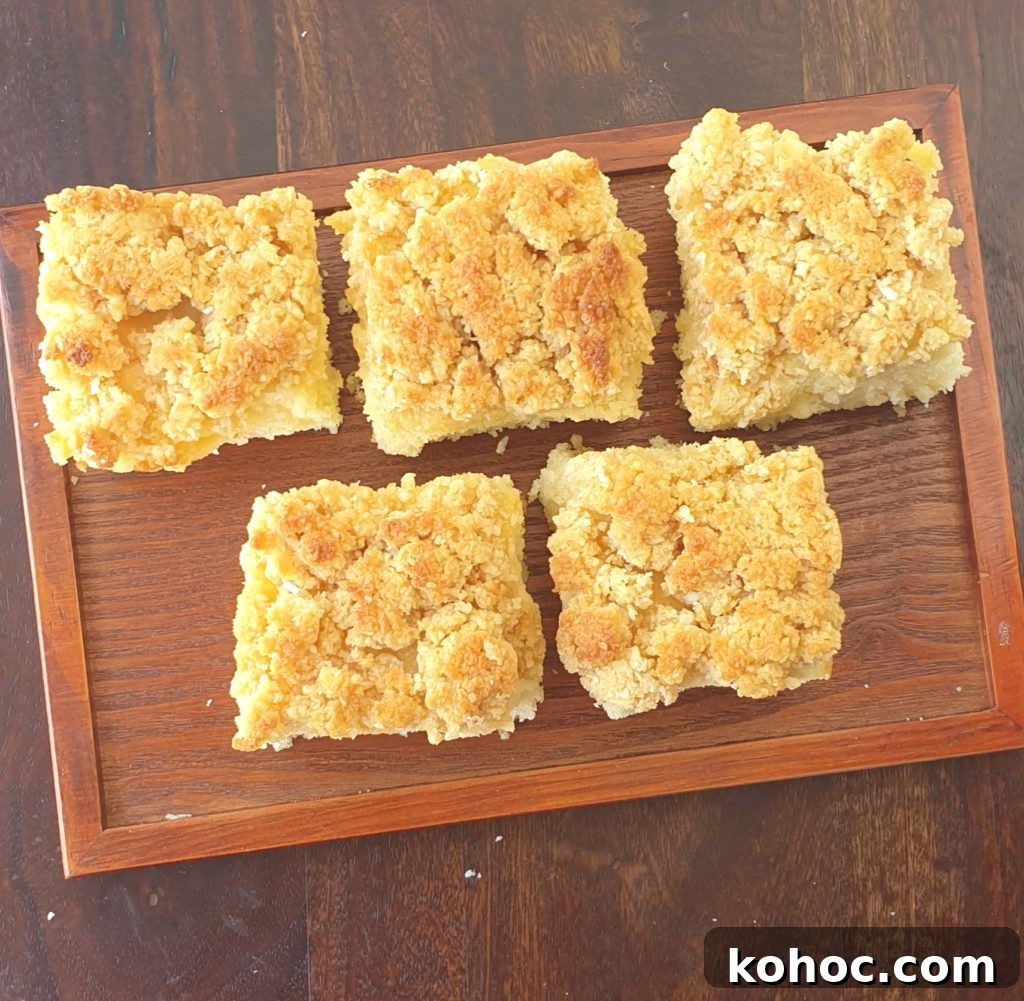
Danish Dream Cake (coconut caramel cake)
Pin Recipe
Ingredients
For the cake
- 190 grams / 1 1/2 cups all-purpose flour
- 1 1/2 teaspoons baking powder
- 1/4 teaspoon salt
- 180 ml / 3/4 cup whole milk
- 112 grams / 1/2 cup unsalted butter
- 3 eggs at room temperature
- 150 grams / 3/4 cup granulated or caster sugar
- 1 teaspoon vanilla extract
For the topping
- 75 grams / 1/3 cup unsalted butter
- 100 grams / 1/2 cup packed brown sugar
- 2 tablespoons milk
- 100 grams / 1 cup desiccated coconut
Instructions
-
Preheat oven to 180°C / 350°F.
-
Butter and flour an 8-inch (20 cm) square cake pan. You can line the bottom with parchment if you like.
-
In a bowl, whisk together the flour, baking powder and salt. Set aside.
-
In a small saucepan, heat the milk and butter until the butter melts. Keep warm.
-
In a large bowl, beat the eggs, sugar and vanilla together until tripled in volume and light and fluffy.
-
Fold in the flour mixture at low speed until just combined. Scrape the bowl to ensure no dry pockets remain.
-
Add the hot milk-butter mixture and mix just until smooth. This only takes a few seconds.
-
Pour the batter into the prepared pan and bake for 20–25 minutes, until the top is set, springs back when pressed, and is lightly browned.
-
While the cake bakes, make the topping.
-
In a saucepan, heat the brown sugar, milk and butter until the sugar dissolves and the mixture bubbles.
-
Remove from the heat and stir in the desiccated coconut until well combined.
-
When the cake has baked 20–25 minutes, remove it and increase the oven temperature to 200°C / 400°F.
-
Spread the topping evenly over the cake surface.
-
Return the cake to the oven and bake for about 10 minutes, until the top is nicely browned.
-
Cool in the pan for 10 minutes, then gently remove and transfer to a wire rack to cool completely.
Video
Notes
Don’t overfill the pan — leave room for the cake to rise and space for a thin topping layer.
My measuring cup is 240 ml.
If you prefer an eggless version, use your favourite vanilla eggless cake recipe and top it with the coconut mixture.
This cake is only mildly sweet. If you want a sweeter cake, increase the sugar in the batter to about 1 cup (I used 3/4 cup).
If you like a thicker, more indulgent topping, double the topping quantities. A sweeter topping will spread more easily; mine was more crumbly and required a bit of patching when spreading.
This cake pairs perfectly with a cup of coffee — the pun is irresistible. If you have a big sweet tooth or want to impress, double the topping. Too much of a good thing? I don’t think so.