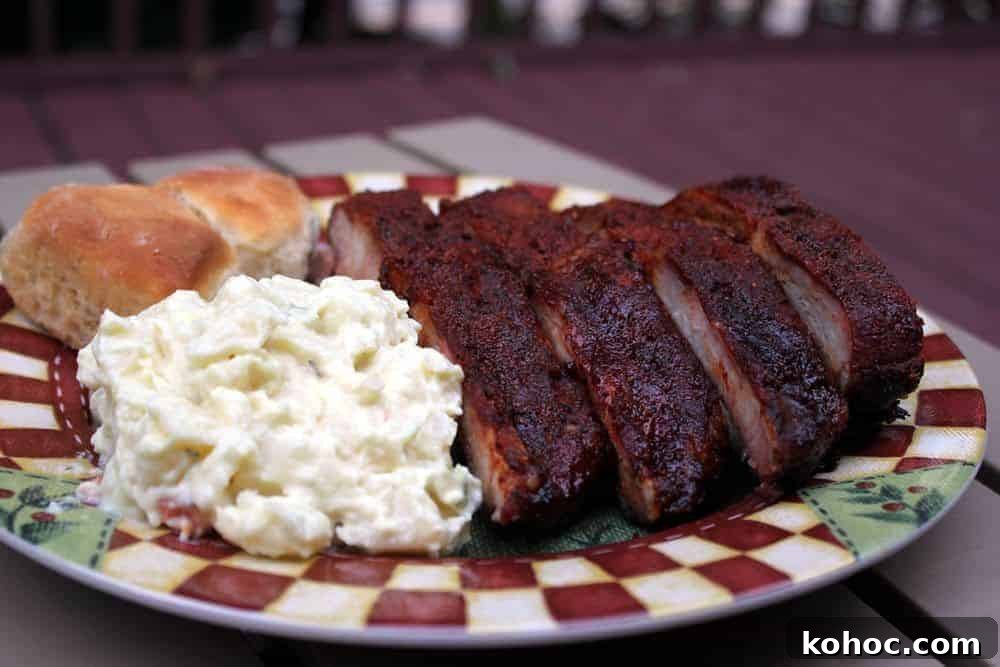
Welcome to this edition of the Smoking Meat newsletter. In this installment I share a real-world experiment that combines travel, family visits, and the need to smoke ribs without any of my usual equipment. It was an opportunity to demonstrate that technique and experience matter more than the gear when it comes to smoking great meat.
While visiting relatives recently I discovered there was no smoker, no covered grill, and I hadn’t brought my usual supplies. That presented a challenge, but with some creativity and basic store-bought items plus a large charcoal grill at a local park, I managed to smoke several racks of ribs. The results exceeded my expectations — the ribs finished among the best I’ve ever cooked.
This story is a challenge to you: don’t let the absence of specialized tools stop you from doing the cooking you enjoy while traveling. With some ingenuity, you can adapt and get excellent results.
Previous Newsletter:
Special Labor Day 2012 Edition
This Labor Day issue walks you through tips for smoking meat during the holidays and offers easy access to many past newsletters so you can quickly decide what to cook for the occasion.
Missed a Newsletter? Check out the Archive
Smoking Ribs Without a Smoker or Covered Grill
Note: This was done with no smoker, no prior preparation, and no specialized smoking tools.
What do you do when you need to smoke ribs while visiting relatives and you lack a smoker, supplies, or even a covered grill? You get creative. Below I describe what I used and how I put everything together, along with alternatives you might consider in similar circumstances.
What You’ll Need
- Six foil oven liners
- Heavy-duty aluminum foil
- Lighter or matches
- Canola or vegetable oil
- Newspaper
- Charcoal (lump is preferred; briquettes will work)
- Smoking wood chunks (I used mesquite)
- Grill brush (a wad of foil works as a substitute)
- Three to four large foil pans
- Three to four racks of baby back ribs
- A batch of your favorite rib rub (I used my Jeff’s Rub)
- Yellow mustard (for binding the rub)
Finding and Preparing a Grill
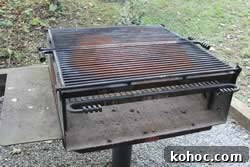
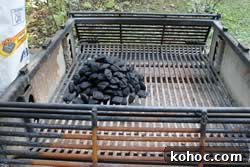
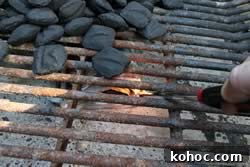
I located an open charcoal grill at a local park. These grills are often small, but I was able to find a larger one that suited my needs. I used about four pounds of briquettes arranged to one side of the grate to create an indirect-heat cooking area.
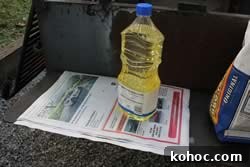
I avoid lighter fluid, and without firestarters available I used crumpled newspaper soaked lightly with oil to start the coals. This method works reliably if you position the paper so the coals can catch from the rising heat.
Preparing the Ribs
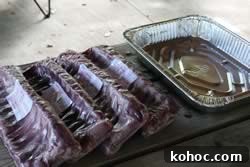
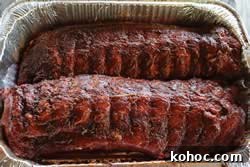
I bought four racks of baby back ribs, yellow mustard, ingredients for the rub, and several disposable foil pans for prepping, cooking, and transporting the ribs. I applied a thin coat of mustard to each rack and massaged the rub in. For speed I left the membrane attached initially, but I later decided I prefer removing the membrane — it’s a worthwhile step and I recommend you take the time to remove it.
Building a Makeshift Smoker Box
Because the park grill is open, I needed to craft an enclosed space to trap heat and smoke. I joined oven liners at their edges to form a box and used the included metal clips to secure seams. I wrapped foil around one side of the grill and over the top to direct heat and smoke into the box. A stick laid across the top helped keep the liners from blowing away, and a rock weighed down the foil to prevent wind from lifting it.
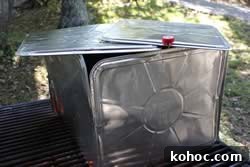
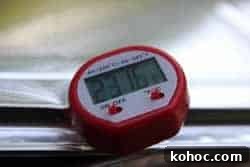
I bought a basic thermometer, which was helpful, but you can manage temperatures by feel and by moving coals around. I aimed to hold the cooking zone at roughly 200–275°F and adjusted coal placement to maintain that range.
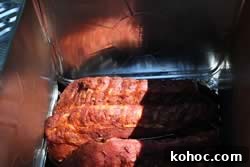
I arranged the ribs vertically in a clearance rib rack I found at the store, which maximized space inside the box. Rolling them into a barrel shape and skewering them would have been another space-efficient option.
Adding Smoke and Managing Heat
To add smoke flavor I placed mesquite wood chunks close enough to the coals to smolder without catching fire. Finding the right spot took some trial and error. I added coals periodically and shifted them as needed, making this a more active process than a typical set-and-forget smoke.
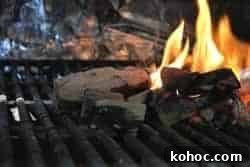
My plan was a modified 2-2-1 approach. I smoked the ribs for about two hours in the makeshift smoker box, then moved them to a foil pan covered with foil and placed the pan near the coals where I could hear a faint sizzle but avoid direct charring.
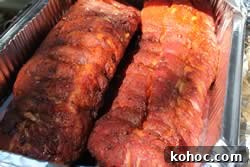
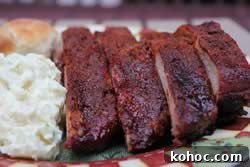
After about an hour in the pan, I placed the ribs directly on the grate away from the hottest coals for roughly 30 minutes, then returned them to the pan until they reached my preferred tenderness. The total cook time was about 5.5 hours. The ribs were tender and flavorful without being completely falling-off-the-bone.
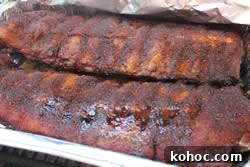
We served the ribs with potato salad and rolls for a satisfying meal.
Notes
- If a park grill isn’t available, you could dig a roughly 3-foot diameter by 1-foot deep pit, lay an oven grate over it, and adapt the same method to create an improvised smoker. The park grill simply made the setup easier.
- Wrapping the entire grill in foil could have held smoke and heat better, but the removable box allowed more control over the amount of heat entering the chamber.
- Ribs aren’t judged by internal temperature for tenderness alone; they’re safe at 145°F, but tenderness is what determines doneness. A practical test is to lift the rack with tongs — when it bends to about 90 degrees, the ribs are usually ready.
- In a pinch you can smoke for a couple of hours on-site, then finish the ribs at home in a covered pan in a 225–240°F oven for an additional three to four hours.