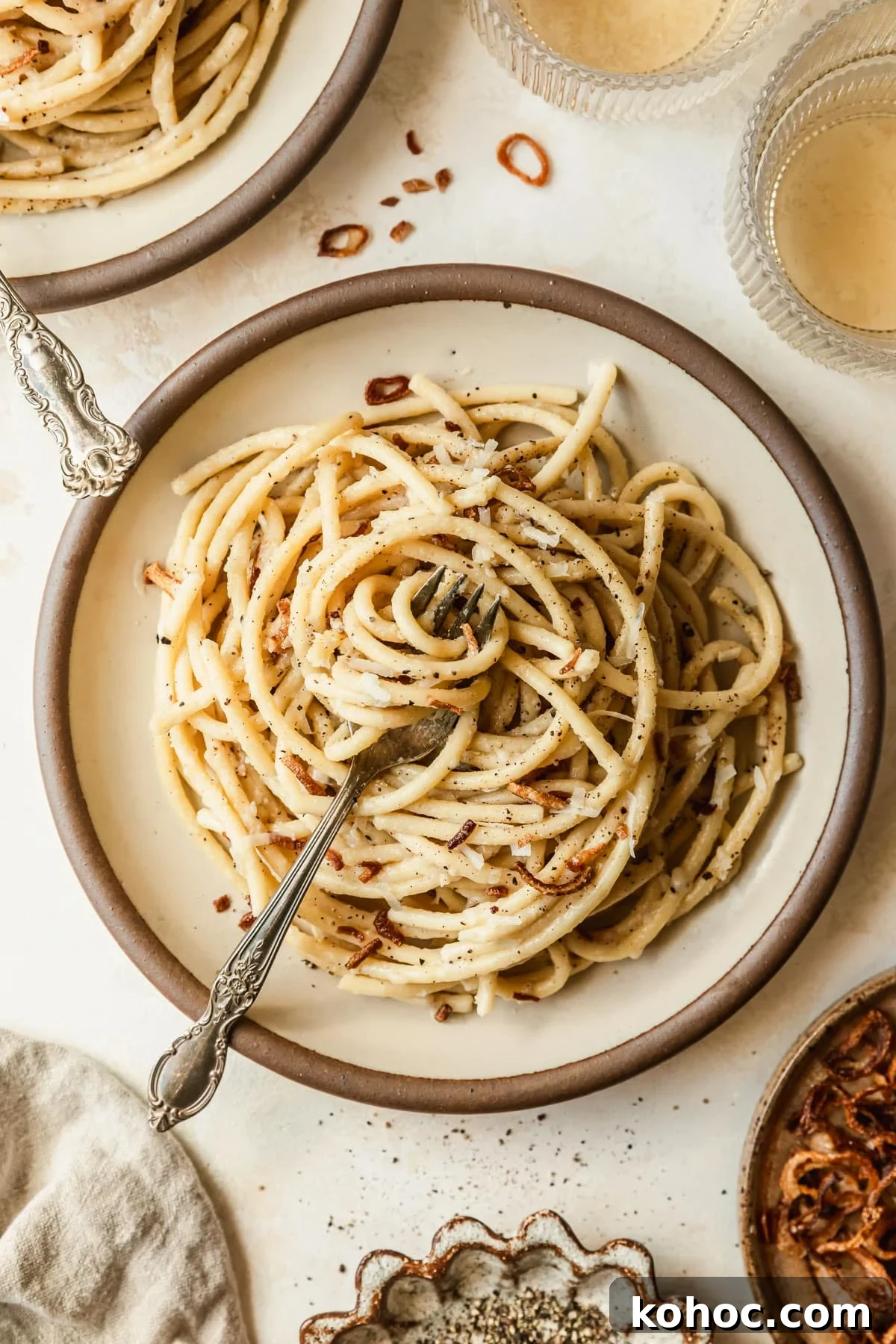
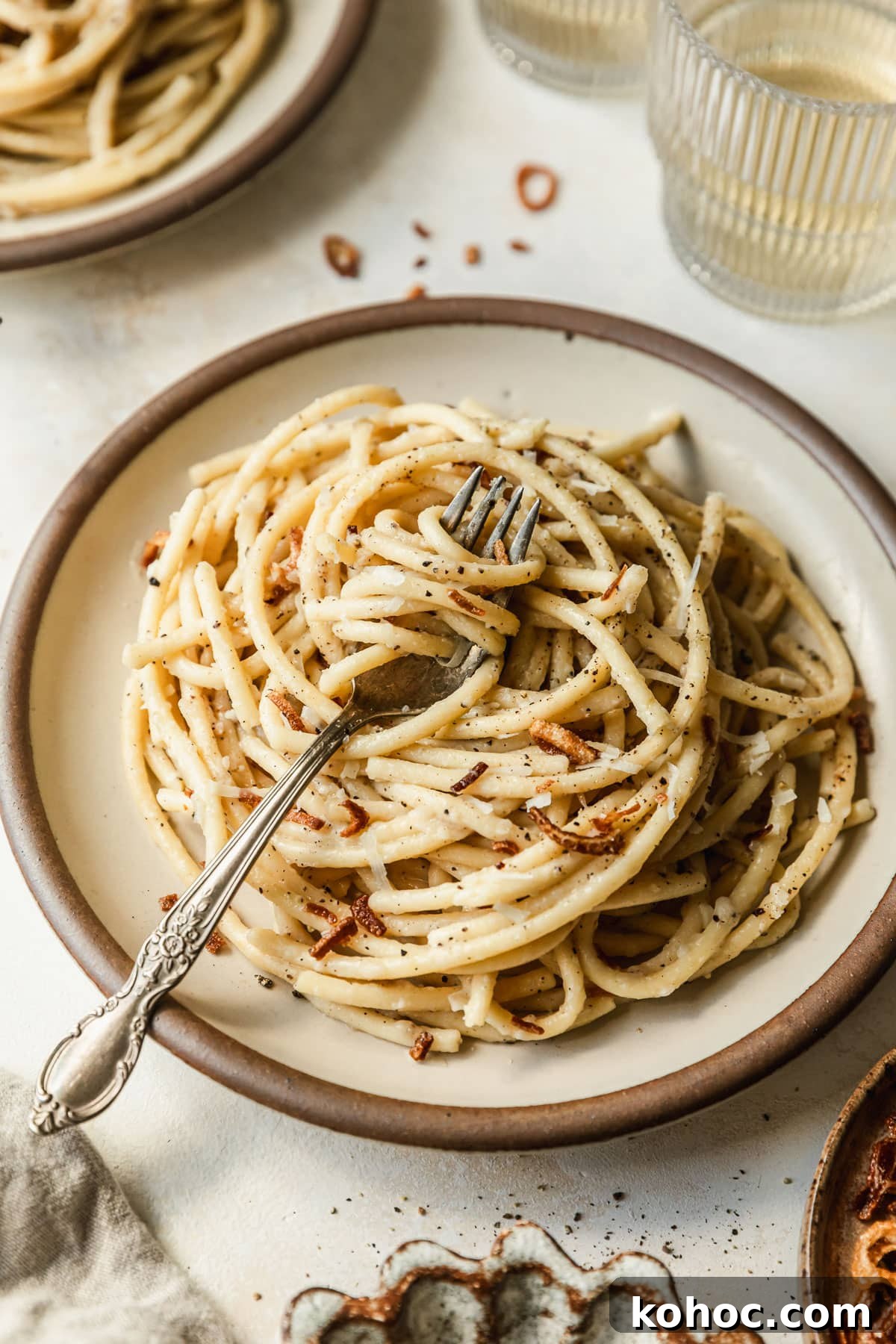
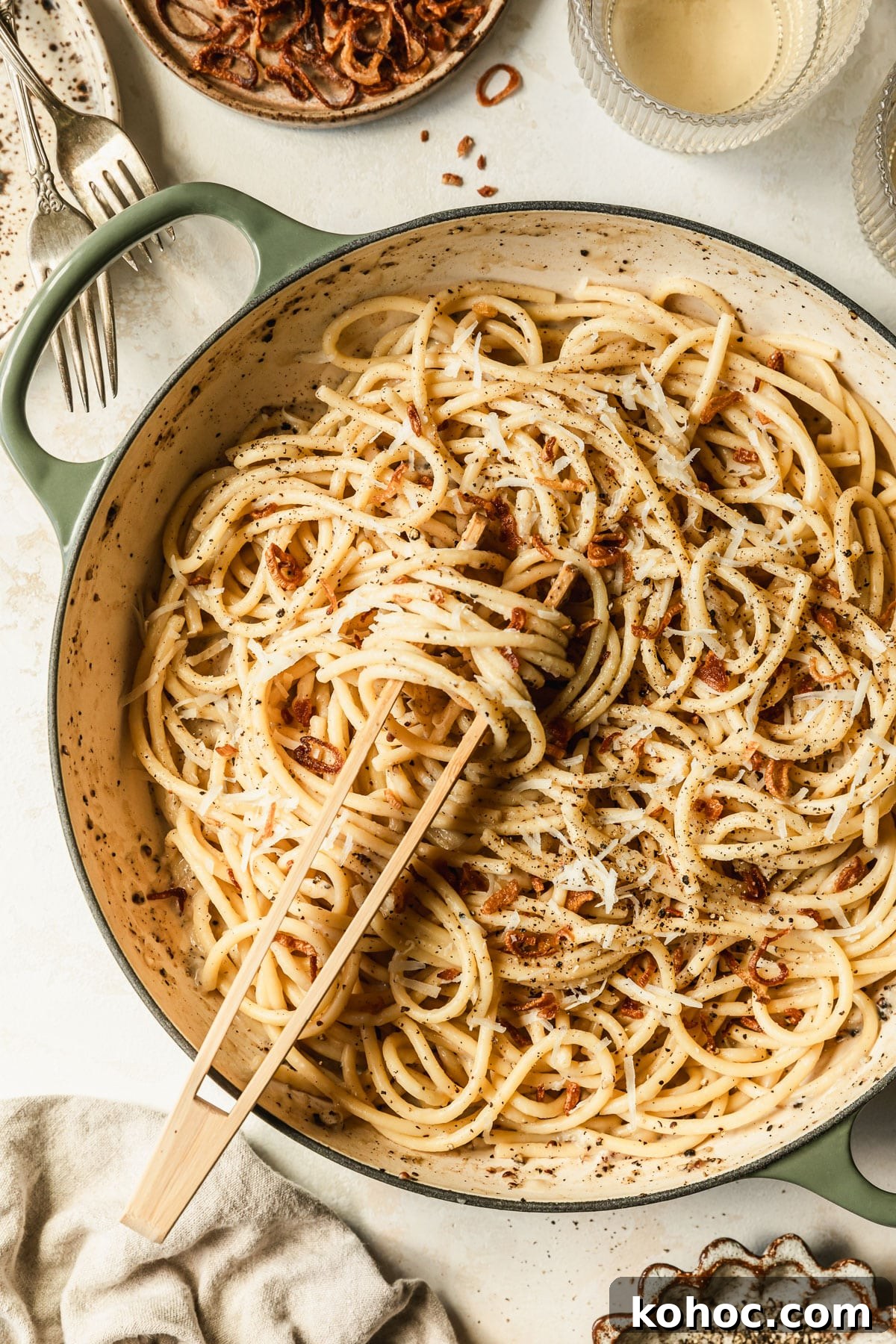
If there’s one foolproof dish for a dinner party, it’s pasta. This bucatini cacio e pepe with fried shallots uses just five ingredients for an elevated take on the classic Roman favorite. It’s simple, quick to make, and luxuriously creamy and cheesy. Serve it as a main or a side — everyone will love it.
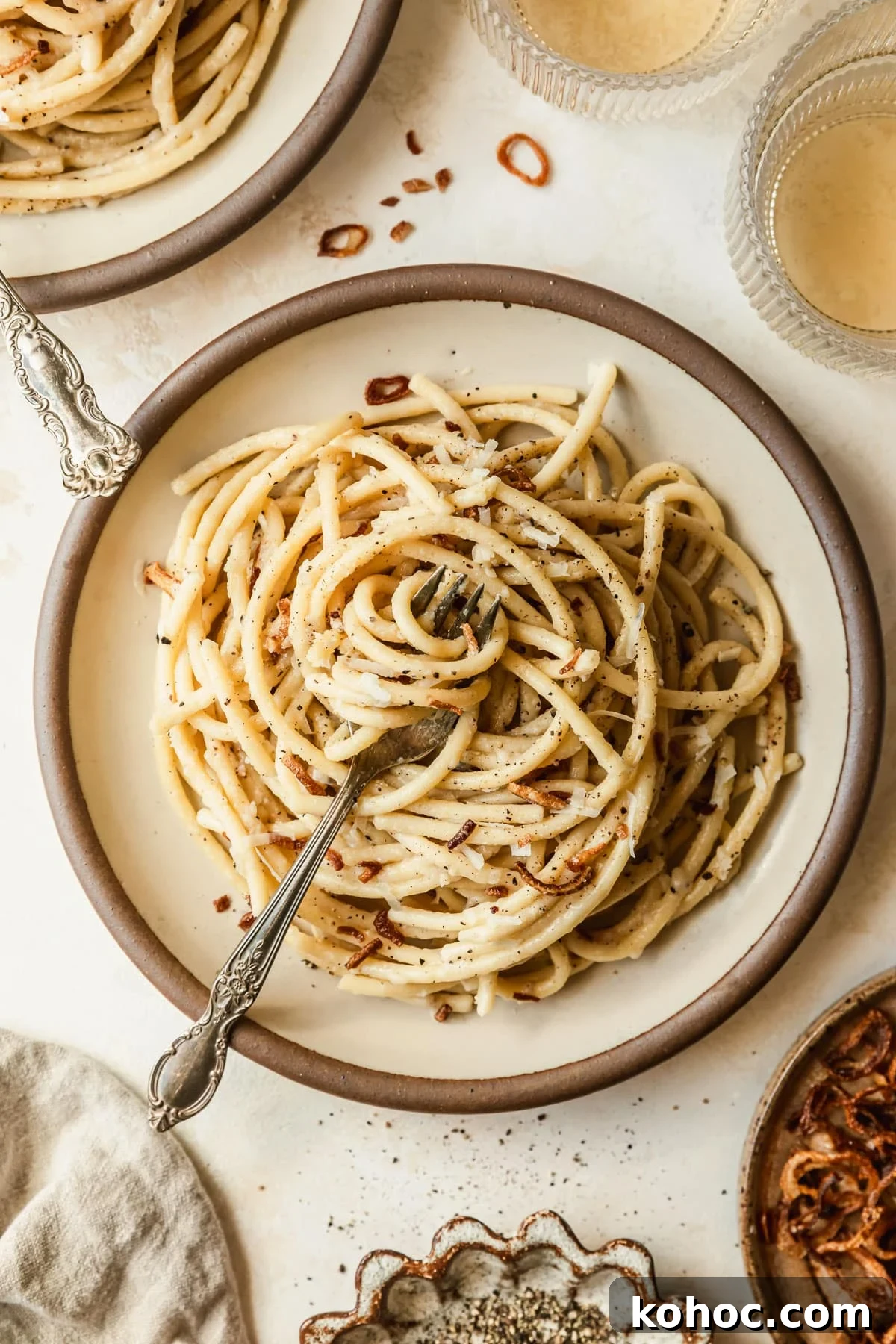
My go-to menu for a girls’ night includes pasta, a big salad, garlic bread, and a few bottles of wine. It’s relaxed and elegant, and everyone leaves happy and comfortably full. Cacio e pepe fits right into that vibe: minimal ingredients, maximum flavor.
The essence of cacio e pepe is remarkably simple — cheese and pepper — but technique makes all the difference. I first learned the method in culinary school and then enjoyed it in Rome. For this version I add crispy fried shallots for contrast. The shallots aren’t traditional, but they add a savory crunch that pairs beautifully with the silky Pecorino sauce.
Light a candle, put on something cute, and invite your friends — pasta night is on.
If you want more pasta ideas, try bucatini carbonara, an ultra-creamy marry-me chicken pasta, or a pork ragù with gnocchi. They’re all crowd-pleasers.
5 ingredients (+ variations!)
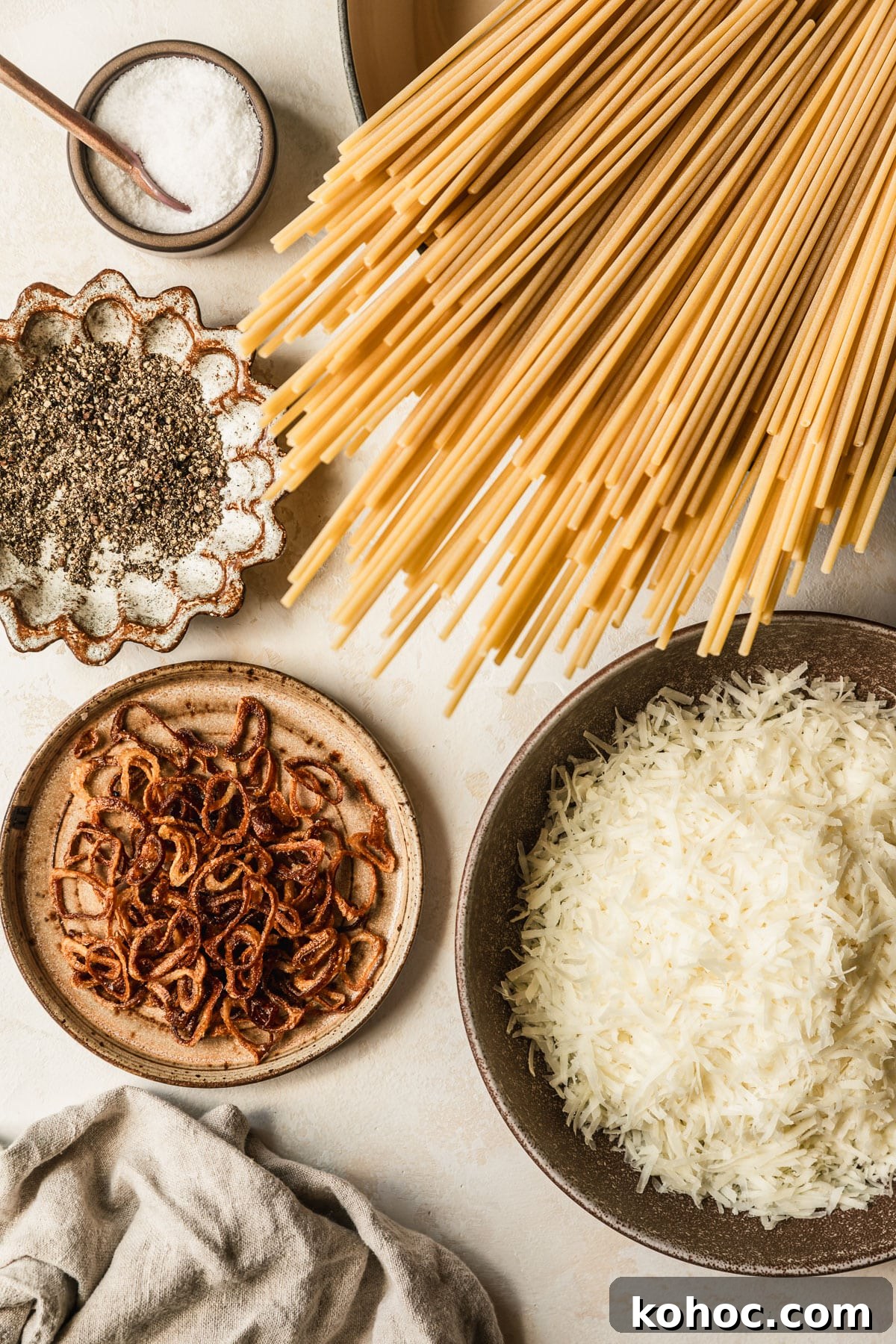
This dish relies on five quality ingredients: pasta, freshly-ground black pepper, Pecorino Romano, fried shallots (store-bought or homemade), and kosher salt. Bucatini is the traditional choice, but spaghetti works well too.
Always use freshly-grated Pecorino Romano. Pre-shredded cheese contains additives that can cause the sauce to clump.
Bronze-cut bucatini
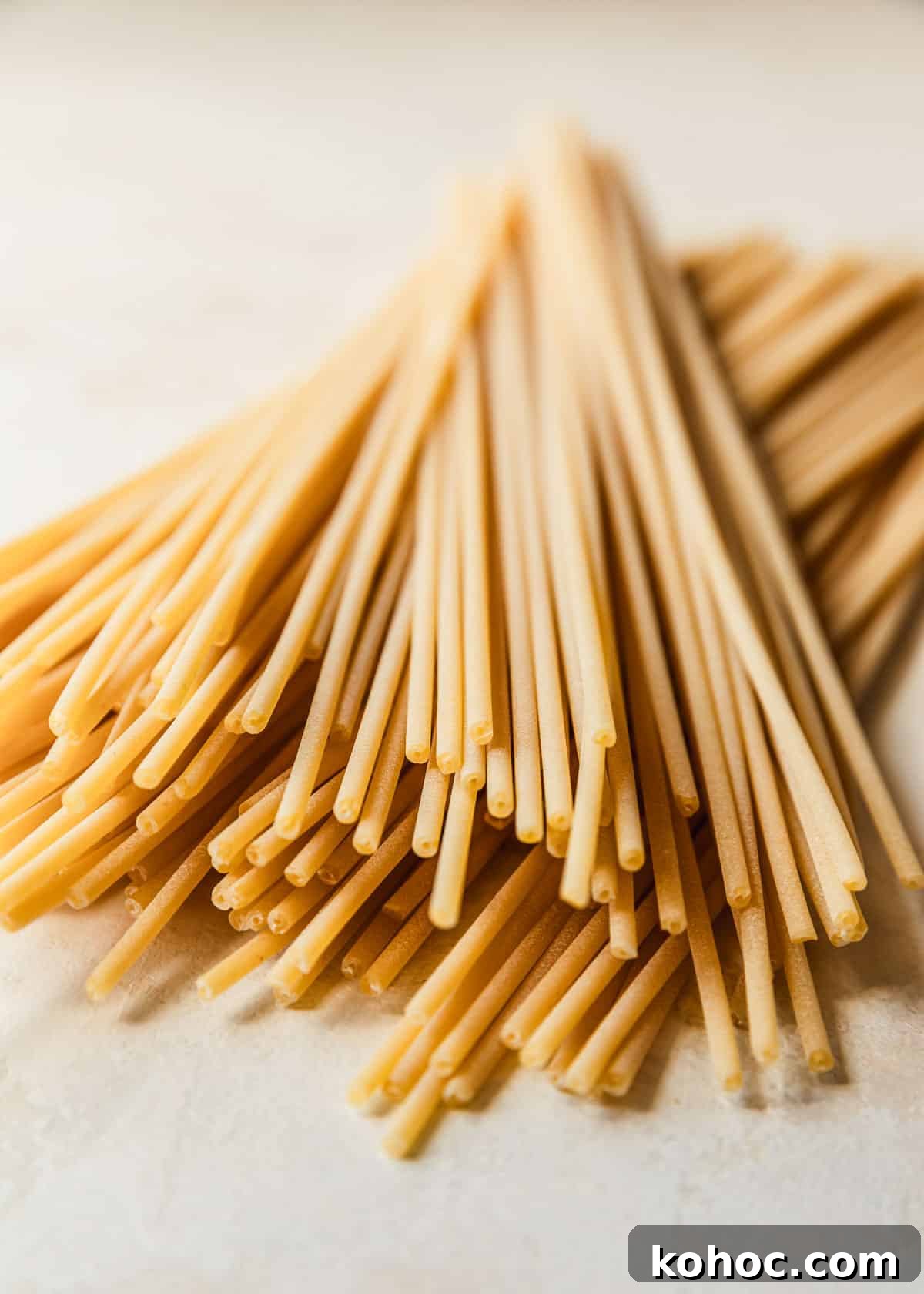
Bucatini is like a thicker spaghetti with a hollow center, which helps it capture sauce. If you can find bronze-cut pasta, use it — the slightly rough texture grabs more sauce and improves the overall mouthfeel.
Bronze-cut (or bronze die) pasta has a coarser surface that holds sauce better — a small upgrade that makes a big difference.
How to make perfect cacio e pepe
The method here is the classic technique I learned in culinary school and have used for years. It’s straightforward and reliable when you follow a few key steps.
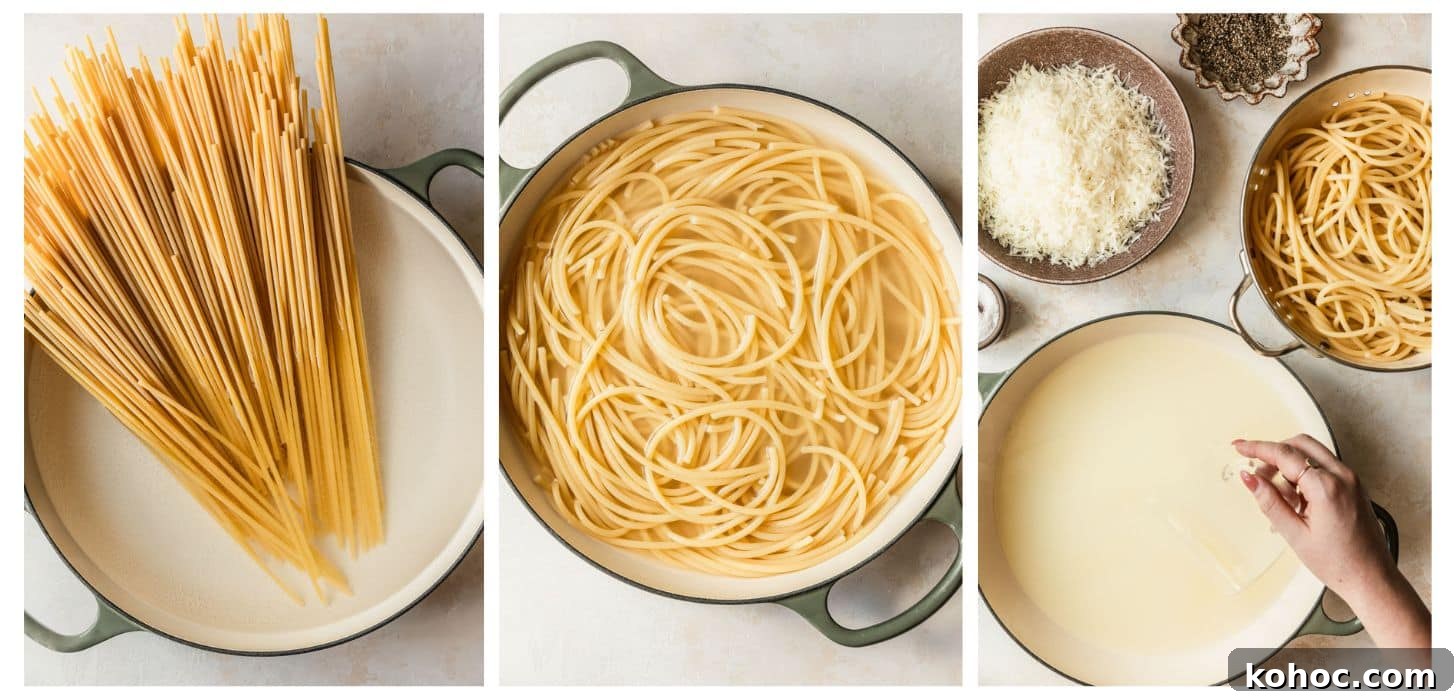
Use just enough water to cover the pasta so the cooking liquid becomes nicely starchy — that starch is essential for a silky sauce.
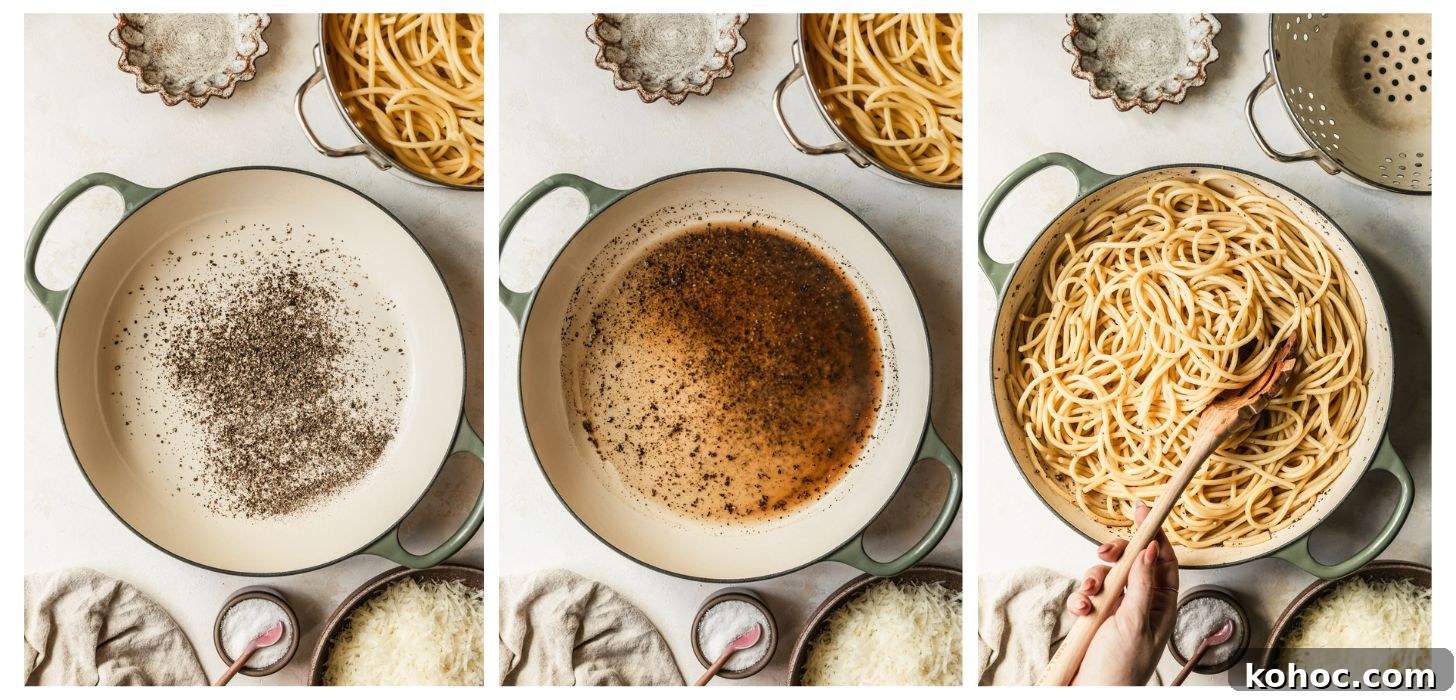
If you saved any oil from frying the shallots, add 1–2 tablespoons to the pan and let the pepper bloom in that oil for extra shallot flavor.
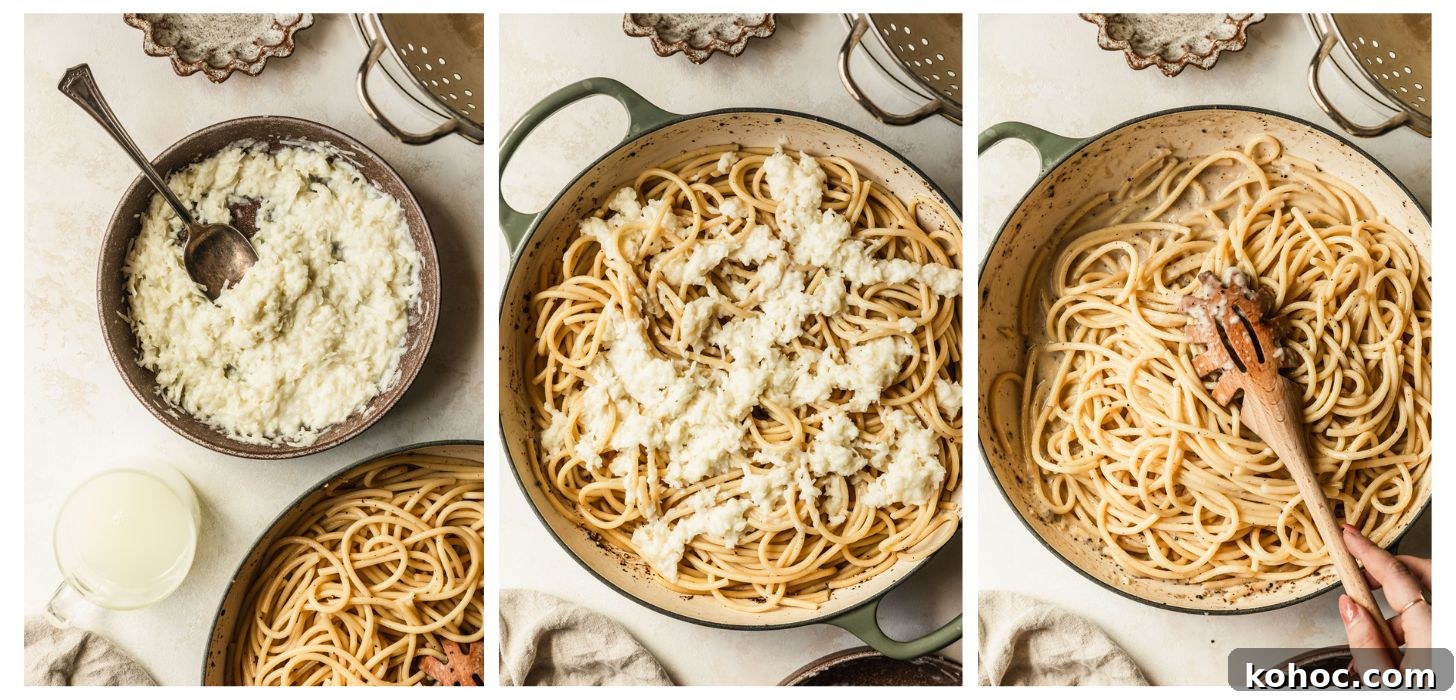
If the sauce seems too thick, add starchy pasta water a splash at a time until it reaches the consistency of heavy cream.
Prevent cheese clumps
The difference between an amazing cacio e pepe and a disappointing one comes down to technique. Avoid clumpy cheese with these tips:
- Freshly-grated Pecorino: Pre-shredded cheese contains anti-caking agents that can make the sauce grainy.
- Temper the cheese: Mix a small splash of starchy pasta water into the grated Pecorino to create a thick paste before adding it to the pasta.
- Stir off the heat: Combine the cheese with the pasta off the heat using the residual warmth. If needed, return to the lowest heat and stir constantly until smooth and creamy.
Store & reheat leftovers
This dish is best served fresh, but leftovers keep. Store cooled pasta in an airtight container in the refrigerator for up to 3 days. Reheat with a splash of reserved pasta water: microwave 1–1½ minutes or warm gently in a pan over medium-low heat, stirring until the sauce returns to a creamy consistency.
Do not store the fried shallots with the pasta — they will become soggy. Add them only right before serving.
If you make this recipe, please leave a rating and review — I read every comment and love hearing what you think. Thanks for supporting Sunday Table!
The Best Bucatini Cacio e Pepe with Fried Shallots
Ingredients
Cacio e Pepe
- 1 pound bucatini or spaghetti (454 grams)
- Kosher salt, to taste
- 2 1/2 teaspoons freshly-ground black pepper
- 2 cups freshly-grated Pecorino Romano, plus more for garnish (140 grams)
- Fried shallots, for serving (optional)
Equipment
-
Box grater
-
Dutch oven or large pot
-
Colander
Instructions
-
Fill a large pot with just enough water to cover the pasta. Salt the water generously — it should taste like the sea. Bring to a boil and cook the bucatini 1–2 minutes shy of al dente. Before draining, reserve at least 2 cups (480 milliliters) of starchy pasta water.
-
After draining, dry the pot and return it to medium heat. Add the freshly-cracked black pepper and toast for about 1 minute, shaking the pan often.
-
Stir in 1 cup (240 milliliters) of the reserved pasta water to create a smooth base. Add the pasta and toss until it reaches al dente and is well coated. Remove the pot from the heat.
-
Mix a splash of pasta water into the Pecorino to form a thick paste, then spoon it over the pasta. Let it sit for about 1 minute, then quickly stir until the sauce is glossy. Add more pasta water a splash at a time if needed to reach the consistency of heavy cream.
-
Adjust seasoning with salt and pepper. Divide between bowls and top with extra Pecorino and fried shallots. Serve immediately.
Notes
For more shallot flavor, add 1–2 tablespoons of reserved shallot frying oil to the pan before toasting the pepper and let it bloom for about 1 minute.
Use freshly-grated Pecorino Romano to avoid clumping.
If the cheese doesn’t melt off the heat, return the pan to the lowest heat and stir constantly until smooth.
Add fried shallots right before serving to keep them crisp.
xo Sara Lynn
Song of the day – He Loves Me by Brittany Howard
Originally posted on April 16, 2020.