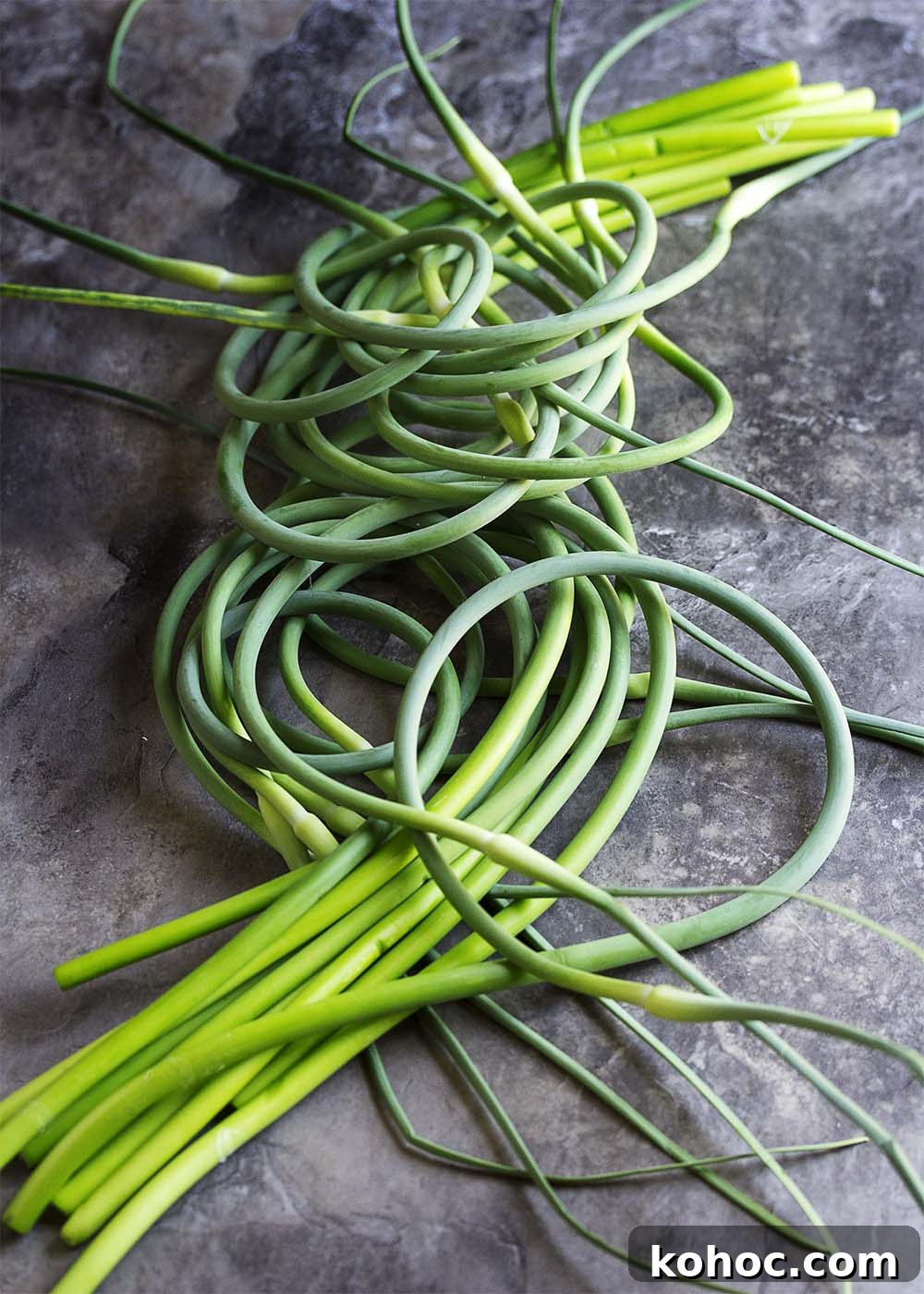
Did you find garlic scapes in your CSA box or at the farmer’s market and wonder what to do with them? This guide explains what garlic scapes are, how they taste, how to use them, and how to store them.
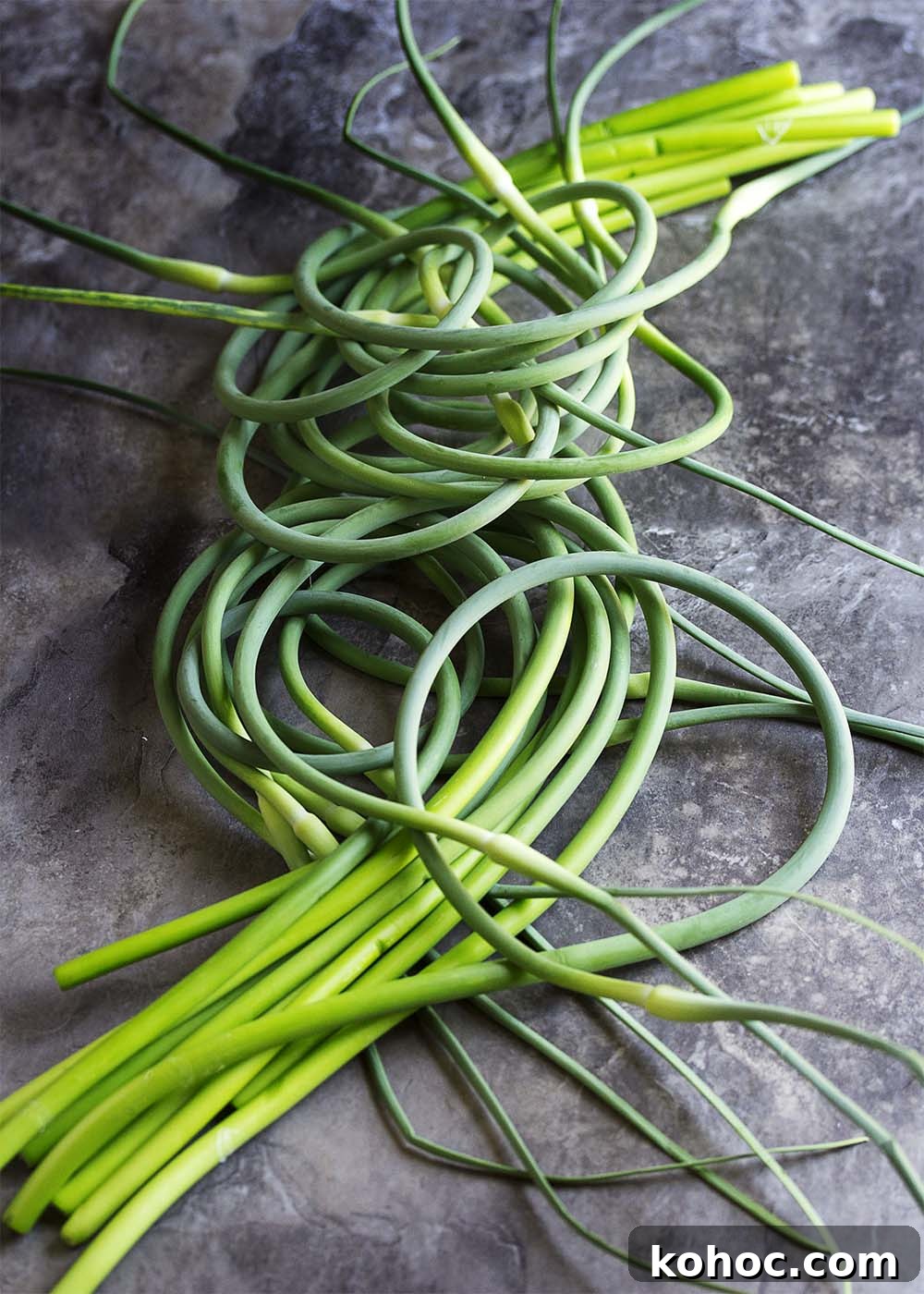
Garlic scapes are one of my favorite seasonal vegetables. Since first seeing them at the market, I’ve used them in pesto, risotto, dips, sautés, and grilled dishes. If you enjoy garlic, scapes are a versatile ingredient that adds fresh, mild garlic flavor to many recipes.
What are Garlic Scapes?
In late spring and early summer you’ll often see bundles of curly green shoots at farmers’ markets and farm stands. These shoots are garlic scapes — the flowering stalks produced by hardneck garlic plants.
Not all garlic produces scapes. Softneck garlic, the common grocery-store variety, doesn’t form a scape and typically yields more cloves per bulb. Hardneck garlic, on the other hand, sends up a scape in spring. Growers usually remove the scape to prevent the plant from flowering so the bulb puts energy into developing larger cloves. That harvest gives you both a garlic bulb and a tasty, edible scape.
Garlic scapes have a texture similar to asparagus stems: tender enough to eat raw, yet sturdy enough to grill, roast, or sauté.
Where do Garlic Scapes come from?
Garlic originated in central Asia and has been cultivated for thousands of years. Hardneck garlic is the older variety and grows best in regions with cool winters and distinct seasons. Scapes generally appear in spring (mid to late spring in many temperate regions). If you don’t see them at your market or in your CSA, ask local farmers — they’re often happy to point you to a seller.
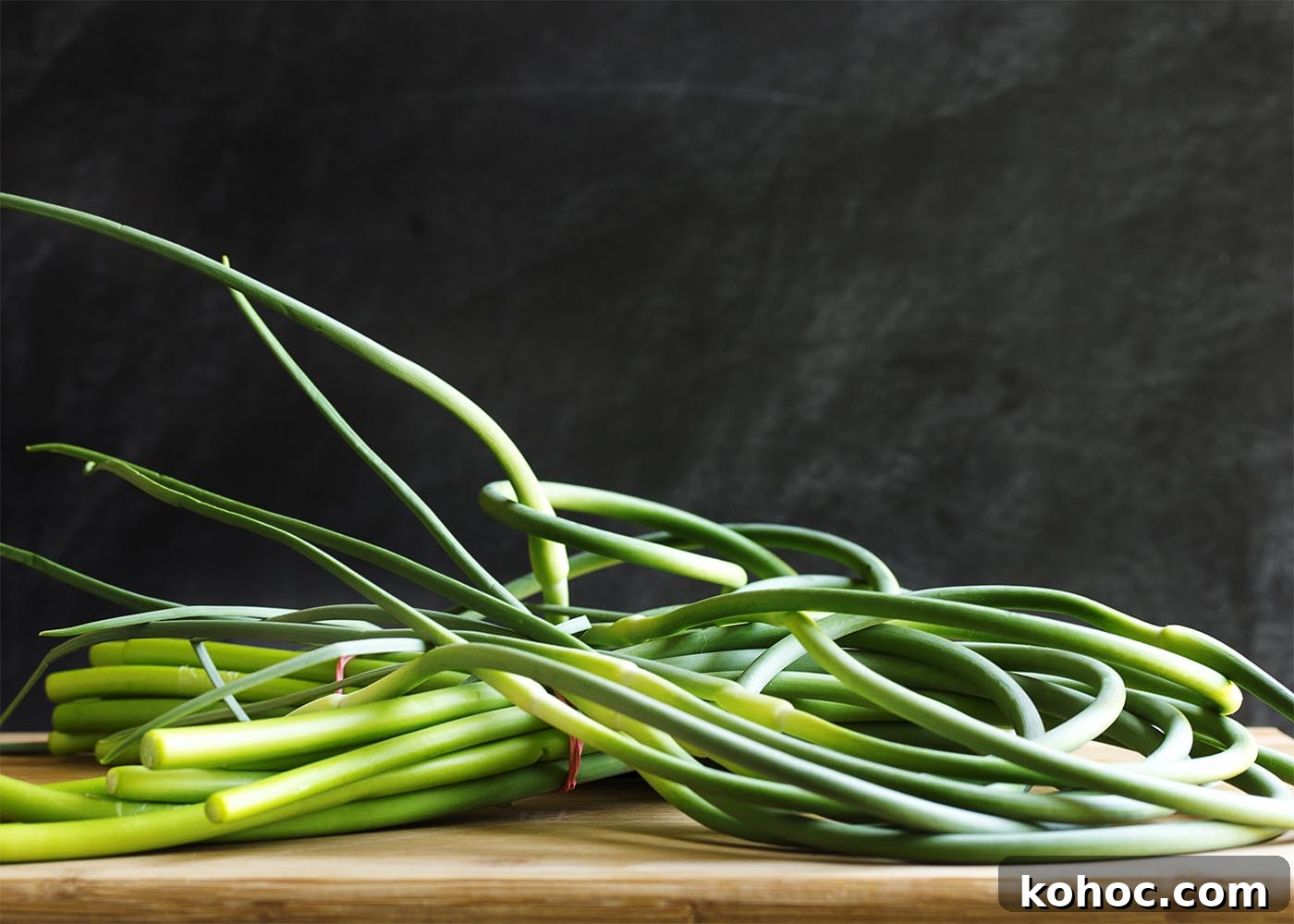
What do Garlic Scapes taste like?
They taste like garlic, but milder and slightly greener or grassy in character. Because their flavor is more delicate than garlic cloves, you can use more scapes in a dish without overpowering it. Scapes are best raw or cooked briefly; extended cooking dulls their flavor. Popular preparations include raw in salads, blanched, quickly sautéed, or grilled.
Nutritional benefits
Garlic scapes are low in fat and calories and supply minerals such as manganese, calcium, phosphorus, and selenium, along with vitamins like B6 and C. Like other Allium family members, they contain sulfur-rich phytocompounds, antioxidants, and other beneficial micronutrients. Consuming them raw preserves many of these compounds.
Potential benefits associated with garlic and related Allium vegetables include supporting cardiovascular health, boosting immunity, reducing inflammation, and providing antioxidant effects. Many of these advantages are linked to compounds such as allicin, which are strongest in raw forms.
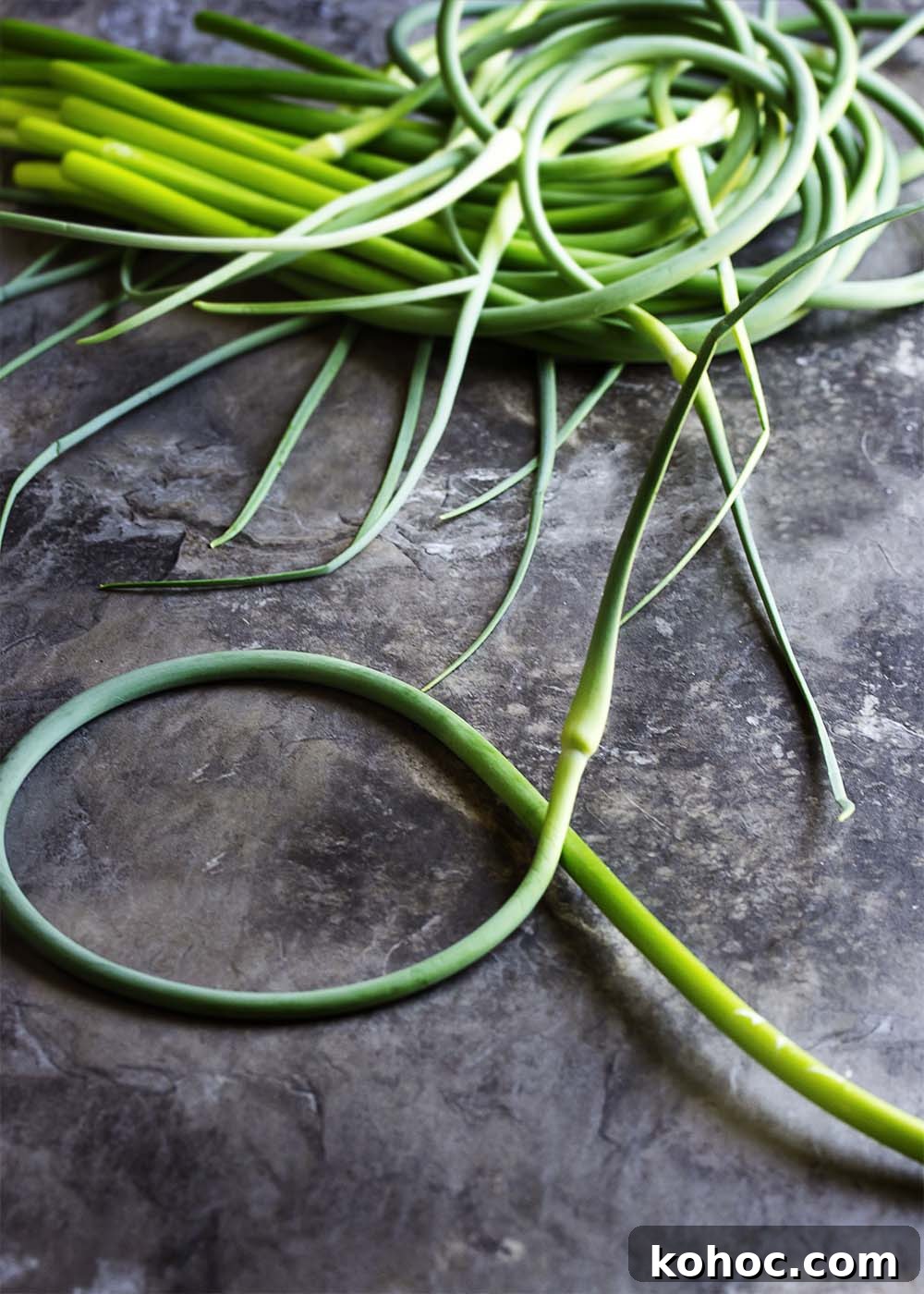
What part of garlic scapes do you eat?
The whole scape is edible and works well in pesto and purees. Some people find the section from the bulb’s bulge to the tip can be tough or stringy, so you may trim that portion to suit your preference. The cut end can be woody if the scapes are older — trim until the interior looks fresh and green before using.
How to use Garlic Scapes
Use garlic scapes anywhere you would use garlic, scallions, or leeks. They’re excellent in pestos (a great way to preserve scapes), dips, sautés, soups, and grilled dishes. Because their flavor is milder, scapes are especially good when added near the end of cooking or used raw to preserve their bright character. Here are a few ideas and preparations to try:
- Pickled garlic scapes — quick-brine pickles make a tangy condiment.
- Garlic scape soup — a smooth, savory soup often paired with greens like spinach.
- Grilled garlic scapes — charred briefly with salt and pepper for a smoky side.
- Garlic scape pesto — blended with nuts, cheese, and oil for pasta or sandwiches.
- Garlic scape vinaigrette — pureed into a bright salad dressing.
- Sausage and Garlic Scape Risotto
- White Bean and Garlic Scape Dip
Storage tips: wrap scapes in a damp paper towel and refrigerate in a perforated bag; they keep well for one to two weeks. To preserve excess scapes, make pesto and freeze it in portions, or blanch and freeze for later use.
Garlic scapes are a bright, seasonal way to add mild garlic flavor and fresh green notes to many dishes. Experiment with raw, quickly cooked, or grilled preparations to discover how you like them best.