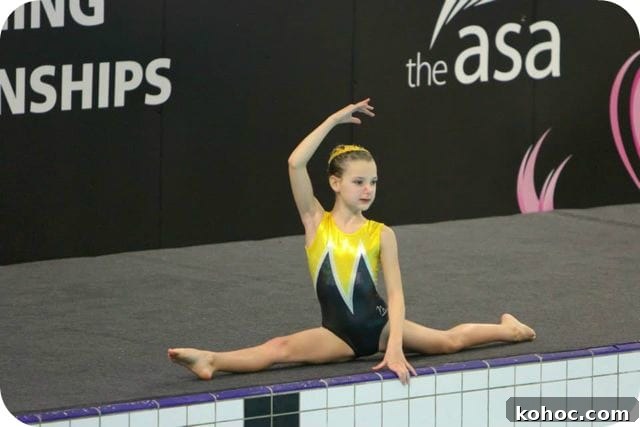
About to swim her solo at National Age Group comp 2013
Two years ago we began a journey that has completely reshaped our lives and Millie’s. It started with her first synchronised swimming lesson in Manchester one Saturday evening. We had no idea what to expect, and Millie was incredibly nervous. Yet within ten minutes she was looking up at us from the pool balcony with a spark in her eyes—and we quickly realised this would become a huge part of our routine.
At first we had no sense of how much synchronised swimming would influence everyday life. I’ve mentioned Millie’s swimming here before, but I haven’t gone into detail: this is really her story. What began as a tentative hobby has turned into intense training, competitions, and genuine achievements.
Within months Millie was training between five and seven times a week. Even on rest days there’s almost always some stretching, splits practice, or dance in her room. Ten months after starting synchro she passed trials and was accepted onto the England Talent Squad—a moment that astonished and delighted us. She’s also on the Development Squad for 2014, which fills us with pride and makes her incredibly happy.
This past weekend she travelled to Sheffield to take part in the display at the Swim4Leukaemia fundraising event. The girls swam alongside other performers to support a great cause, and it was another reminder of how much synchronised swimming has given Millie: discipline, teamwork, and a platform to contribute.

The day Rebecca Adlington met the girls from Trafford Synchro at Swim4Leukaemia
Here’s a snapshot of what two years in synchronised swimming has involved for us:
- About 74 nose clips (with more on order)
- Roughly 15 boxes of gelatin for hair and costumes
- 21 nights in budget hotels while competing away from home
- 250+ miles of driving per week to training, not counting trips to Leeds, Crystal Palace, Glasgow, Gloucester and Sheffield
- More than 300 cups of coffee while spectating at pools
- Hundreds of washed towels
- Multiple pairs of goggles and several swimming caps
- Six sports water bottles and numerous swimsuits
- Millions of sequins and countless hours sewing and prepping costumes
- Even more tears—mostly mine, from pride and worry
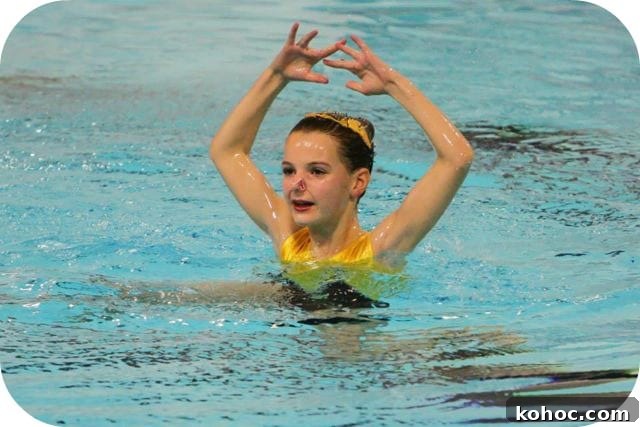
All of the effort has been worthwhile. Our nervous nine-year-old has become a confident, ambitious eleven-year-old who applies herself in and out of the pool. She balances schoolwork with early morning weekend training and spends hours selecting music, perfecting routines, and practising flexibility in the living room. Millie keeps her synchro life mostly to herself at school—she doesn’t broadcast her achievements—but she loves her team mates, whether they are ten or eighteen. The friendships and camaraderie are among the best parts of the sport.
However, this journey also has its challenges. Recently the synchronised swimming community was shaken by news that Olympic funding for Team GB was being cut. That announcement threatened the dreams and ambitions of many young athletes. Millie went to bed that night wondering what all the hard work would now mean. But the response from the swimmers has been resilient: instead of giving up, they resolved to work even harder to restore funding and support the sport they love.
Millie is exactly the kind of young athlete the 2012 Olympic legacy aimed to inspire—determined, dedicated, and full of potential. It would be a loss to let that momentum fade. The experience, discipline, and confidence she’s gained through synchronised swimming are invaluable, and we intend to keep supporting her as she pursues her goals.
NB: Many thanks to Martyn Bowes for permission to use the above photographs.