A firsthand review of painting furniture with an inexpensive handheld paint sprayer you can buy almost anywhere — honest and unbiased (spoiler: it worked!). I also share practical tips I learned for easy application and a great finish.
Some links in this article are affiliate links and if you click on them and purchase I will receive a small commission at no cost to you.
For years both Brian and I had heard that inexpensive handheld paint sprayers were unreliable and not worth the money. We’ve used larger airless sprayers borrowed from a former contractor to paint our entire interior and exterior, so we understood what a sprayer can do. Still, I had a backlog of small painting projects where a large sprayer felt like overkill and brushing was tedious.
We’d used spray cans on the curved base of our dining table last year and liked the smooth coverage, but spray cans quickly become costly and limit color choices. When it came time to paint our dining room chairs, I started with a can of spray paint and realized each chair would need two cans. That added up fast, and the cramped finger fatigue from spraying without a trigger convinced me to look into electric handheld sprayers.
Inexpensive Handheld Paint Sprayer
Reading reviews was eye-opening. Some reviewers raved about the sprayer’s value and time savings, while others warned about clogging and poor performance. The polarized feedback suggested results depended a lot on how the sprayer was used. After narrowing options, I chose an entry-level Wagner HVLP handheld sprayer and decided to try it myself.
My expectations were modest — I wanted a tool for small jobs like chairs, bi-fold doors, and cabinet fronts, not flawless professional results. Common issues with sprayers like overspray, drips, and cleanup were expected, but I hoped a handheld unit could make small projects faster and easier.
UPDATE: Wagner later released a Control Spray Double Duty model that includes two easy-change paint containers and is marketed for indoor or outdoor use; it may be a better option for some interior door projects.
Using the Handheld Paint Sprayer + Tips
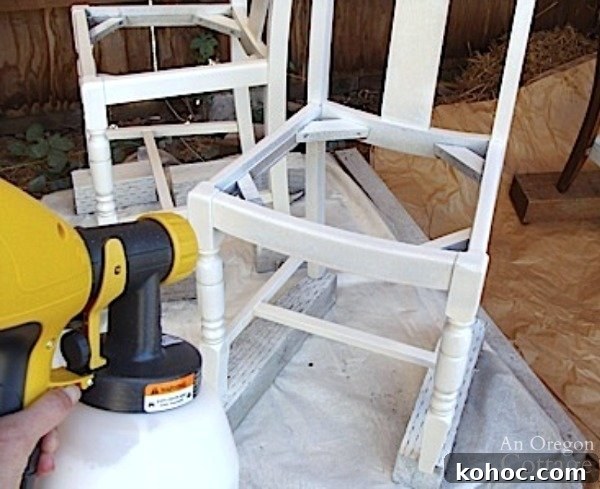
Reviewer tips proved valuable. Below are the practical steps I followed to get the best results from the handheld sprayer.
- I used a paint conditioner formulated for thinning latex paint and followed its directions. Thinning the paint made it spray smoothly.
- Although the sprayer’s instructions didn’t explicitly mention latex, many users reported success spraying water-based latex, so I proceeded carefully and it worked fine.
- I practiced on cardboard first to get a feel for the trigger and spray pattern and to catch any initial spit or uneven spray.
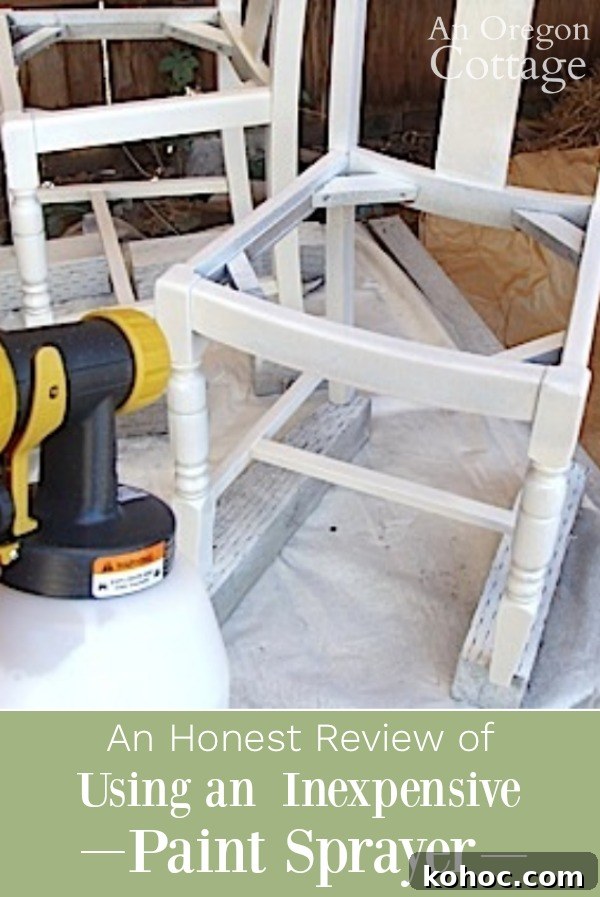
- I set up a simple three-sided “spray booth” using an old shed to contain overspray and keep the work area organized.
- I applied multiple thin coats rather than trying to cover in one thick pass. Thin coats reduce drips and build a smooth finish over several passes.
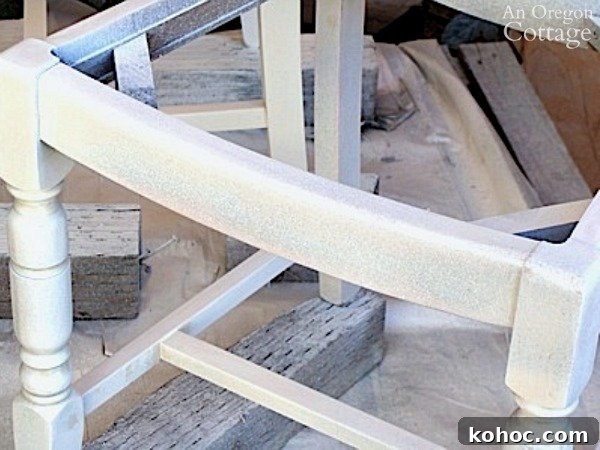
Thin coats felt counterintuitive at first, because the early passes looked dotted and uneven. The initial layers often still showed the original finish and gave a speckled appearance up close. That’s normal — by the third coat the coverage became even and the surface smoothed out.
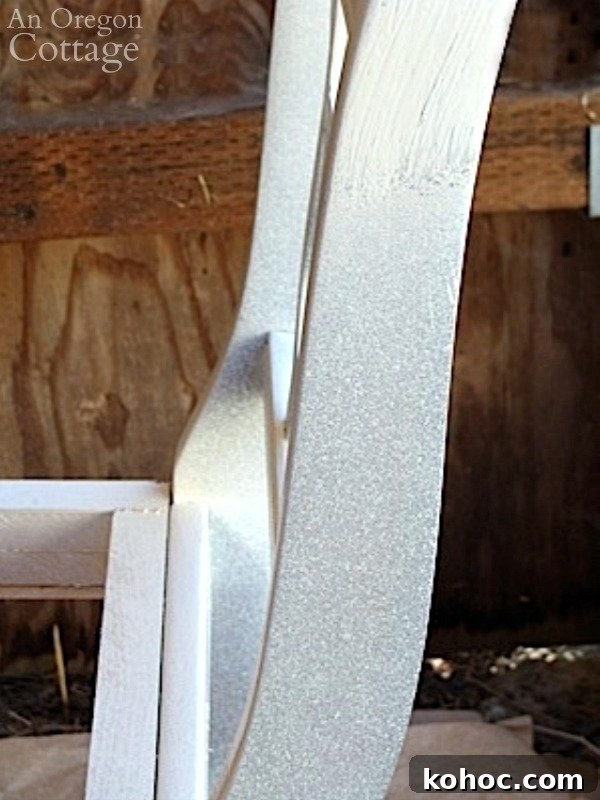
Water-based latex dries relatively quickly in thin coats, so I could complete a chair or small bench within a few hours, allowing time for drying between coats. If I needed to stop for the day, I followed a simple trick reviewers suggested: leave the sprayer still and let a small amount of paint dry on the nozzle. This created a temporary seal that kept the paint inside from drying out. To resume, gently pierce and remove the dried bit from the nozzle with a thumbtack, spray onto cardboard for a few seconds, and the sprayer was ready again.
Cleaning
I cleaned the sprayer thoroughly only after finishing all planned projects. Following the manufacturer’s cleaning instructions, the unit rinsed and scrubbed clean without much trouble. Regular cleaning after each session would likely make maintenance even easier.
Results
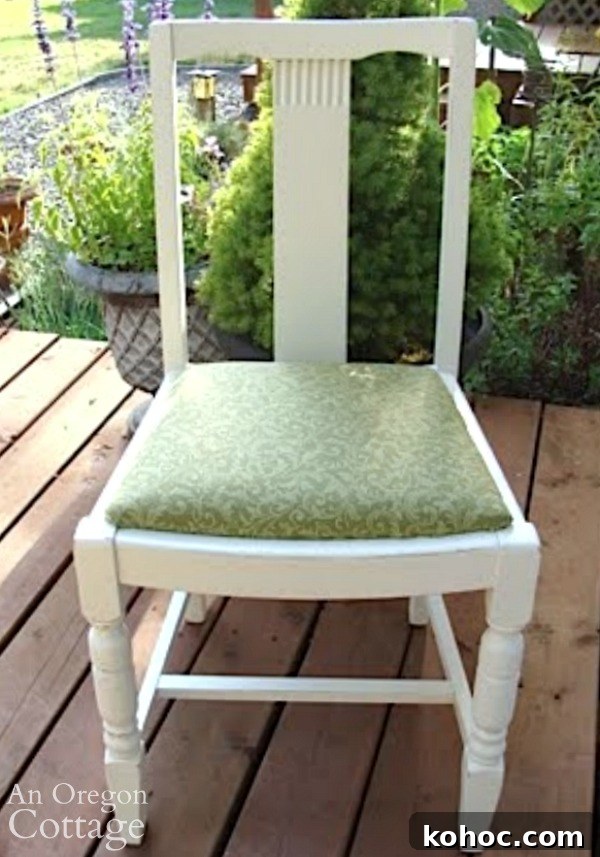
After applying several thin coats and allowing the paint to dry, the finish looked smooth and more professional than brush-applied paint. It wasn’t quite as glassy as a fine spray-can finish if you examine it closely, but the difference was subtle and not noticeable to most people. For chairs, cabinet doors, louvered bi-folds, and other household pieces, the handheld sprayer saved a lot of time and produced consistently good results.
The sprayer won me over. It’s not a replacement for a professional setup on large jobs, but for small to medium DIY projects it’s a useful, time-saving tool. I’ll remove larger doors to finish them in my makeshift spray booth, but the hours saved compared to brushing make that effort worthwhile.
Have you used one of these inexpensive handheld sprayers? Which camp do you fall into?
Note: This review was originally published in September 2011, reflecting excitement about finding an affordable sprayer that makes projects like painting chairs much easier. This was not a sponsored post. Affiliate links in the original post may earn a commission on purchases at no extra cost to you.
Disclosure: affiliate links in this article may earn commission based on sales, but they do not change your price.