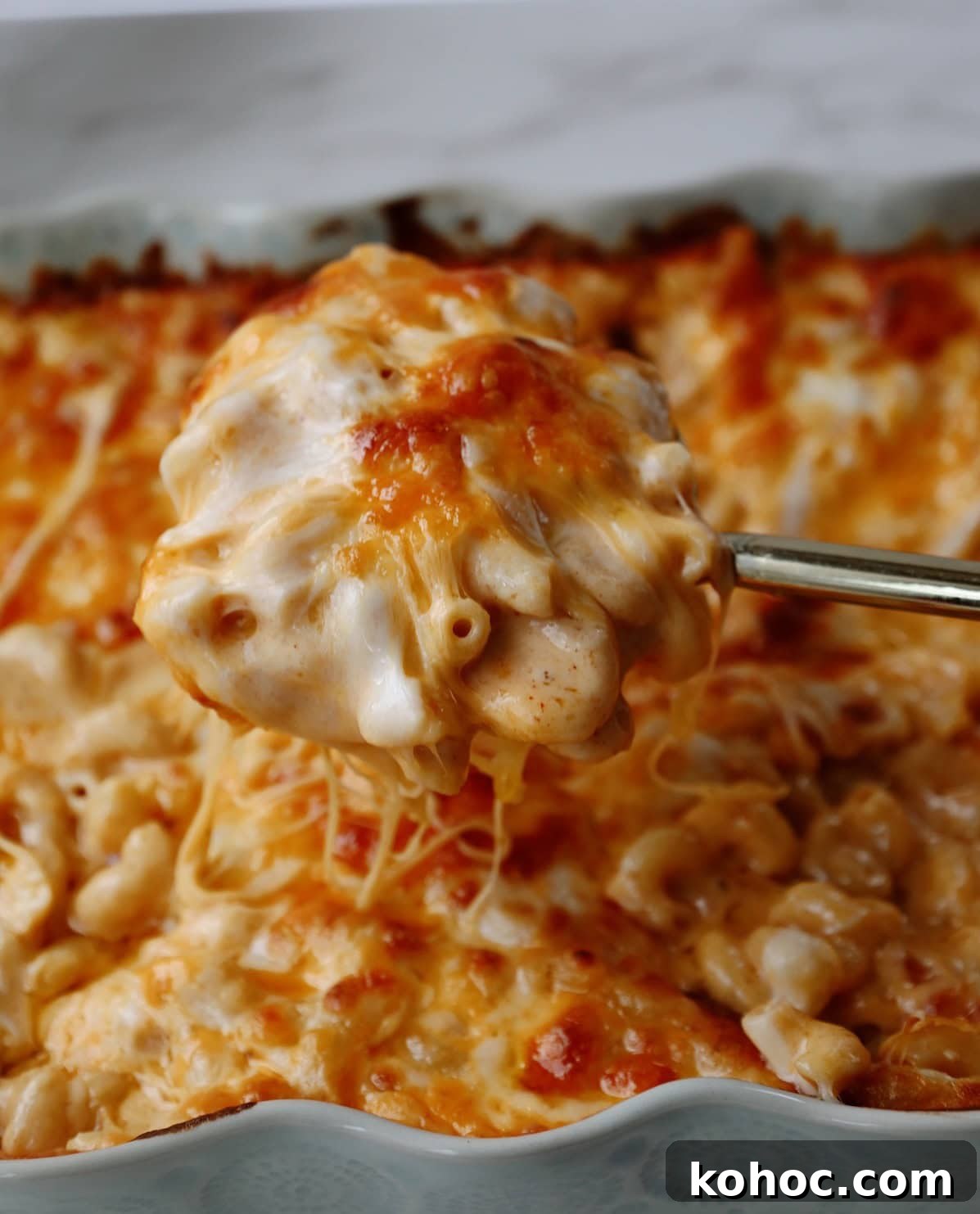
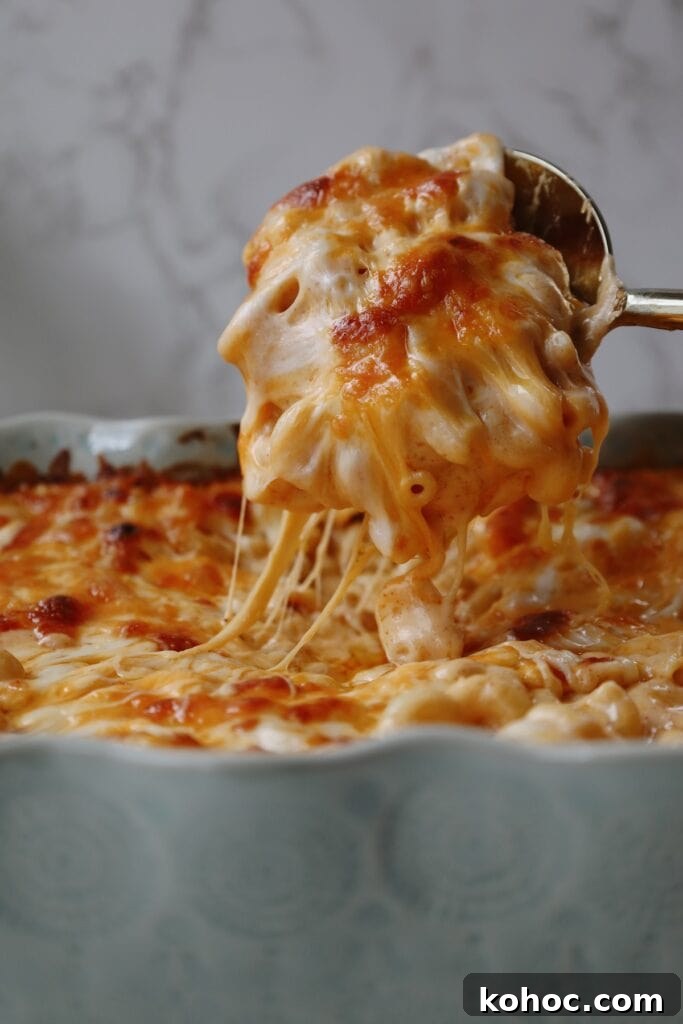
If there’s one dish that consistently steals the show at any table, it’s extra cheesy mac and cheese. Creamy, gooey, and richly satisfying, this is the ultimate comfort-food side—or even a main when you want something indulgent. It’s perfect for holiday dinners like Thanksgiving or Christmas, and equally welcome on a cozy weeknight.
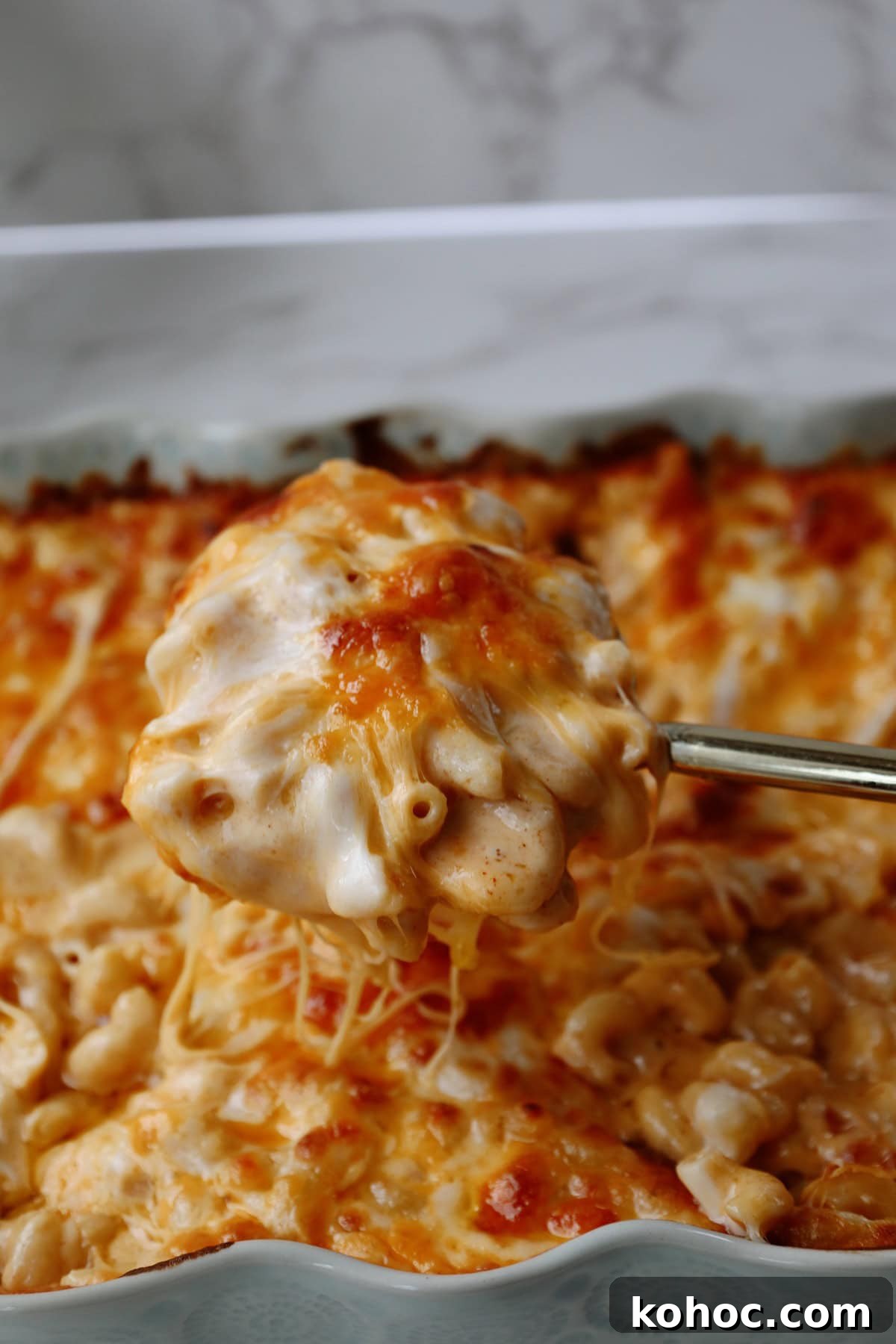
Quick Look: Extra Cheesy Mac and Cheese
✅ Recipe Name: Extra Cheesy Mac and Cheese
🕒 Ready In: 30 minutes
👪 Serves: 8
🍽 Calories: Approximately 800 kcal per serving (estimate)
🥣 Main Ingredients: elbow macaroni, butter, flour, milk or half-and-half, sharp cheddar, mozzarella, Colby Jack, Monterey Jack
👌 Difficulty: Medium — you’ll make a roux-based cheese sauce, combine with pasta, and bake until bubbly and golden.
What Are the Best Cheeses for Mac and Cheese?
Not all cheeses behave the same when melted. For an extra cheesy mac and cheese you want a mix that balances bold flavor with excellent meltability. Here are top choices and why they work:
- Sharp Cheddar — Classic, tangy, and full of flavor; it anchors the sauce.
- Mozzarella — Mild, moist, and stretchy for that desirable cheese pull.
- Colby Jack — Creamy and mellow; it helps smooth out sharper cheeses.
- Monterey Jack — Buttery and very melty, great for silky texture.
- Gruyère or Fontina (optional) — Use sparingly for nutty or extra creamy notes.
- Parmesan or Pecorino (finishing) — Add a small amount for umami and salty depth; they don’t melt as smoothly but are useful as accents.
This recipe uses a four-cheese blend (sharp cheddar, mozzarella, Colby Jack, and Monterey Jack) to layer flavor and ensure a cohesive, silky sauce.
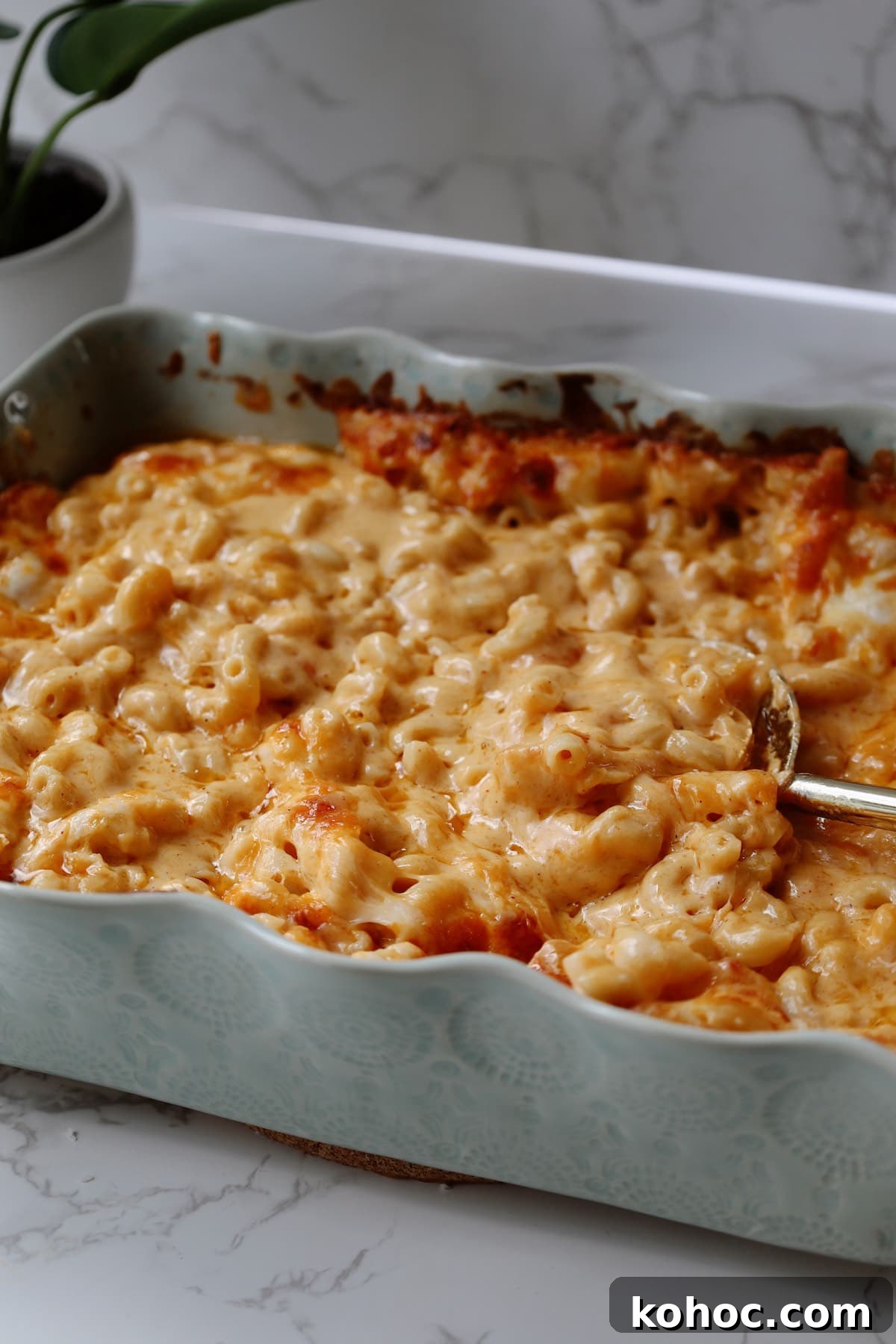
Key Ingredients and Why They Matter
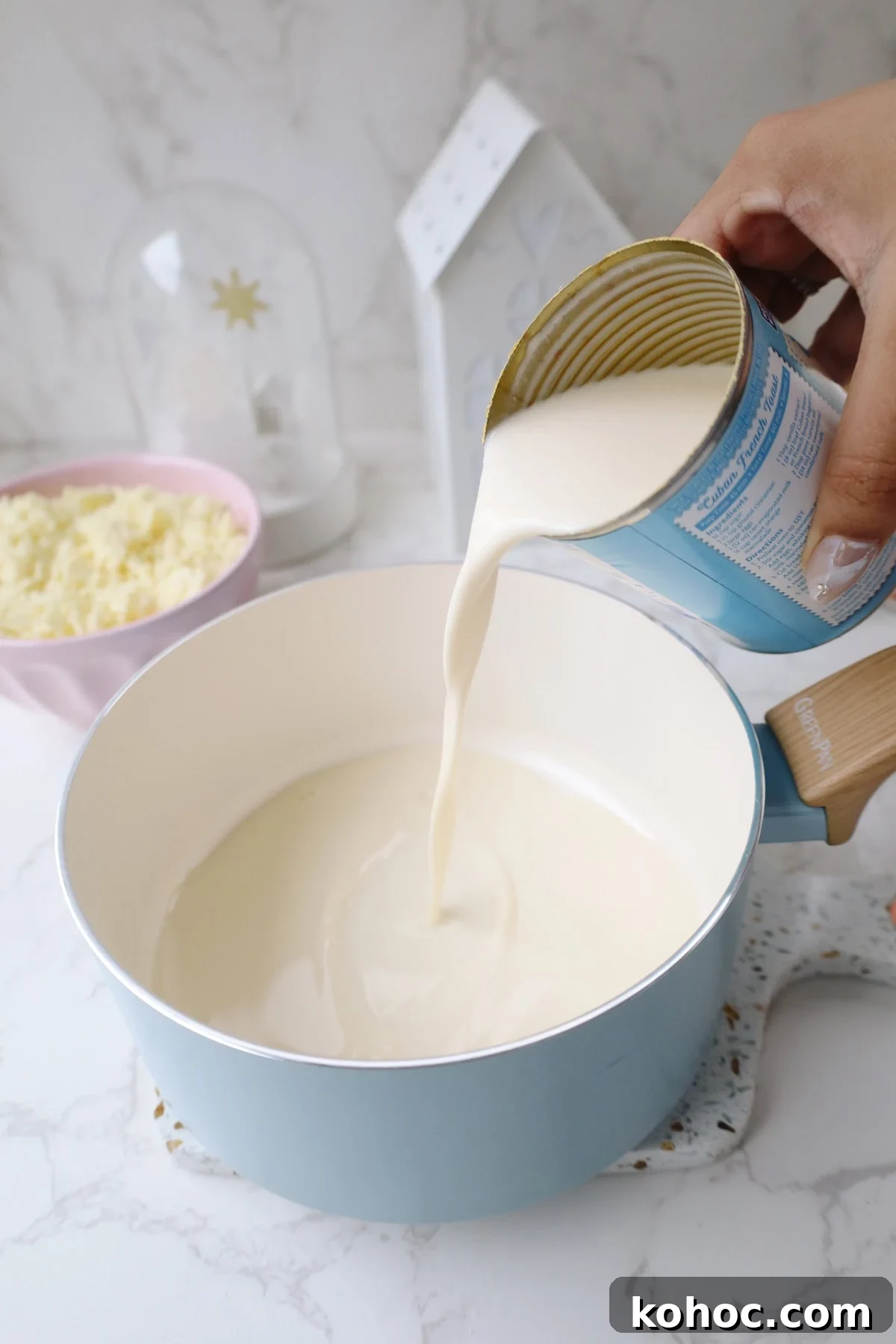
- Salted butter: Adds richness and helps coat the pasta; also forms part of the roux.
- All-purpose flour: Thickens the sauce so it stays creamy rather than watery.
- Half-and-half (or evaporated/whole milk): Gives a rich, smooth base without the heaviness of full cream.
- Sharp cheddar: Provides bold, classic mac and cheese flavor.
- Mozzarella: Delivers the stretchy, gooey texture.
- Colby Jack: Smooths flavors and melts well.
- Monterey Jack: Adds buttery, melty consistency for a luscious sauce.
Ingredient Substitutions
- Cheeses: If you don’t have the exact cheeses listed, swap with other flavorful and melty options — for example, gouda, fontina, or havarti pair well with cheddar.
- Half-and-half: Evaporated milk or whole milk can be used in place of half-and-half.
The full recipe with precise measurements is included in the recipe card below.
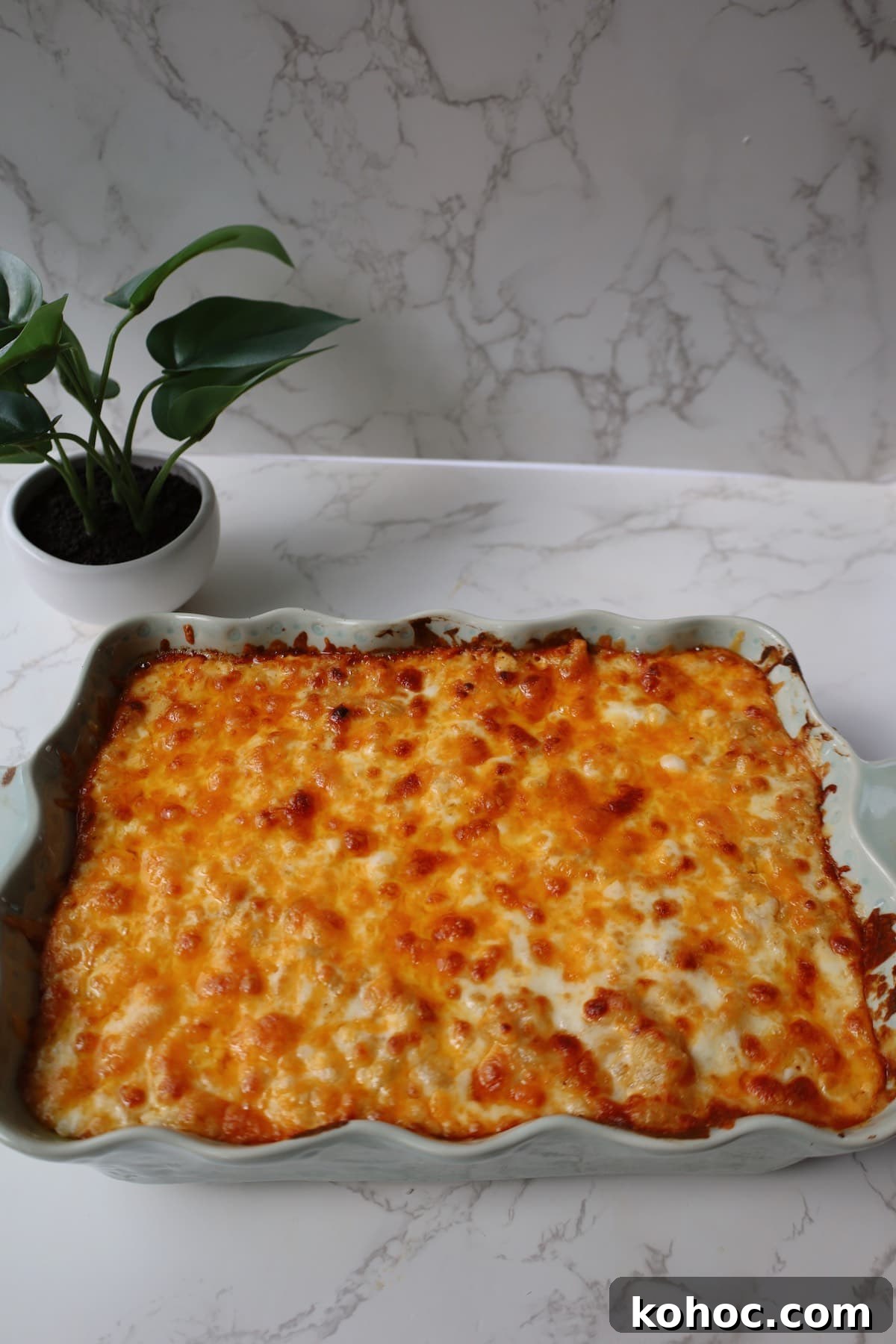
How to Make Extra Cheesy Mac and Cheese
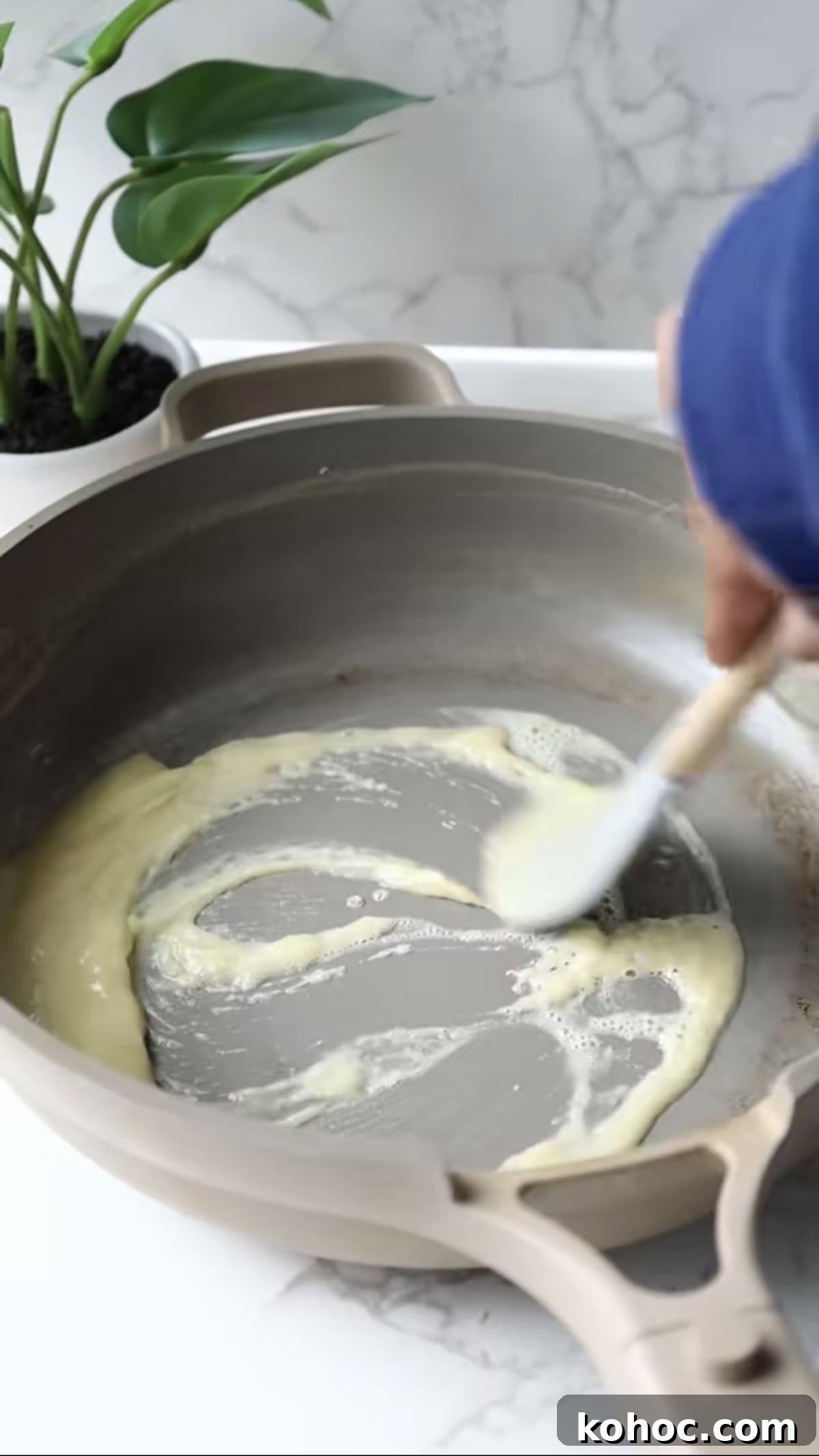
- Make the roux: Melt butter over low–medium heat and whisk in flour until smooth and lightly bubbly.
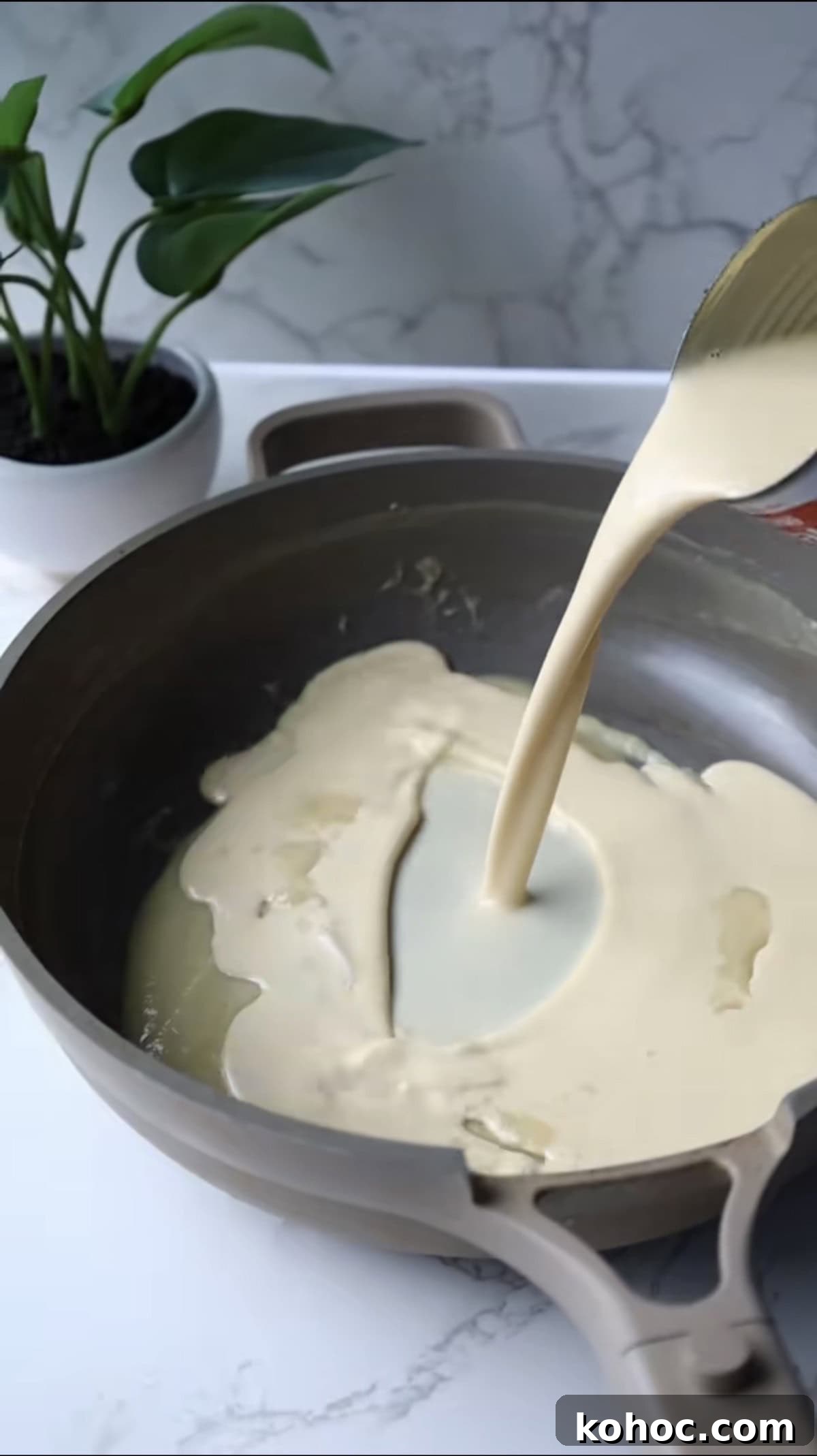
- Add the milk: Slowly pour in half-and-half while whisking constantly. Allow the sauce to thicken slightly without boiling.
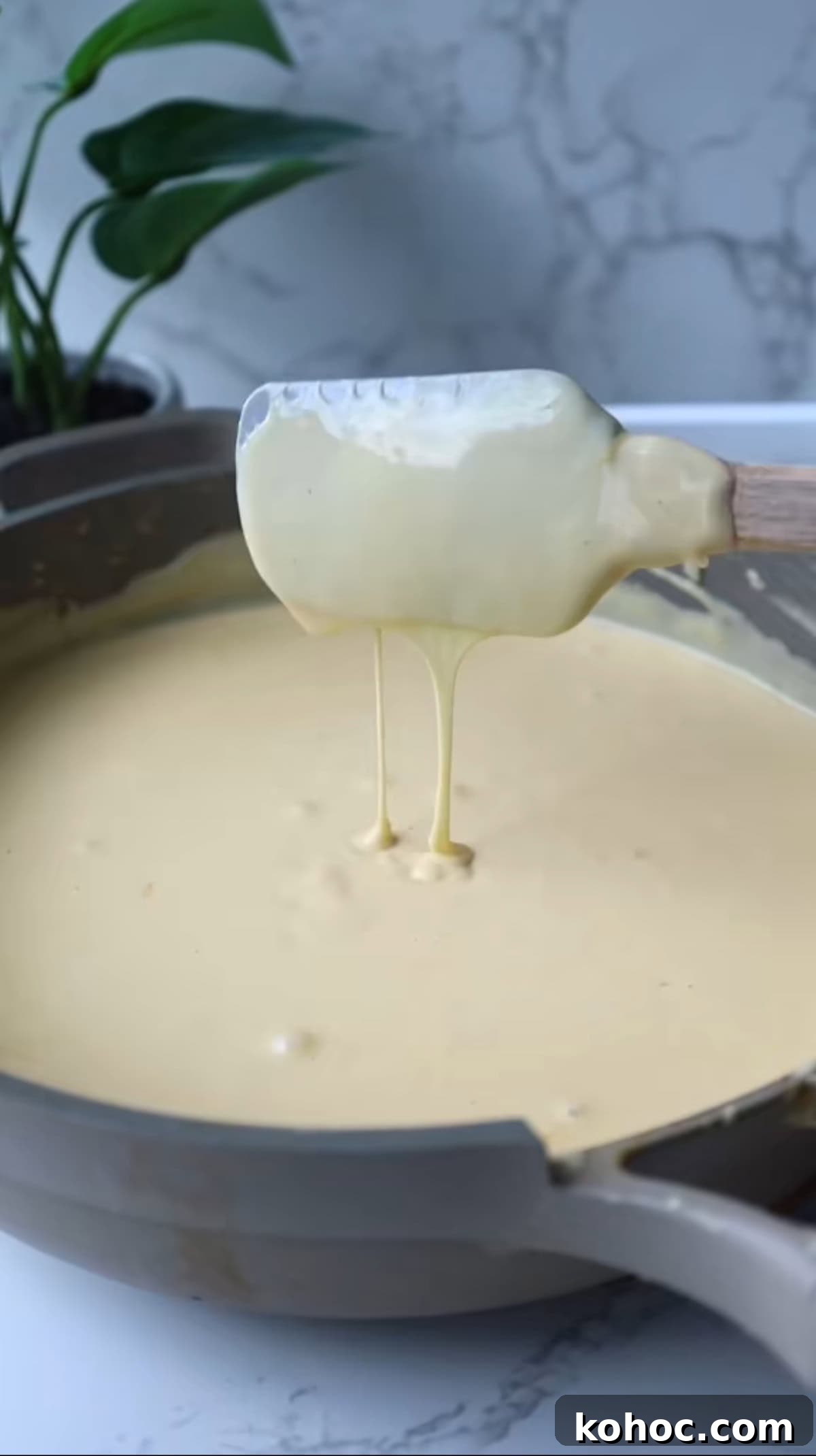
- Melt in half the cheese: Keep heat low and whisk in half the shredded cheese a little at a time, letting each addition melt fully. Add seasonings and taste before adding more cheese.
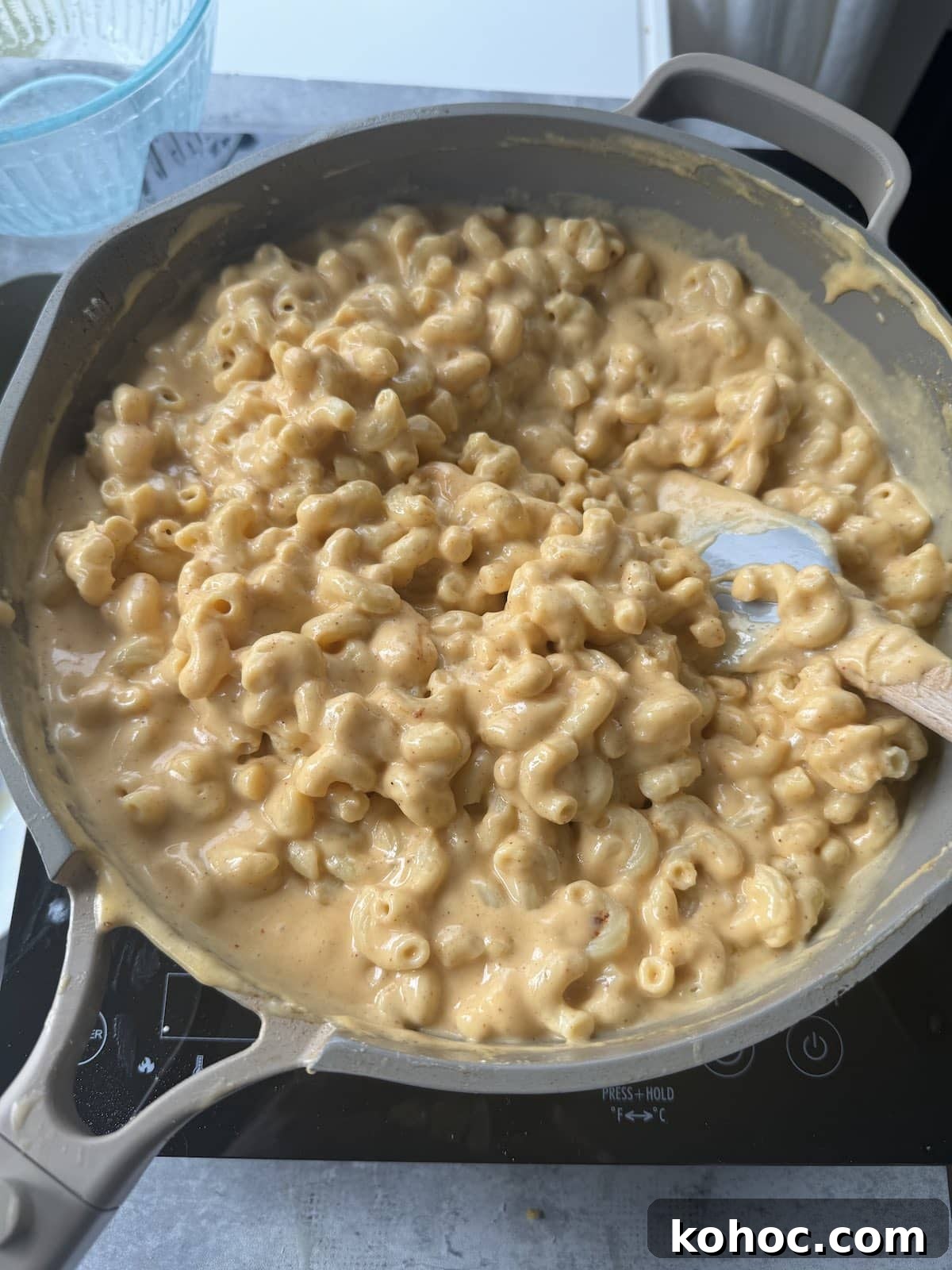
- Combine pasta and sauce: Mix the cheese sauce with cooked pasta, then layer half into a baking dish.
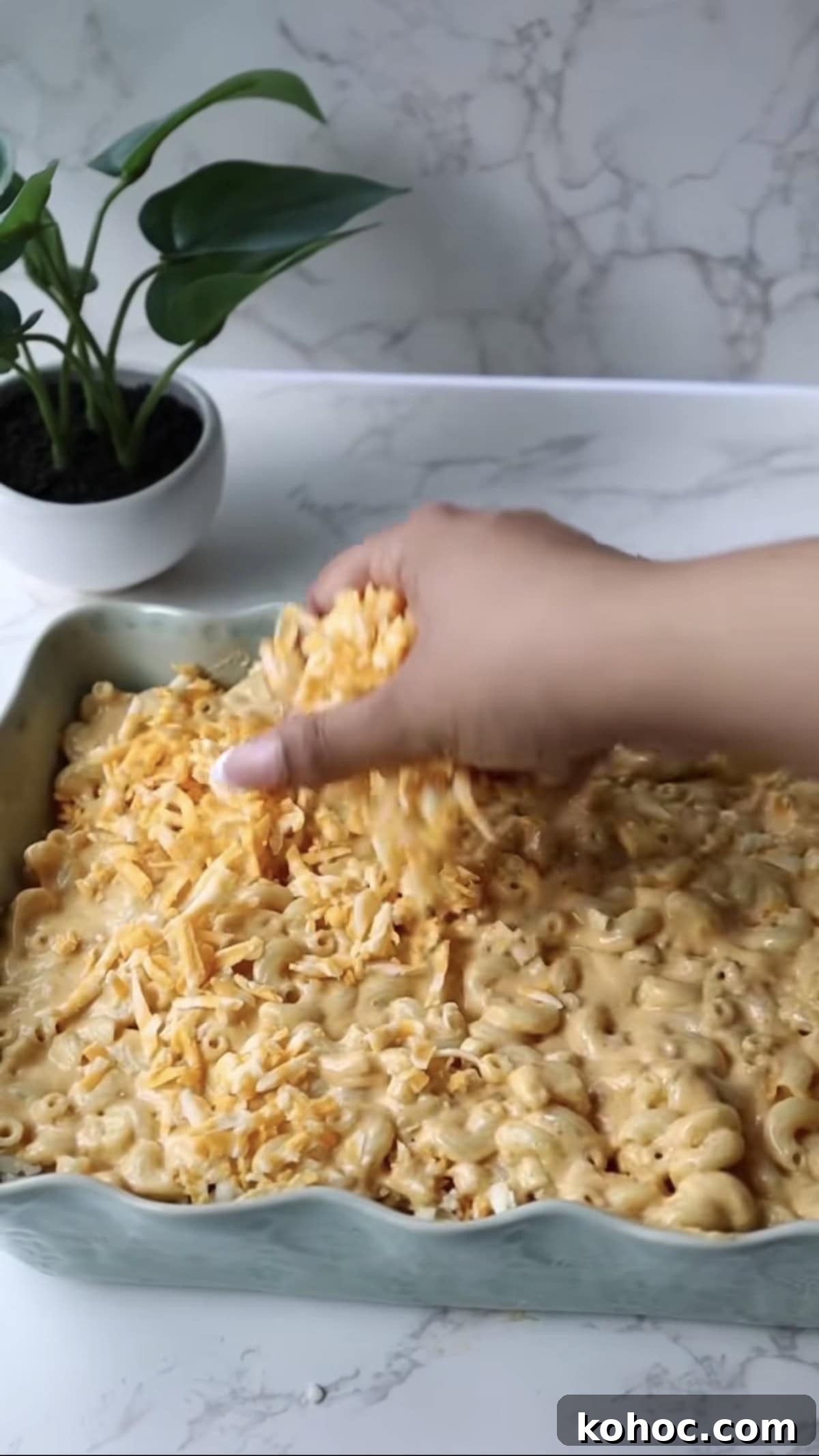
- Layer: Sprinkle a portion of the reserved shredded cheese between layers of pasta and sauce, finishing with the remaining cheese on top.
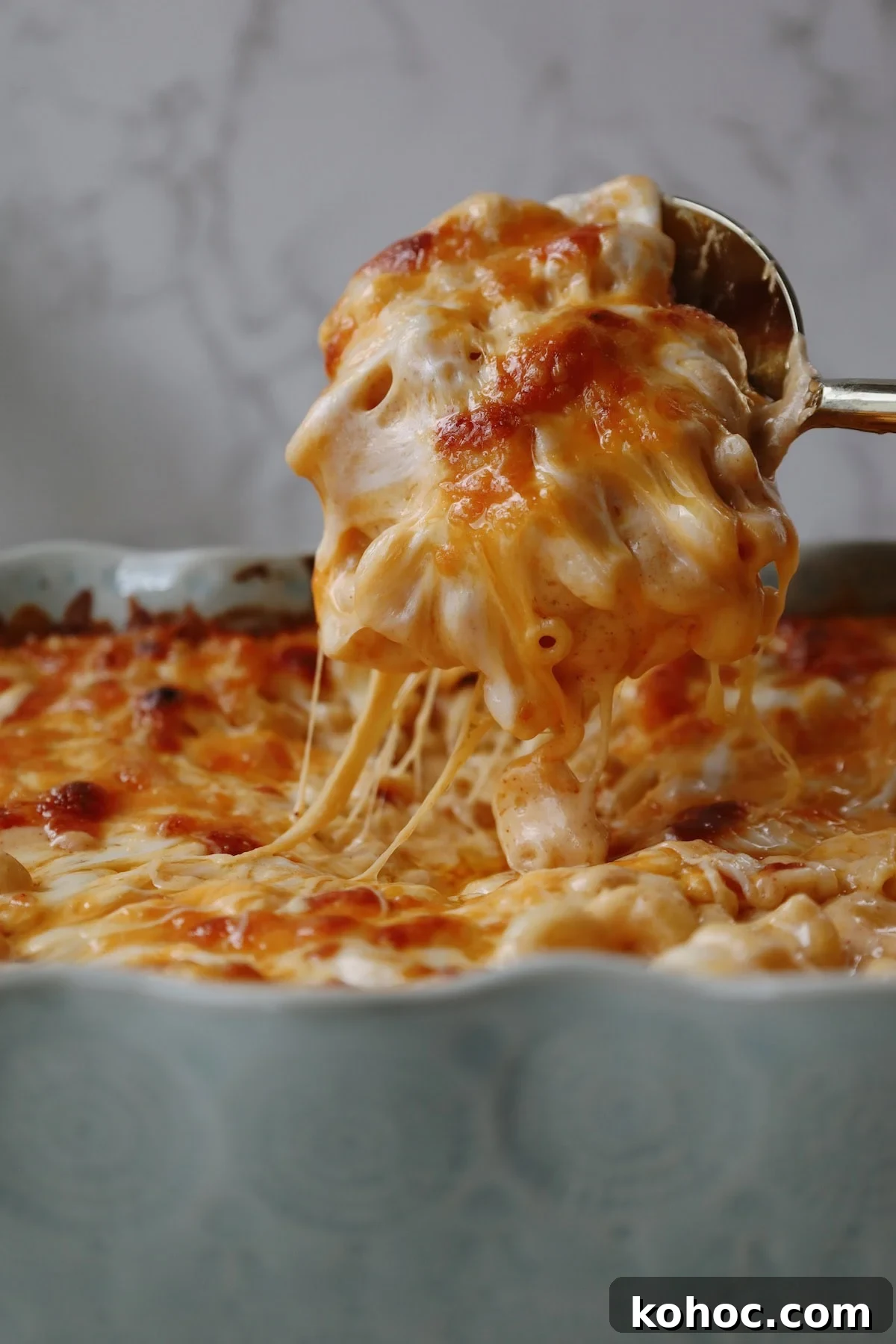
- Bake: Bake at 350°F until bubbly, then broil briefly to get a golden, lightly crisp top—watch closely while broiling.
Why Does My Cheese Sauce Separate When I Make Mac and Cheese?
Sauce separation is a common issue. The main causes and how to prevent them:
- Too much heat or boiling: High heat causes cheese proteins to tighten and expel fat and water. Melt cheese gently over low heat.
- Adding cheese too quickly: Add cheese gradually so it melts evenly into the sauce.
- Pre-shredded cheese: Pre-shredded cheeses often contain anti-caking agents that can make the sauce grainy.
- Weak roux: A proper flour–butter roux stabilizes the sauce and supports the cheese emulsion.
- Over-stirring pasta: Excess starch from overworking or stirring hot pasta can gum up the sauce.
To rescue a slightly broken sauce, remove it from heat and whisk in a little cold milk or cream to re-emulsify; prevention is preferable.
My Expert Tips
Correct cheese-to-liquid ratio: Avoid adding too much cheese to the base; the sauce should be silky, not clumpy.
Layer your cheese: Reserve some cheese to layer in the casserole and on top so pockets of pure melted cheese remain throughout.
Gentle melting over low heat: Melt cheese slowly to prevent proteins from tightening and the sauce from turning greasy.
Build a stable base: A good roux and milk base helps emulsify the sauce and gives it body.
Mac and Cheese Serving Suggestions
For a balanced holiday plate, pair mac and cheese with simple sides such as green beans, roasted carrots, or mashed potatoes. It also works as a main: add sautéed mushrooms, plant-based sausage, crispy breadcrumbs, or roasted vegetables for a complete meal. Leftovers make excellent grilled cheese sandwiches.
Extra Cheesy Mac and Cheese FAQ
You can, but freshly shredded cheese melts creamier. Pre-shredded varieties often contain anti-caking agents that can make the sauce grainy.
Reheat gently over low heat on the stovetop or in the oven with a splash of milk or cream, stirring frequently. Avoid boiling.
Yes. Cool completely, freeze in airtight containers, then thaw in the refrigerator before reheating gently with a little milk to restore creaminess.
More Recipes You’ll Love!
Main Courses
Thai Basil Fried Rice
Side Dishes
Easy Korean Cucumber Salad (Oi Muchim)

Side Dishes
Air Fryer Buffalo Vegan Chicken Nuggets
Side Dishes
Creamy Mashed Potatoes
Please leave a review if you make this recipe — feedback helps improve future recipes.
Extra Cheesy Mac and Cheese
Ingredients
Noodles
- 2.5 cups elbow pasta
- 2 tbsp salted butter
Cheese Sauce
- 3 tbsp salted butter
- 3 tbsp all-purpose flour
- 2 cups half-and-half (evaporated or whole milk work too)
- 2 tsp onion powder
- 2 tsp garlic powder
- 1 tsp chili powder
- 1/4 tsp smoked paprika
- Salt and pepper, to taste
- 12 oz sharp cheddar, freshly shredded
- 12 oz mozzarella, freshly shredded
- 12 oz Colby Jack, freshly shredded
- 6 oz Monterey Jack, freshly shredded
Instructions
- Preheat oven & prepare pasta: Preheat oven to 350°F. Cook elbow pasta in well-salted water until just al dente. Drain and toss immediately with 2 tbsp salted butter.
- Make the roux: In a saucepan over low–medium heat, melt 3 tbsp butter. Whisk in 3 tbsp flour gradually until smooth and lightly bubbly (1–2 minutes), avoiding browning.
- Incorporate dairy: Slowly pour in half-and-half while whisking until incorporated and slightly thickened. Do not boil.
- Add seasonings: Stir in onion powder, garlic powder, chili powder, smoked paprika, and salt & pepper. Taste and adjust before adding cheese.
- Melt in cheese: With heat low or off, whisk in half the shredded cheese a handful at a time, letting each addition melt fully to form a smooth sauce.
- Layer pasta & cheese: In a baking dish, spread half the pasta mixture, sprinkle a quarter of the reserved cheese, add the remaining pasta, and finish with the remaining cheese on top.
- Bake & broil: Bake at 350°F for 15–20 minutes until bubbling, then broil 3–5 minutes until the top is golden—watch carefully while broiling.
Video
Notes
Storage: Keep leftovers in an airtight container in the fridge for 3–4 days.
Reheating: Warm gently on the stovetop or in the oven with a splash of milk; avoid boiling.
Freezing: Best fresh, but you can freeze portions after cooling. Thaw overnight and reheat gently.
Substitutions/tips: Swap sharp cheddar with mild/medium/white cheddar, and use gouda, fontina, or havarti for melty cheese options. Evaporated milk works in place of half-and-half.
Nutrition
Calories: 791 kcal (approx.), Carbohydrates: 42 g, Protein: 38 g, Fat: 53 g, Saturated Fat: 31 g. Nutrition information is an approximation.